







Definition and Meaning of Form 2433
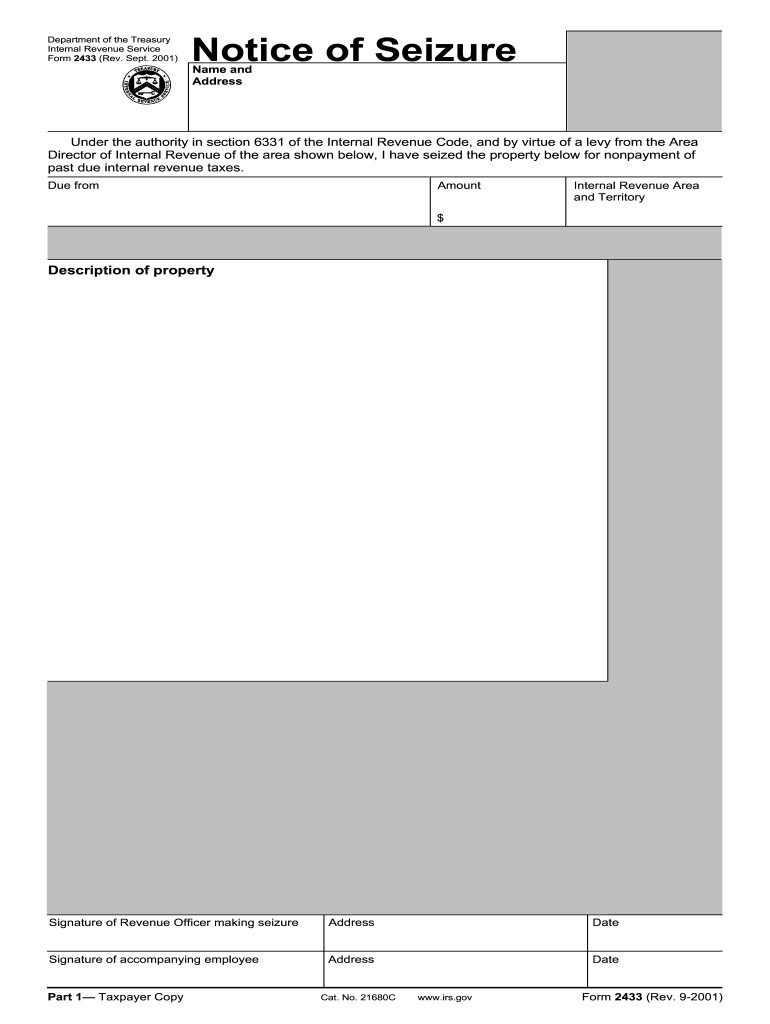
Form 2433, also known as the Notice of Seizure, is a document used by the Internal Revenue Service (IRS) to inform a taxpayer of the seizure of their property due to unpaid internal revenue taxes. This form is part of the IRS's enforcement mechanism under the Internal Revenue Code. It provides the legal framework for the IRS to take possession of property, outlining the specifics such as taxpayer details and property in question. This form ensures transparency in the tax collection process, allowing taxpayers to understand the implications of their non-compliance.
How to Use the Form Notice of Seizure
To use the Form 2433 effectively, it must first be properly filled out by the IRS official executing the seizure. The form should detail the taxpayer’s information, including name, address, and taxpayer identification number. It then provides specifics about the property being seized, such as description and value. The IRS uses this form to communicate the taking of assets in lieu of unpaid taxes, serving as an official notification and providing the taxpayer with the necessary details to respond or take action if desired.
Practical Example
Consider a case where a business owner fails to pay their federal taxes for an extended period. An IRS officer will complete Form 2433, detailing the seizure of a company vehicle. The form will be presented to the business owner, informing them of the action and the steps they can take, including how to appeal or pay the outstanding taxes to potentially reclaim the asset.
How to Obtain the Form Notice of Seizure
The Form 2433 is typically not obtained by taxpayers directly, as it is issued by the IRS during enforcement actions. IRS personnel complete and issue it during property seizures. If a taxpayer needs to review or obtain a copy for legal or personal reasons, they must contact the IRS directly or consult with a tax attorney who can request documentation on their behalf.
Steps to Complete the Form Notice of Seizure
- IRS Officer Identification: The IRS officer must fill out the top section, including their information and authority.
- Taxpayer Information: Include comprehensive details about the taxpayer, such as name and tax identification number.
- Property Description: Accurately describe the property being seized with any identifiable characteristics.
- Reason for Seizure: Clearly outline the tax liabilities that have led to the enforcement action.
- Signatures: Ensure the document is signed by the IRS officer and, if possible, acknowledged by the taxpayer.
Detailed Steps and Requirements
- Verification: Confirm taxpayer identification and their current outstanding liabilities.
- Property Evaluation: Assess and document all relevant details regarding the property to provide an accurate overview.
- Legal Compliance: Ensure all actions conform to the guidelines set out in the Internal Revenue Code for seizures.
Key Elements of the Form Notice of Seizure
- Taxpayer Identification: Essential for ensuring the correct individual or entity is subject to the seizure.
- Description of Seized Property: Detailed and specific information on the assets included.
- Seizure Details: Reason for seizure and related tax liabilities clearly mentioned.
- Acknowledgment Section: Space for the taxpayer to acknowledge receipt of notice.
Important Terms Related to Form Notice of Seizure
- Levy: The legal seizure of property to satisfy a tax debt.
- Garnishment: Legal process of withholding earnings or property to satisfy a debt obligation.
- Tax Lien: Government claim against property for unpaid taxes, preceding the seizure.
Penalties for Non-Compliance
Failure to comply with tax obligations that lead to issuance of a Form 2433 can have severe repercussions. Consequences include the loss of property, significant financial setbacks, and potential legal penalties. In addition to the physical seizure of assets, non-compliant taxpayers may face additional fines and increased scrutiny from the IRS in future tax periods.
Legal Use of the Form Notice of Seizure
The legal use of Form 2433 is strictly delineated under the Internal Revenue Code. The IRS utilizes this form to enforce tax collection while ensuring due process and legal rights of taxpayers. It acts as an official documentation of the IRS's right and action to seize assets, providing a clear pathway for taxpayers to address disputes or settle outstanding tax debts.
Legal Context
- Tax Code Authority: The form is backed by the Internal Revenue Code, giving the IRS the authority to seize assets.
- Notification Obligations: Serves to formally notify taxpayers and ensure they have legal recourse to address the situation.
Understanding the depth and implications of the Form 2433 is crucial for taxpayers facing tax-related issues, allowing them to navigate challenges effectively and seek appropriate resolutions.




