




01. Edit your personal injury intake form template online
Type text, add images, blackout confidential details, add comments, highlights and more.

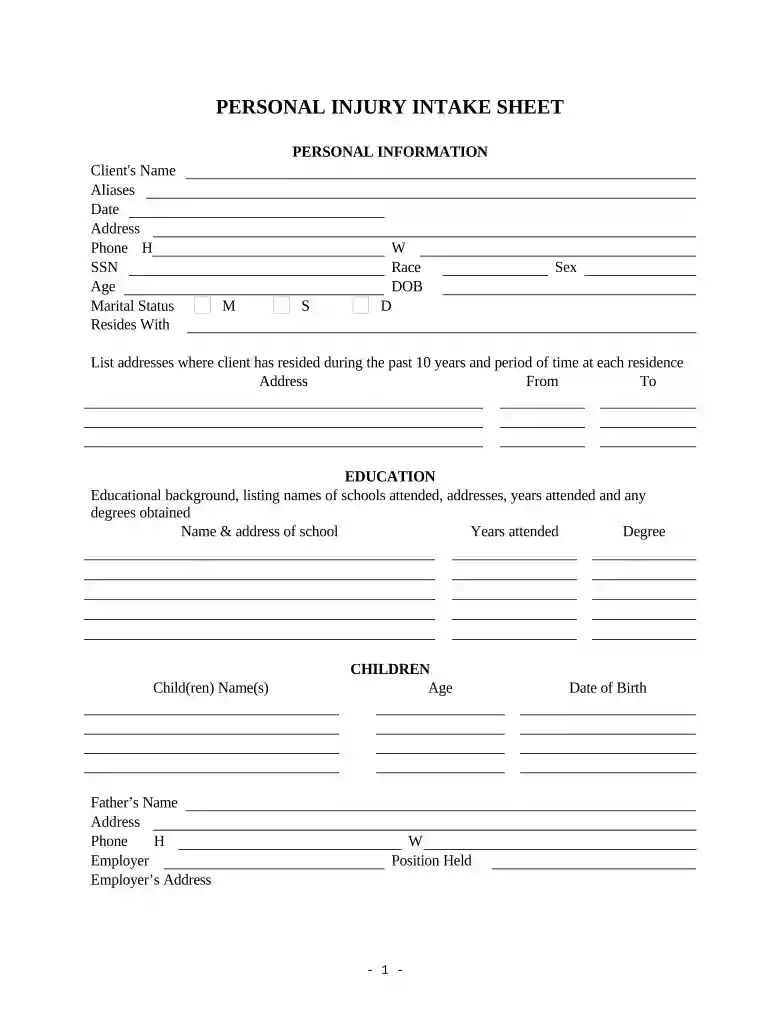
Type text, add images, blackout confidential details, add comments, highlights and more.

Draw your signature, type it, upload its image, or use your mobile device as a signature pad.

Send personal injury intake form pdf via email, link, or fax. You can also download it, export it or print it out.
A personal injury intake form template is a structured document designed to collect essential information from clients who have experienced personal injuries, such as car accidents, slips and falls, or workplace incidents. This form serves as a foundational tool for attorneys and legal professionals to gather the necessary data to represent their clients effectively in legal matters. Key components of the form typically include personal information, accident details, medical history, insurance information, and a record of damages incurred due to the incident.
This template not only standardizes the information collection process but also ensures that no critical details are overlooked. By providing a comprehensive overview of the client’s situation, it helps attorneys assess the case's merits, develop strategies for legal representation, and streamline communications regarding the client's condition and needs.
A well-structured personal injury intake form template includes several key sections that facilitate thorough data collection. These elements can be categorized as follows:
Personal Information: This section requests the client's name, contact details, date of birth, and relevant demographic information. Gathering complete personal details allows for effective communication and identification throughout the legal process.
Accident Details: Clients describe how the injury occurred, including the date, time, and location of the incident. This section may include space for detailed narratives to capture the circumstances surrounding the accident, which is vital for establishing liability.
Medical History: Clients provide information on any medical treatment received as a result of the injury, including hospital visits, diagnoses, and ongoing medical care. This helps attorneys understand the extent of the injuries and the potential impact on the client’s life.
Insurance Information: Details about any insurance coverage the client holds, including policy numbers and coverage types, are critical for determining the avenues for compensation available to the client.
Damages Incurred: This section allows clients to outline the financial and non-financial damages they are claiming, such as medical expenses, lost wages, and pain and suffering. Clearly documenting these damages is essential for preparing legal arguments and negotiating settlements.
Completing a personal injury intake form template involves a systematic approach to ensure all relevant information is captured. The following steps outline how to successfully fill out the form:
Gather Basic Information: Collect your personal details, including your full name, contact information, and any identifying numbers relevant to your case.
Describe the Incident: Provide a clear and concise description of how the accident occurred. Be specific regarding the date, time, and location, and include any witnesses if applicable.
Document Medical Treatment: List all medical services received post-accident. Include names of healthcare providers, dates of service, and types of treatment administered.
Complete Insurance Details: Fill out your insurance information, including the name of your insurance company, policy number, and coverage details related to the incident.
Outline Damages: Write down all damages linked to the personal injury, such as medical costs, lost income, and emotional distress. This is critical for establishing the basis of your legal claim.
Review for Completeness: Before submitting the form, double-check that all sections have been filled out correctly and completely. Missing information can lead to delays in processing your case.
The personal injury intake form template is predominantly utilized by:
Personal Injury Attorneys: Legal professionals who represent clients in cases of injury from accidents, malpractice, or workplace incidents use this form to gather relevant information for building a case.
Claims Adjusters: Insurance professionals analyzing claims related to personal injuries rely on this form to assess the validity and extent of claims submitted by policyholders or affected parties.
Medical Professionals: Healthcare providers documenting and reporting patient histories for insurance claims may also reference information gathered from a personal injury intake form for accurate record-keeping.
Clients: Individuals who have sustained injuries and seek legal representation complete the form as part of the initial consultation process, ensuring their cases are documented and handled properly.


Utilizing a personal injury intake form template is critical for several reasons:
Efficiency: The standardized format expedites the information-gathering process, allowing attorneys to assess cases quickly and focus on developing strategies for client representation.
Comprehensive Data Collection: A well-structured form ensures that all necessary information is collected, reducing the likelihood of missed facts that could affect the outcome of a case.
Enhanced Communication: By providing a clear framework for discussions, attorneys can effectively communicate with their clients regarding the details of their cases, thereby improving attorney-client rapport.
Legal Protection: A completed intake form serves as an official record that can be referred to throughout the legal process, providing evidence of the client's claims and facilitating negotiations with opposing parties.
Sure, a typed name is recognized as a valid electronic signature when you add it to your document utilizing a compliant solution like DocHub. Simply import your personal injury intake form to our editor, click Sign in the top tool pane → Create your signature → Type your name in the appropriate tab, and choose how it will look on your document.
You can find the latest and most relevant version of the car accident intake form in our DocHub forms collection. Search it by categories or utilize the search field to find the exact template that suits your case. You can open this form for editing after you find it.
At DocHub, your data security is our priority. We follow HIPAA, SOC2, GDPR, and other standards, so you can work on your documents with confidence.





This form is used to collect information about volunteers and used for internal purposes only. The information you provide is confidential and will be treatedRead more
Leave and Workers Compensation. Personal Leave Request Form Parental Leave Request Form Certification for Serious Injury or Illness of Covered Service MemberRead more


