Type text, add images, blackout confidential details, add comments, highlights and more.
02. Sign it in a few clicks
Draw your signature, type it, upload its image, or use your mobile device as a signature pad.
03. Share your form with others
Send it via email, link, or fax. You can also download it, export it or print it out.
How to use or fill out Living Trust for Husband and Wife with One Child - Washington
Ease of Setup
DocHub User Ratings on G2
Ease of Use
DocHub User Ratings on G2
Click ‘Get Form’ to open it in the editor.
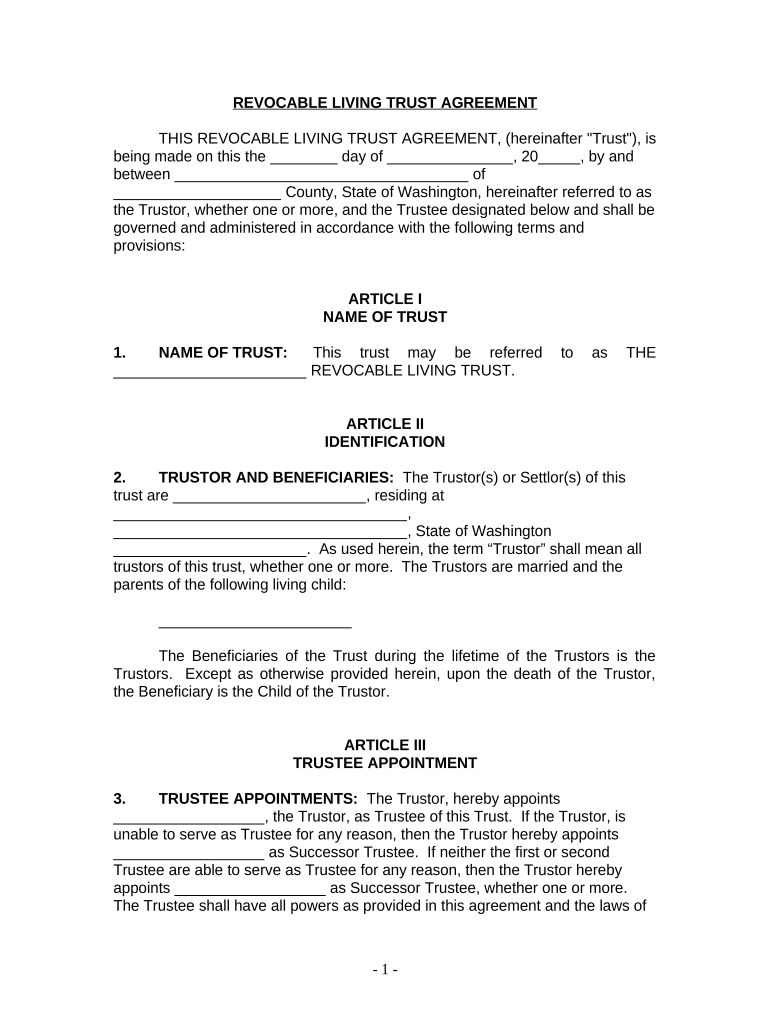
Begin by entering the name of the Trust at the top of the form. This is where you will specify the title of your trust, such as 'The [Your Family Name] Revocable Living Trust'.
In Article II, fill in the names and addresses of both Trustors (husband and wife) and identify your child as the sole beneficiary.
Designate a Trustee in Article III. You can appoint one or both Trustors as Trustees, along with a Successor Trustee if needed.
List all assets intended for inclusion in the trust under Article IV. Attach Schedule A detailing these assets.
Review Articles V through XII carefully to understand Trustee powers, administration during life and after death, and any specific provisions relevant to your situation.
Once completed, save your document. Use our platform’s signing feature to securely sign and share your trust document.
Start using our platform today to create your Living Trust for free!
Fill out Living Trust for Husband and Wife with One Child - Washington online It's free
Living trust for husband and wife with one child washington stateLiving trust for husband and wife with one child washington formLiving trust for husband and wife with one child washington cost
Security and compliance
At DocHub, your data security is our priority. We follow HIPAA, SOC2, GDPR, and other standards, so you can work on your documents with confidence.
by WHOSHA WILL If there is no surviving spouse, all community property goes to surviving children, equally, with one eqval share going to living issue of any deceased child,.Read more
Under the terms of the trust, the trustee is required to pay all the income annually to the grantors (Eric and Annie), or to the survivor if one of them dies.Read more
Cookie consent notice
This site uses cookies to enhance site navigation and personalize your experience.
By using this site you agree to our use of cookies as described in our Privacy Notice.
You can modify your selections by visiting our Cookie and Advertising Notice.