
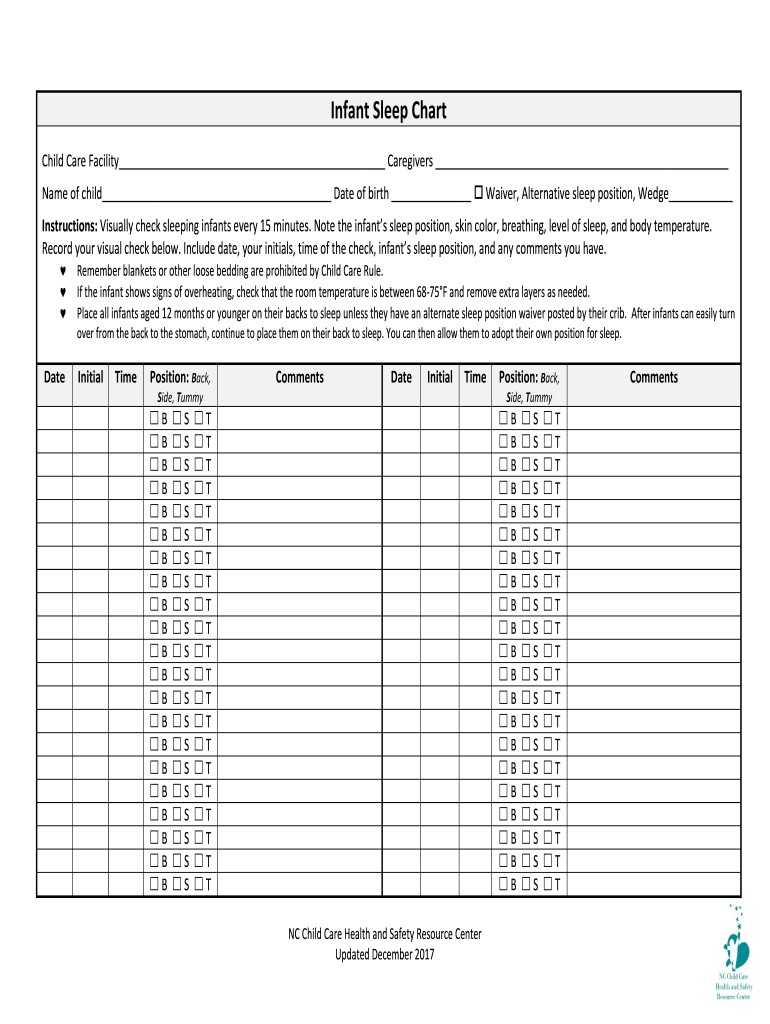







Definition and Purpose of the Infant Sleep Chart Daycare
The infant sleep chart daycare is a crucial document used in child care facilities to monitor infants' sleep patterns, ensuring a safe and healthy environment. This chart records essential details, such as sleep positions, breathing patterns, skin color, and overall body temperature. The objective is to maintain a consistent observation schedule, with caregivers checking sleeping infants every 15 minutes and documenting their findings. This practice not only emphasizes safe sleep guidelines—including placing infants on their backs to sleep—but also helps to detect any potential issues early.
Having a structured method for keeping track of infant sleep habits supports multiple stakeholders, including parents, caregivers, and regulatory agencies. It assures parents that their children are being monitored closely, while also providing caregivers with a reliable framework for documenting sleep patterns. This documentation can be vital during regulatory inspections and may play a role in quality assurance assessments within child care facilities.
Furthermore, the infant sleep chart daycare is tailored to meet both safety and compliance needs as dictated by state regulations, enhancing child wellness and care standards within the daycare environment.
How to Use the Infant Sleep Chart Daycare
To effectively utilize the infant sleep chart daycare, caregivers must familiarize themselves with its structure and requirements. This chart is designed to easily capture various observations during an infant's sleep cycle.
- Setup: Each chart should include sections for recording the date, the infant's name, and specific time intervals for checks.
- Observations: Caregivers should take detailed notes on key indicators such as:
- Sleep Position: Ensure that infants are placed on their backs.
- Skin Color: Monitor for any changes in color, which could indicate issues.
- Breathing Patterns: Look for steady, rhythmic breathing.
- Temperatures: Use a thermometer to confirm that the infant's body temperature falls within the ideal range of 68-75°F.
By adhering to these guidelines, caregivers can maintain comprehensive and accurate records that fulfill both safety protocols and state requirements.
Best Practices for Monitoring
- Routine Checks: Establish a routine for checking on infants every 15 minutes. This practice not only complies with safety regulations but also helps caregivers become more familiar with each infant’s unique sleep habits.
- Documentation: Use clear and simple language when recording observations, ensuring that the information is easy to relay to parents or healthcare providers when necessary.
- Communication: Share findings in regular staff meetings to address any concerns and to ensure that all team members are aware of best practices regarding infant sleep safety.
Steps to Complete the Infant Sleep Chart Daycare
Completing the infant sleep chart daycare involves a specific set of steps that caregivers should follow to ensure accuracy and reliability:
- Initial Information: At the beginning of each day, input the date and the names of infants present in care on the chart.
- Monitoring Process:
- Every 15 minutes, visually check each infant.
- Observe and note their sleep position, skin color, breathing rate, and body temperature.
- Documentation:
- Fill out the corresponding sections of the chart after each observation.
- Utilize a consistent format (e.g., "2:00 PM - Back, Pink, Steady, 72°F").
- End-of-Day Review:
- At the end of the day, review all entries to ensure nothing is missed.
- Share information with parents during pickup, answering any questions they may have.
- Storage: Keep the completed infant sleep charts in a safe, organized manner for future reference or inspections.
Importance of Accuracy
Accurate documentation is essential, not only for regulatory compliance but also for identifying any potential patterns or issues over time. For example, if a specific infant shows signs of decreased alertness or trouble maintaining a healthy body temperature, caregivers can quickly respond to address the situation or consult a healthcare professional.
State-Specific Regulations for Infant Sleep Charts
Regulations regarding the use of infant sleep charts can vary significantly across different states in the U.S. It is necessary for child care providers to stay informed about their particular state's rules to ensure that they remain compliant.
- Consult State Guidelines: Many states require specific documentation practices. For instance, the state of California emphasizes the use of LIC 9227, an individual infant sleeping plan that encompasses specific observations for each infant.
- Regular Training: Caregivers should participate in regular training sessions that cover updates to these regulations. This can include learning about any new legal requirements or best practices based on health studies.
- Documentation Review: State authorities may conduct inspections that include reviewing documentation. Having accurate and comprehensive infant sleep charts is crucial to passing these inspections.
Understanding these state-specific rules allows caregivers to maintain compliance and provide a safe, nurturing environment for infants in their care.
Key Elements of the Infant Sleep Chart Daycare
The infant sleep chart daycare encompasses several critical elements that ensure effective monitoring and documentation. These elements contribute significantly to the promotion of safe sleep practices.
- Time Intervals: Designated check intervals—typically every 15 minutes—are crucial for timely observations.
- Observation Guidelines: Caregivers should have clear criteria for making observations, which may include specific physical signs and behavioral indicators.
- Communication Tools: Space for notes may be included for any atypical observations or occurrences during the monitoring period.
- Compliance with Policies: Ensure the chart meets all local, state, and federal guidelines regarding child care standards.
Each of these elements plays a role in the infant sleep chart’s effectiveness in nurturing a safe environment for babies, facilitating proper care, and systematically addressing any potential health concerns.
In summary, the proper implementation of the infant sleep chart daycare is essential for any child care facility. By documenting infants’ sleep patterns, child care providers not only adhere to regulations but also prioritize the health and safety of every child under their care.




