







Understanding the Argumentative Essay Graphic Organizer
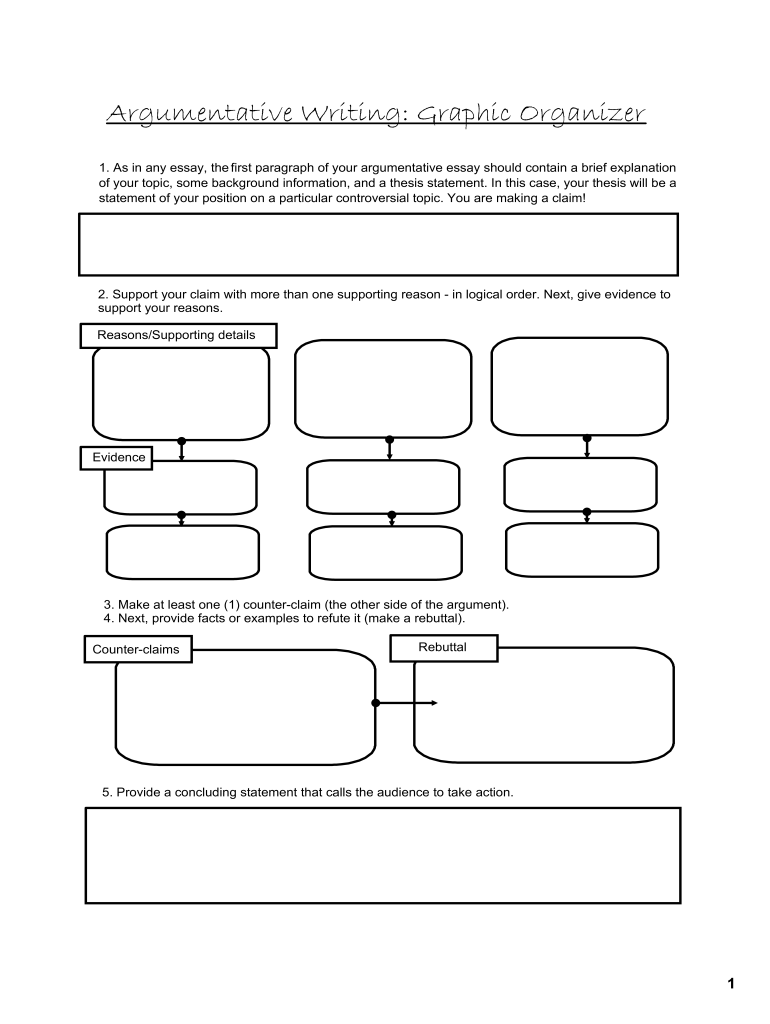
An argumentative essay graphic organizer is a visual tool that helps writers structure their arguments effectively. This organizer typically includes designated areas for elements such as thesis statements, claims, evidence, counterclaims, and rebuttals, which guide the writing process.
Key Components of the Graphic Organizer
A well-designed graphic organizer incorporates essential components that contribute to building a strong argumentative essay. These components include:
- Thesis Statement: This is the central argument or position of the essay. It should be clear and concise, providing a roadmap for the entire piece.
- Supporting Claims: Writers list their main arguments that support the thesis. Each claim should be distinct and logically sound.
- Evidence: For each claim, supporting evidence must be provided. This could include statistics, quotes, or examples, serving to reinforce the claims made.
- Counterclaims: Recognizing opposing viewpoints is crucial in argumentative writing. The graphic organizer should have a section dedicated to counterclaims, ensuring the writer considers multiple perspectives.
- Rebuttals: Following the counterclaims, there should be space for rebuttals. This section addresses the counterarguments and provides evidence or reasoning to refute them.
Crafting the Argumentative Essay
Utilizing a graphic organizer makes the process of writing an argumentative essay more structured and efficient. Here’s how you can leverage it effectively:
-
Brainstorming Ideas: Start by brainstorming relevant topics or issues related to your thesis. Jot these ideas down, focusing on both sides of the argument.
-
Filling in the Organizer: As you brainstorm, fill in the sections of the graphic organizer. Begin with the thesis statement at the top.
-
Developing Claims and Evidence: Under each claim, write down evidence that supports your argument. Integrate various sources to ensure a robust argument.
-
Addressing Counterclaims: Dedicate a section to potential opposition. This not only shows that you are aware of other perspectives but allows you to build a richer, more convincing argument.
-
Finalizing the Rebuttals: Develop clear rebuttals for the counterclaims. This will strengthen the discussion and demonstrate thorough understanding and analysis of the topic.
Importance of a Graphic Organizer in Argumentative Writing
Using a graphic organizer for writing argumentative essays provides several advantages:
-
Clarity and Organization: Visual organization helps writers clearly see the structure of their arguments, ensuring that ideas flow logically.
-
Enhanced Focus: By laying out claims, evidence, and counterarguments visually, writers can focus on each part independently before crafting full paragraphs.
-
Efficient Revisions: When drafting essays, having a clear structure allows for easier revisions. Writers can quickly identify areas that may need more evidence or stronger rebuttals.
-
Facilitates Collaboration: In group settings, graphic organizers enable all participants to contribute ideas in a structured manner. This can lead to diverse perspectives enhancing the overall argument.
Examples of Argumentative Graphic Organizers
Different formats of graphic organizers can be utilized depending on the complexity of the essay:
-
Basic Outline: A simple chart can be used, with columns for claims, supporting evidence, counterclaims, and rebuttals.
-
Detailed Templates: More comprehensive templates include sections for introduction and conclusion as well, guiding the entire writing process.
-
Digital Organizers: Tools like Google Docs or specialized software can be employed to create interactive graphic organizers, allowing for real-time collaboration and editing.
Practical Applications of Argumentative Graphic Organizers
Teachers and students benefit significantly from utilizing graphic organizers. In high school classrooms, students can apply these to a variety of writing tasks, including:
-
Debate Preparation: Students preparing for debates can plot out their arguments visually to ensure robust preparation.
-
Research Projects: Graphic organizers can aid in synthesizing information from multiple sources, improving the overall quality of student research papers.
-
Peer Feedback: Using graphic organizers in peer review sessions can facilitate constructive feedback by clearly outlining arguments and evidence.
In summary, an argumentative essay graphic organizer is a valuable educational tool that fosters clarity in writing, guides critical thinking, and enhances the overall argumentative writing process. Employing such a structure not only aids students in organizing their thoughts but also equips them with essential skills for effective communication.




