
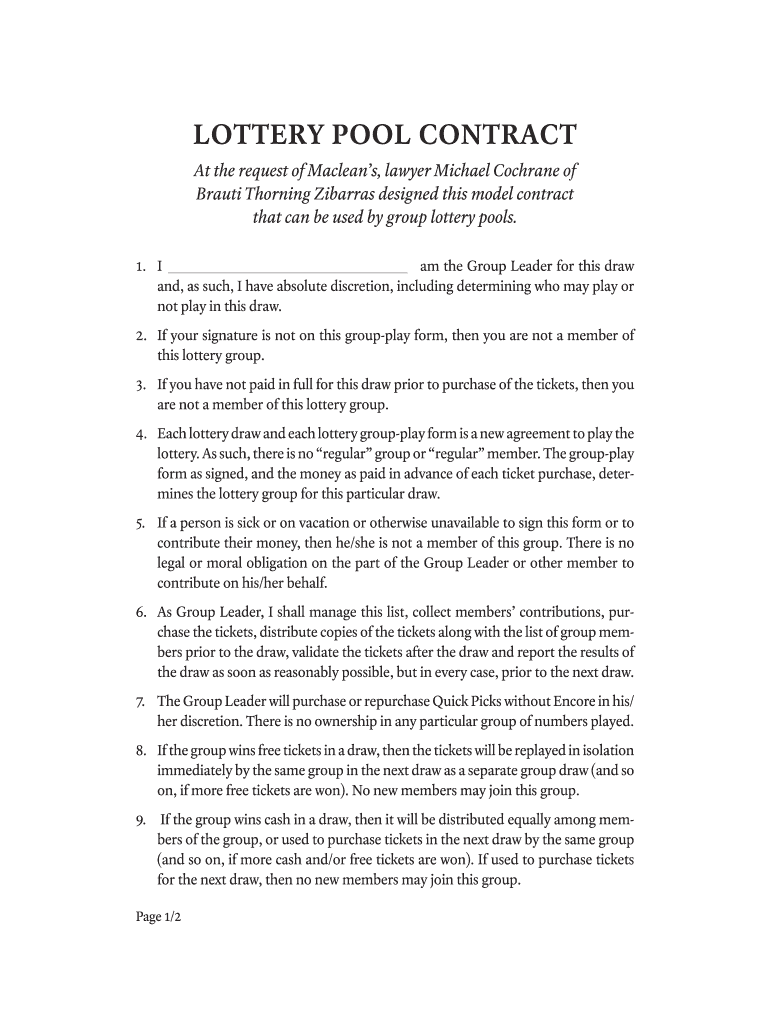







Overview of Lottery Contracts and Their Importance
A lottery contract is essential in regulating participation in lottery pools. It clearly outlines the roles and responsibilities of all involved parties, ensuring transparency and accountability. This document typically covers the rules governing ticket purchases, prize distribution, and member obligations.
Key Components of a Lottery Contract
-
Membership Requirements: Clearly defined criteria for participants, such as age restrictions and payment obligations. Members must often sign the agreement and pay their share to join the pool.
-
Ticket Purchasing Protocols: Detailed instructions on how tickets will be purchased, including deadlines and payment methods. This section ensures that all members understand when and how to contribute financially to the pool.
-
Winnings Distribution: An explanation of how winnings will be divided among members. This part is crucial to avoid potential disputes, specifying whether winnings are split equally or based on contributions.
Dispute Resolution Mechanisms
-
Arbitration Procedures: The contract should outline how disputes will be handled outside of court. This may include appointing an arbitrator and establishing how decisions will be enforced, providing a clear pathway for conflict resolution.
-
Liability Limitations: Often, lottery contracts include clauses that limit the liability of the group leader or organizers regarding any issues that may arise, whether financial or legal.
Creating a Free Lottery Pool Agreement
A free lottery pool agreement can serve as a foundational tool for those wishing to establish a lottery group. Common components include:
-
Editable Templates: Many websites offer downloadable templates that can be customized based on the group's specific needs. These templates provide a legal framework that is easy to modify.
-
Printable Formats: Contracts should be available in formats like PDF for easy printing and distribution among members. This ensures everyone has a physical copy of the agreement for their records.
-
Examples and Customization: By reviewing sample contracts, groups can see various ways agreements are structured, which can aid in creating their own tailored version.
Steps to Customize Your Lottery Contract
- Select a Template: Choose from available templates that align with your group’s structure and objectives.
- Define Roles: Clearly state the roles of each member and the leader, ensuring everyone knows their responsibilities.
- Set Payment Procedures: Specify how and when payments are to be made.
- Outline Prize Distribution: Include clear guidelines for how any winnings will be allocated.
- Finalize and distribute: Review for clarity and completeness, then share with all members for signatures.
Legal and Compliance Aspects of Lottery Agreements
Understanding the legal framework around lottery contracts is crucial for compliance with U.S. laws. Important considerations include:
-
Adherence to State Laws: Lottery laws vary by state, and it’s vital to ensure compliance to avoid legal issues. Each state may have different regulations about private lottery pools and how they can operate.
-
Record-Keeping: Maintain detailed records of all contributions, winnings, and communications. Good documentation can protect against disputes and provide evidence if required legally.
Collaborating in Lottery Pools
Collaboration is vital in lottery pools, which often involve multiple participants working together. Key areas of focus include:
-
Communication Channels: Establishing clear lines of communication among members will ensure that updates about ticket purchases and winnings are effectively shared.
-
Shared Responsibilities: Assigning tasks, such as purchasing tickets or managing funds, can help distribute workload and enhance accountability.
Tools for Team Coordination in Lottery Pools
- Digital Platforms: Utilize online tools for managing entries, distributions, and discussions about the lottery process.
- Shared Documents: Platforms like Google Docs can store and manage the lottery contract collaboratively, allowing all members to access and edit as needed.
Summary of Best Practices for Lottery Agreements
Creating a robust lottery contract requires attention to detail and a thorough understanding of the involved parties' rights and responsibilities. Common best practices include:
- Use Clear Language: Ensure that all terms are understandable to avoid misinterpretations.
- Regular Reviews: Update the contract periodically as laws change or as the group's needs evolve.
- Obtain Legal Advice: Consulting with a legal professional can help ensure that your contract is compliant and covers all necessary aspects effectively.




