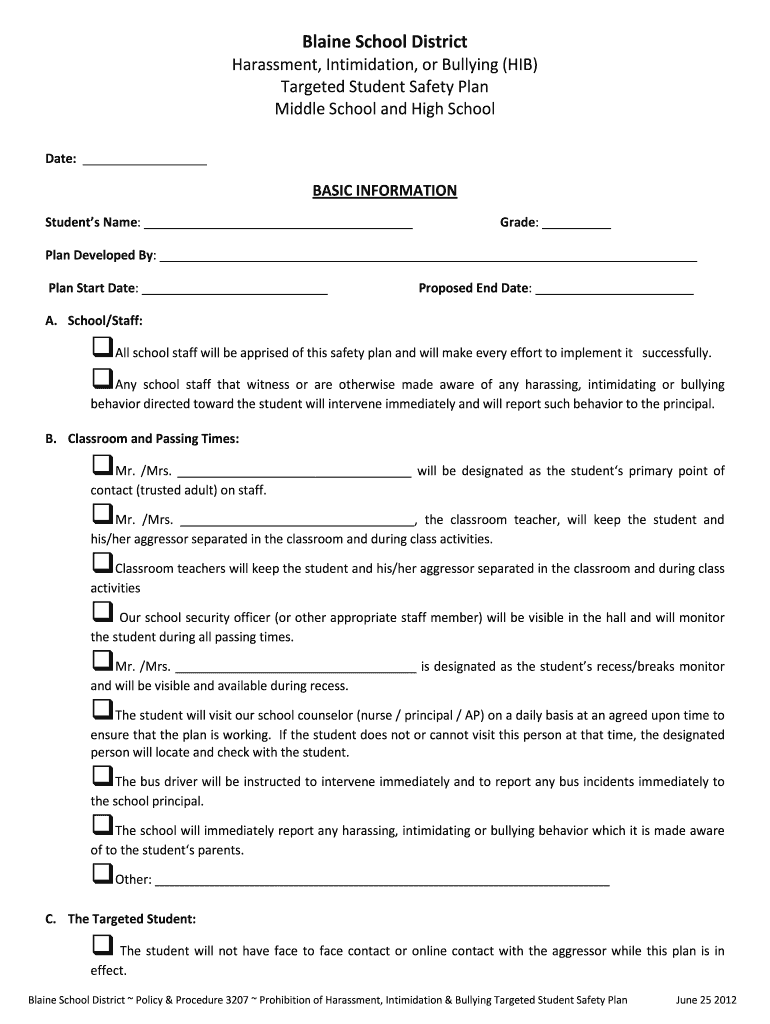







Understanding the High School Student Safety Plan Template
The high school student safety plan template serves as a critical framework to establish safety protocols in a school environment. It outlines strategies designed to ensure the well-being and security of students. This plan includes various aspects of student safety, including emergency procedures, bullying prevention, and mental health considerations.
Key Elements of the High School Student Safety Plan Template
A comprehensive high school student safety plan template should encompass several essential components:
-
Emergency Procedures: Detailed protocols for different emergency scenarios, such as natural disasters, active shooter situations, or medical emergencies. Schools must outline how to communicate these procedures to students and staff.
-
Bullying Prevention Strategies: Approaches to create a safe environment that discourages harassment and bullying. This may include educational programs, peer support systems, and clear reporting mechanisms.
-
Mental Health Resources: Access to counseling services, mental health hotlines, and programs that promote emotional well-being among students. It’s vital to foster a supportive environment where students feel comfortable seeking help.
-
Parent and Community Involvement: Guidelines for involving parents and the local community in safety planning. This could include workshops, informational sessions, or volunteer programs to promote awareness and engagement.
-
Training and Drills: Regular training for staff and students on the safety plan. Conducting drills for various emergencies ensures that everyone understands their roles and responsibilities.
Steps to Complete the High School Student Safety Plan Template
Creating an effective high school student safety plan template involves a systematic approach. Here are the steps to consider:
-
Conduct a Needs Assessment: Identify the specific safety concerns and requirements of the school community through surveys, meetings, and consultations with stakeholders.
-
Develop Protocols: Create detailed descriptions of procedures for emergencies, bullying response, and mental health support tailored to the school's context.
-
Engage Stakeholders: Involve students, parents, teachers, and community members in the review process to gather diverse perspectives and expertise.
-
Document the Plan: Use the template to formally document all elements discussed and agreed upon in a clear and organized manner.
-
Distribute the Plan: Ensure that the finalized plan is shared with all stakeholders. Employ multiple formats, such as printed copies and digital access points.
-
Review and Update Regularly: Set a schedule for regular reviews and updates of the safety plan to adapt to changing needs or in response to incidents.
Legal Use of the High School Student Safety Plan Template
Understanding the legal aspects surrounding the high school student safety plan template is crucial. Schools must comply with local, state, and federal regulations regarding student safety. This may involve:
-
Adhering to State Laws: Familiarity with state-specific guidelines on safety protocols is necessary, as some states might mandate particular practices or strategies to enhance student safety.
-
Privacy Considerations: Ensuring confidentiality when dealing with sensitive information related to students’ mental health or incidents of bullying. Compliance with laws such as the Family Educational Rights and Privacy Act (FERPA) is essential.
-
Liability Issues: Schools must be aware of potential liabilities associated with safety plans. This means clearly defining the responsibilities of school personnel and maintaining accurate records of training and incidents.
Examples of Using the High School Student Safety Plan Template
Real-world applications of the high school student safety plan template illustrate its effectiveness in various contexts:
-
Incident Response: A high school implements its safety plan during a weather emergency, successfully guiding students and staff to safety with designated shelter areas and clear communication protocols.
-
Bullying Prevention Program: Schools that have adopted comprehensive strategies from the safety plan template report decreased bullying incidents. These strategies include workshops that educate students about empathy and conflict resolution.
-
Mental Health Campaigns: Incorporating mental health resources into the plan, a school organizes awareness campaigns, resulting in an increased number of students seeking help from counselors.
Who Typically Uses the High School Student Safety Plan Template
The high school student safety plan template is utilized by various stakeholders within the educational community:
-
School Administrators: They develop and maintain safety protocols and ensure compliance with legal requirements.
-
Teachers and Staff: Frontline personnel who implement safety measures and serve as immediate responders during emergencies.
-
Parents and Guardians: They play a key role by supporting and reinforcing safety measures at home, while also providing feedback on the school's safety initiatives.
-
School Resource Officers: Law enforcement professionals assigned to schools who contribute to the formulation and execution of safety protocols.
Through the integration of these components, schools can create a supportive environment that prioritizes student safety. This approach fosters a sense of security, reduces incidents, and enhances the overall educational experience.