Type text, add images, blackout confidential details, add comments, highlights and more.
02. Sign it in a few clicks
Draw your signature, type it, upload its image, or use your mobile device as a signature pad.
03. Share your form with others
Send it via email, link, or fax. You can also download it, export it or print it out.
How to use or fill out debt writing with our platform
Ease of Setup
DocHub User Ratings on G2
Ease of Use
DocHub User Ratings on G2
Click ‘Get Form’ to open the debt writing document in the editor.
Begin by entering your personal information at the top of the form, including your name, address, and date. This ensures that your correspondence is properly identified.
Next, fill in the company’s details such as their name, contact person, and address. Accurate information is crucial for effective communication.
In the 'Re:' section, specify the case number related to your debt. This helps to reference your specific situation clearly.
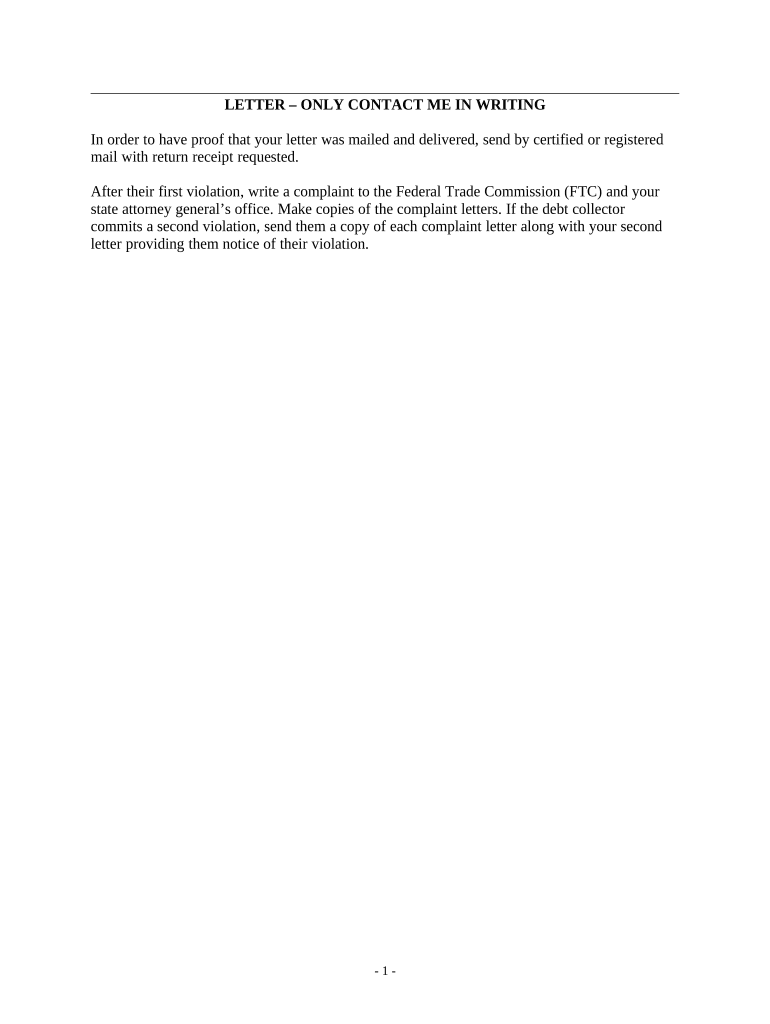
Compose your message in the body of the letter. Clearly state that you wish to be contacted only in writing and outline any violations of communication you have experienced.
Finally, sign off with your name and include any necessary enclosures like copies of complaint letters if applicable.
Start using our platform today for free to streamline your debt writing process!
Allowance for Doubtful Accounts and Bad Debt Expenses
The allowance, sometimes called a bad debt reserve, represents managements estimate of the amount of accounts receivable that will not be paid by customers.Read more
Cookie consent notice
This site uses cookies to enhance site navigation and personalize your experience.
By using this site you agree to our use of cookies as described in our Privacy Notice.
You can modify your selections by visiting our Cookie and Advertising Notice.