






Definition and Meaning of Sample Letter Records
Sample letter records refer to formatted letters used to communicate the absence of records for various inquiries, such as legal proceedings, medical requests, or administrative tasks. They serve as official documentation stating that a search for requested records yielded no results. This letter format is essential for individuals or entities needing to provide clarity or validation regarding missing documentation.
Use Cases for Sample Letter Records
- Legal Context: In legal scenarios, a sample letter of no record may be required when parties involved in a case need to demonstrate that certain evidence or documentation does not exist.
- Medical Requests: Healthcare providers might issue a no medical records found letter when patients request their medical history but no records are available in the system.
- Administrative Procedures: In administrative contexts, such as applying for government benefits, a certification of no records found sample may be needed as part of the process.
How to Use the Sample Letter Records
Utilizing sample letter records effectively hinges on understanding the situation at hand and adhering to specific formatting protocols. Follow these guidelines to ensure proper usage:
-
Identify the Need: Determine why the letter is necessary. Is it for legal validation, healthcare queries, or administrative purposes?
-
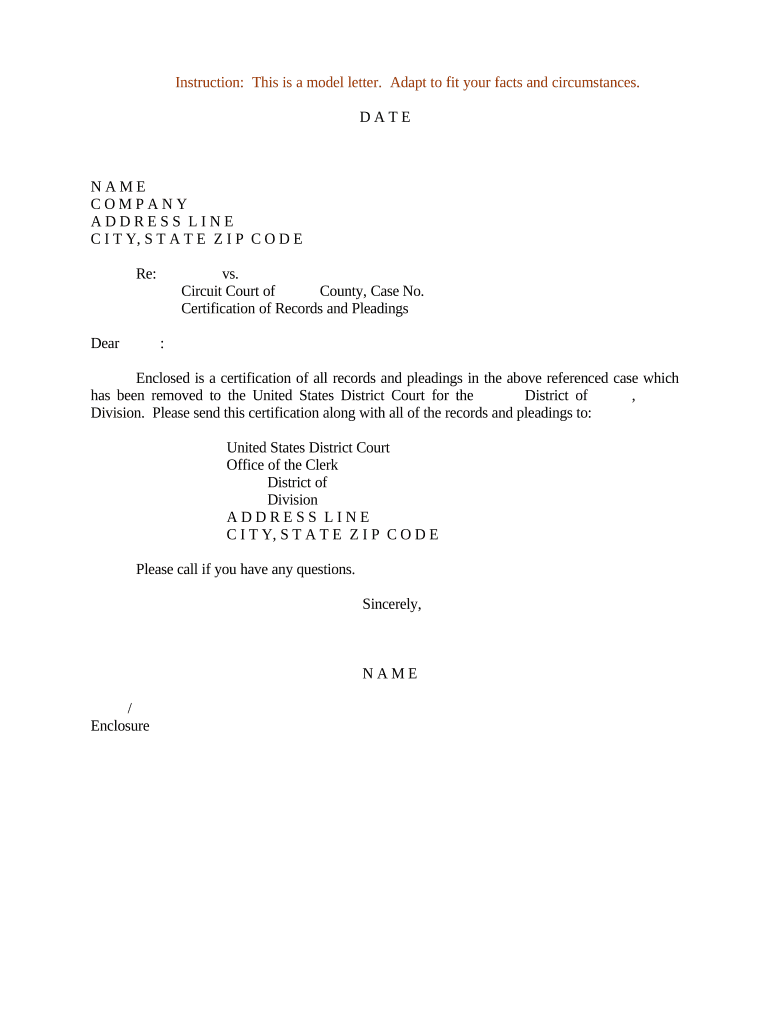
Choose the Right Format: Use a standard business letter format, which typically includes the sender's address, the date, the recipient’s address, a subject line, and a professional salutation.
-
Include Essential Information:
- The specific records requested.
- Confirmation of record searches conducted.
- A clear statement indicating no records were found.
-
Sign and Date: Ensure the letter is signed by the appropriate authority (e.g., a custodian of records) and includes the date of issuance.
Following these steps not only provides clarity but also reinforces the credibility of the letter.
Steps to Complete the Sample Letter Records
Completing a sample letter records involves a systematic approach to ensure that all required information is included and clearly presented. The following steps outline the process:
-
Header Preparation:
- Include your organization's name and contact details at the top.
- Add the date of writing.
- Include the recipient's name and address.
-
Subject Line: Clearly state the purpose of the letter in the subject line to aid in quick identification, such as "Certification of No Records Found".
-
Opening Statement:
- Use a greeting (e.g., "Dear [Recipient's Name]").
- State the purpose of the letter immediately thereafter.
-
Detail the Search Process:
- Explain the methods used to search for the records.
- Mention time frames and department involvement.
-
Conclude with a Clear Statement:
- Reaffirm that no records were found related to the request.
- Offer to provide further assistance if needed.
-
Review and Edit: Before finalizing, proofread the letter for clarity and accuracy, ensuring all information is correct.
-
Signature: Ensure the letter is signed by the authorized party and include any necessary titles or positions for verification.
Key Elements of the Sample Letter Records
A well-structured sample letter records should always include several vital components to ensure its validity and efficacy. These key elements are outlined below:
Important Components
- Date: The date the letter is issued.
- Sender's Information: Complete name, title, and contact information of the sender.
- Recipient's Information: Full name and address of the individual or organization receiving the letter.
- Subject Line: A clear indication of the letter’s purpose.
- Statement of Search: An explicit mention of the search conducted for the requested records.
- Conclusion: A definitive statement indicating the absence of records and an offer for further assistance if desired.
Legal Use of the Sample Letter Records
The legal ramifications of using a sample letter of no record are significant, especially in circumstances where documentation is critical. Here's a breakdown of its legal utility:
- Evidence in Court: Such letters can be submitted as evidence to validate claims of missing information in legal proceedings.
- Healthcare Compliance: Providers may rely on these letters to fulfill legal requirements regarding record-keeping and patient requests.
- Regulatory Adherence: Various agencies may require a certification of no records found when conducting audits or reviews, making these letters a critical compliance tool.
Incorporation of Legal Standards
- ESIGN Act Compliance: Ensure that any electronic versions of these letters comply with laws governing electronic signatures and record-keeping.
- Retention Policies: Organizations must adhere to retention policies governing the storage of record search results and correspondence, which can include these letters.
By grasping the legal use of these sample letters, individuals and organizations can better navigate the complexities of documentation in various sectors.