




01. Edit your sample letter to request medical records from doctors pdf online
Type text, add images, blackout confidential details, add comments, highlights and more.

Type text, add images, blackout confidential details, add comments, highlights and more.

Draw your signature, type it, upload its image, or use your mobile device as a signature pad.

Send sample letter to request medical records from doctors via email, link, or fax. You can also download it, export it or print it out.
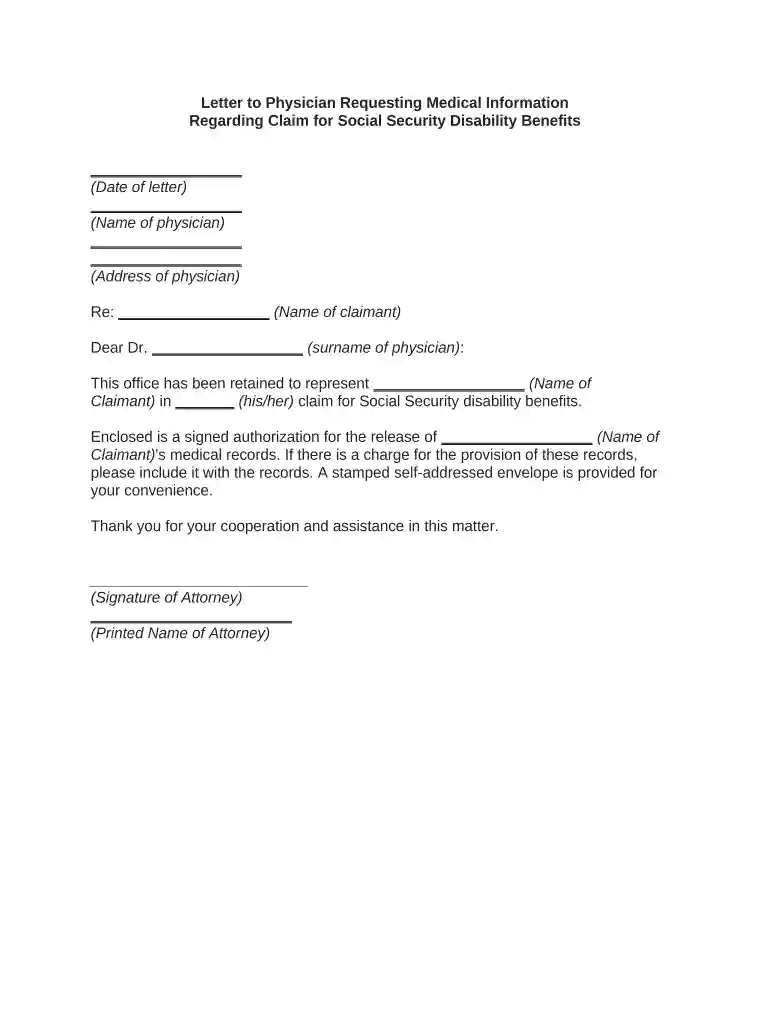
A letter requesting medical records is a formal document used by patients or their representatives to obtain medical information from healthcare providers. This letter typically includes personal identification details, a clear request for specific medical records, and necessary authorization to comply with HIPAA regulations. The purpose of such a letter can vary, including but not limited to seeking documentation for insurance claims, legal cases, or personal health records. It serves as a crucial tool in facilitating the transfer of medical information efficiently and securely.
Patients or their representatives may require various types of medical records, such as:
When drafting a letter to request medical records, specific formatting and content requirements should be followed to ensure clarity and compliance.
Personal Information: Begin with the sender's full name, address, phone number, and email at the top of the letter. Following this, include the date.
Recipient Details: Clearly state the healthcare provider's name, their title, the facility's name, and full address to which the request is directed.
Subject Line: A succinct subject line, such as "Request for Medical Records," can be beneficial.
Introduction Paragraph: Introduce yourself, including pertinent information such as date of birth and patient identification number (if applicable).
Request Details: Clearly specify the records you are requesting. Be explicit about which documents you need and the relevant dates of treatment or consultations.
Authorization Statement: Include a statement giving permission for the release of the records, typically referring to HIPAA requirements.
Closure and Signature: Close the letter with a polite thank you, providing your signature and printed name.
When composing a request for medical records, certain key elements must be included to ensure the request is processed smoothly.
Clear Identification: Including your full name, date of birth, and contact information enables healthcare providers to locate your records efficiently.
Specificity in Records Requested: Instead of a generic request, detailing specific documents or time frames related to your medical history can expedite the process.
Authorization for Release: Mention your consent for the release to comply with privacy laws, providing a signature line for the healthcare provider.
Mention of Fees: If there are any fees associated with obtaining the records, inquire about these, specifying your willingness to cover reasonable costs.
Many individuals seeking to obtain their medical records may have questions about the process. Some common queries include:
How long does it take to obtain medical records? The timeframe can vary but expect a minimum of 30 days for processing.
What if my doctor does not respond? If there is no response after the allotted time, consider following up with a phone call to the office.
Can I refuse the charges for my records? While patients can inquire about fees, healthcare providers may charge for the time spent retrieving and copying records regardless.
Are there any exceptions to accessing my medical records? Certain situations, such as ongoing investigations or specific legal restrictions, may limit access to particular documents.
Understanding the legal framework surrounding medical records is essential for both patients and healthcare providers. The Health Insurance Portability and Accountability Act (HIPAA) provides guidelines for patient privacy and identifies under what conditions medical records can be released.
Patient Consent: Medical records can typically only be released with explicit permission from the patient or their legal representative.
Immutability of Certain Records: Some documents, such as mental health records or substance abuse treatment records, may require additional protections and authorization before release.
Compliance Requirements: The healthcare provider is mandated to respond to requests within specific timeframes while abiding by legal stipulations regarding fees and documentation.
It is important to be aware that regulations concerning medical records, including requests and fees, can differ significantly between states.
Time Frame for Release: Some states mandate a quicker response time than the federally mandated 30 days.
Fees for Copies: Each state has its regulations regarding permissible charges for copying medical records, which can vary widely.
Rights of Access: Certain states extend additional rights to patients, such as the ability to request amendments to their records or stipulating that certain types of records may be exempt from fees.
Being informed of these regulations can facilitate a smoother process in obtaining medical records, ensuring compliance with both state and federal laws.
At DocHub, your data security is our priority. We follow HIPAA, SOC2, GDPR, and other standards, so you can work on your documents with confidence.

I am requesting that you send me all of the information used to review my request including: 1. A detailed description of why my claim was denied. 2. A writtenRead more
Custodian of Records or Healthcare Provider,. I am requesting medical records, including but not limited to diagnosis, treatments, and prescriptions, forRead more


