






Definition and Purpose of CSI Form 13.1A
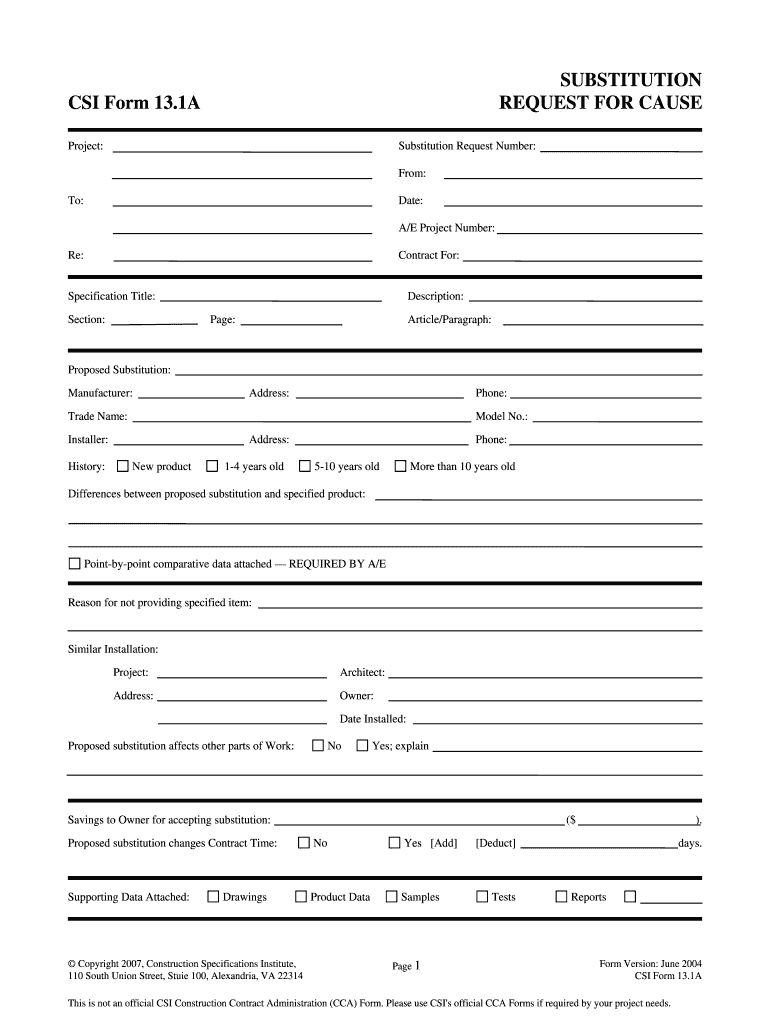
CSI Form 13.1A, also known as the CSI substitution request form, is a standardized document used in the construction industry to propose alternative products in place of specific items originally specified in contract documents. Typically employed during construction projects, this form facilitates communication between contractors, architects, and engineers, ensuring that all parties are aligned regarding changes to project materials.
This form serves multiple purposes:
- Proposed Substitution: It enables contractors to suggest alternate materials or equipment that may offer better performance, availability, or cost-effectiveness than the originally specified versions.
- Detailing Justifications: Contractors are required to provide detailed reasons for the proposed change, including performance comparisons and how the substitution aligns with project requirements.
- Supporting Data: The request must be backed by supporting data, certifications, or specifications to validate that the proposed alternative meets or exceeds the original requirements.
Understanding the function of CSI Form 13.1A is essential for contractors and parties involved in construction projects, as proper use can lead to improved efficiencies and cost savings.
How to Use CSI Form 13.1A
Using CSI Form 13.1A involves several clear steps that ensure effective communication of proposed changes in construction materials. Proper filling out of the form is crucial for approval by architects or engineers, as inaccuracies or omissions may delay project timelines.
-
Select the Right Form: Start by ensuring you have the correct version of the CSI Form 13.1A, which is specifically designed for substitution requests.
-
Fill in Project Information: Begin with general project details, such as the project name, location, and contract number. Accurate details help facilitate the review process.
-
Detail Proposed Substitution: Include comprehensive information about the alternative product. This section should detail the proposed product's specifications, manufacturer, model number, and any performance data that demonstrates its suitability.
-
Justify the Change: Clearly articulate reasons for the substitution, including any benefits over the original product such as cost savings, improved performance, or enhanced availability.
-
Attach Supporting Documentation: Provide any necessary documentation that further substantiates the substitution request, such as technical data sheets or certifications of compliance.
-
Submit to Relevant Parties: After completing the form, submit it to the architect or engineer for review. Monitor for feedback or any requests for additional information.
Effective use of the CSI Form 13.1A not only streamlines the substitution process but also fosters better collaboration between all stakeholders involved in the construction project.
Steps to Complete the CSI Form 13.1A
Completing the CSI Form 13.1A accurately requires careful attention to detail. Below are essential steps to follow for ensuring all required information is provided:
-
Review Contract Documents: Before filling out the form, review the original contract documents to identify the specific products or materials that are being substituted.
-
Gather Product Information: Collect detailed information about the alternative product. This may include:
- Performance specifications
- Compliance certifications
- Manufacturer contact details
-
Complete the Form:
- Start with project identification details.
- Fill in the specifications of the proposed substitution.
- Provide justifications that emphasize the benefits of the alternative product.
-
Attach Necessary Documentation: Include any supporting documents that validate your claims regarding performance or compliance of the proposed substitution. Such documentation can add credibility to your request and facilitate approval.
-
Review and Revise: Before submission, review the completed form for clarity and accuracy. Consider having a colleague or supervisor check the form to ensure nothing is overlooked.
-
Submit for Approval: Send the completed CSI Form 13.1A to the architect or engineer overseeing the project. Understand that feedback may be expected, so be prepared to provide additional information if needed.
By following these steps, contractors can significantly enhance the likelihood of their substitution requests being approved.
Key Elements of CSI Form 13.1A
Understanding the key elements of CSI Form 13.1A can facilitate a smoother substitution request process. Each component of the form must be completed thoroughly to ensure clarity and effective communication.
- Project Information: Includes the project name, address, and number, establishing the context for the request.
- Item Description: A precise description of the original product, including manufacturer and model number, sets a clear benchmark against which the requested substitution will be assessed.
- Proposed Substitution Details: This section includes the name of the proposed alternative, along with detailed performance specifications and characteristics that substantiate its relevance.
- Justification for Change: Clear explanations articulating the advantages of the substitution over the original specification are essential. This may involve discussing factors such as availability, cost, performance benefits, or compliance with project requirements.
- Supporting Data and Documentation: Additional information such as certifications, technical specifications, and comparison charts can bolster the request's validity and enhance the chances of approval.
Importance of Thoroughness
Completing each element thoroughly is vital, as unclear or incomplete information can lead to rejection of the substitution request, thereby delaying project timelines and escalating costs.
Examples of Using CSI Form 13.1A
Practical scenarios illustrate how the CSI Form 13.1A can be effectively employed during the construction process, showcasing its utility in real-world applications.
- Alternative Materials for Cost Savings: A contractor proposes a lower-cost flooring option that meets durability requirements. The substitution request outlines the original product, the alternative, and includes a detailed cost comparison, demonstrating potential savings for the project budget.
- Upgrading Equipment: In a mechanical installation project, a contractor might suggest an updated HVAC system with higher energy efficiency ratings. The form would detail both systems, emphasizing the long-term cost benefits associated with using the newer model.
- Addressing Supply Chain Issues: When a specified material becomes unavailable, a contractor could use the form to propose a similar item that is readily available. This request needs to effectively show how the alternative meets or exceeds the original specifications.
These examples highlight how the CSI Form 13.1A is not only a bureaucratic tool but also a mechanism to improve construction quality and cost efficiency while maintaining compliance with project specifications.
Common Users of CSI Form 13.1A
Several stakeholders in the construction industry frequently utilize the CSI Form 13.1A, contributing to its importance within project management workflows.
- General Contractors: Often the primary users, they propose substitutions on behalf of subcontractors, ensuring materials align with project budgets and timelines.
- Architects and Engineers: Responsible for reviewing substitution requests, they assess whether proposed alternatives meet design requirements and project specifications.
- Subcontractors: May fill out this form when they identify superior materials or products that enhance their contributions to the project.
- Construction Managers: Oversee the project and may need to ensure that substitutions do not impact overall project performance or compliance with building codes.
Understanding the diverse user base for the CSI Form 13.1A can help streamline the communication and approval processes necessary for maintaining project momentum.