Type text, add images, blackout confidential details, add comments, highlights and more.
02. Sign it in a few clicks
Draw your signature, type it, upload its image, or use your mobile device as a signature pad.
03. Share your form with others
Send quitclaim deed via email, link, or fax. You can also download it, export it or print it out.
How to use or fill out dc quitclaim deed with our platform
Ease of Setup
DocHub User Ratings on G2
Ease of Use
DocHub User Ratings on G2
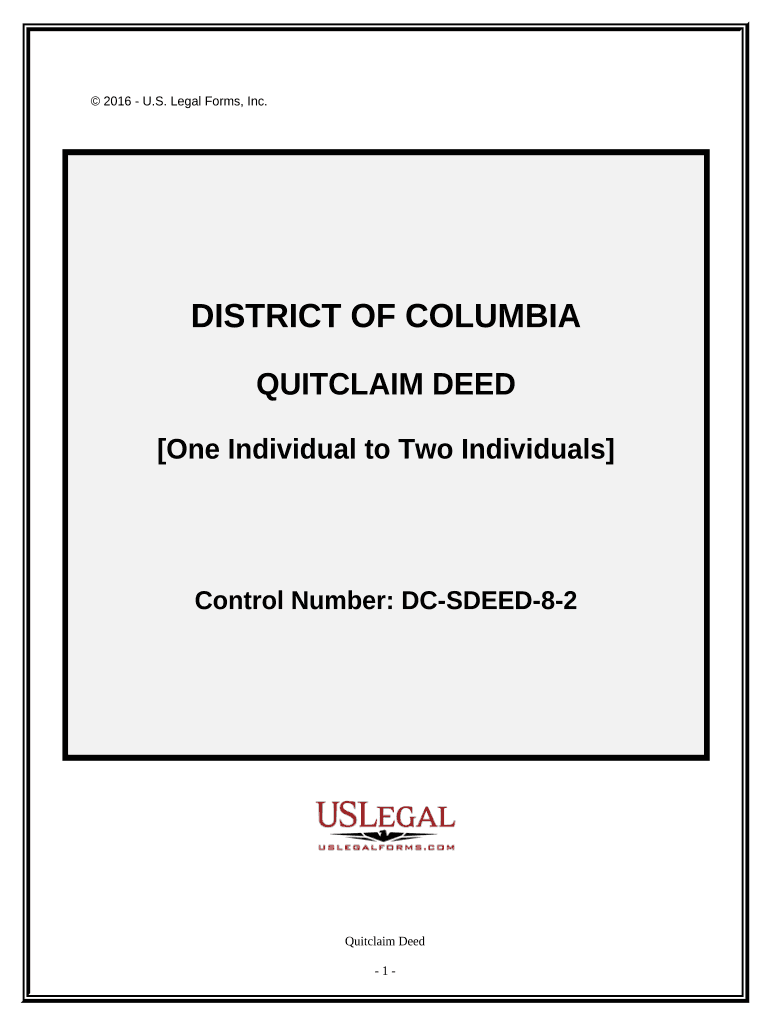
Click ‘Get Form’ to open the dc quitclaim deed in the editor.
Begin by entering the date of the deed in the designated field. This is crucial for legal documentation.
In the first part, input the name of the individual transferring the property. Ensure accuracy as this identifies the grantor.
Next, enter the names of the individuals receiving the property in the second part. They will be joint tenants with rights of survivorship.
Specify the consideration amount in words and numbers, which represents what is being exchanged for the property.
Fill in the legal description of the property, including lot number, square number, and street address. If necessary, refer to Exhibit A for detailed information.
Finally, ensure that a witness signs and prints their name next to your signature as well as a notary public certifying your execution of this deed.
Start using our platform today to complete your dc quitclaim deed online for free!
Using a quitclaim deed can introduce several risks in the estate planning process. Since a quitclaim deed doesnt guarantee clear ownership, you might unknowingly transfer property with liens or other claims against it.
What are the risks of a quitclaim?
However, this approach has certain risks, so its not always the best option. Using a quitclaim deed might create tax issues or result in a loss of control of the property after the transfer. Additionally, the property could still require probate if you dont handle the transfer correctly.
What is the most common circumstance in which someone will issue a quitclaim deed?
Quitclaim deeds can be used in a number of different situations, though they are most common when transferring property between family members or spouses. For example, after a divorce one spouse may sign a quitclaim deed to officially sign over ownership of the home.
What is the most common use of a quit claim deed?
Quitclaim deeds are typically used to transfer property in non-sale situations, such as transfers of property between family members.
What are the requirements for a deed in DC?
In DC, in order to be valid, a deed must contain the names of the grantor and grantee, a description of the property sufficient to identify it with reasonable certainty, and the interest or estate intended to be granted, is sufficient, if executed, acknowledged, and recorded.
quitclaim deed dc
Dc quitclaim deed templateDc quitclaim deed formDc quitclaim deed pdfDc quitclaim deed sampleDc quitclaim deed form pdfDc quitclaim deed exampleDC deed requirementsDC Recorder of Deeds online
Security and compliance
At DocHub, your data security is our priority. We follow HIPAA, SOC2, GDPR, and other standards, so you can work on your documents with confidence.
The following is an overview of the steps to filing a quitclaim deed. Obtain a quitclaim deed form. Your very first step is obtaining your quitclaim deed. Fill out the quitclaim deed form. Get the quitclaim deed docHubd. Take the quitclaim deed to the County Recorders Office. File the appropriate paperwork.
Who benefits the most from a quitclaim deed?
The quitclaim deed simply transfers any interest they may have to the other party. Because of the lack of title guarantees, quitclaim deeds are most often used to transfer property between two parties who know and trust each other, such as family members.
quitclaim deed form district of columbia
athenahealth, Inc.
Deed. A quitclaim deed substantially in the form of Exhibit C attached hereto and incorporated herein by this reference (. Deed) executed and acknowledged
Recorder of Deeds Frequently Asked Questions (FAQs) | otr
The Recorder of Deeds is located at 1101 4th Street, SW, Suite 500, Washington, DC 20024, and is open from 9 am to 3 pm for purposes of recording a deed.
Cookie consent notice
This site uses cookies to enhance site navigation and personalize your experience.
By using this site you agree to our use of cookies as described in our Privacy Notice.
You can modify your selections by visiting our Cookie and Advertising Notice.