




01. Edit your personal trainer questionnaire for clients online
Type text, add images, blackout confidential details, add comments, highlights and more.

Type text, add images, blackout confidential details, add comments, highlights and more.

Draw your signature, type it, upload its image, or use your mobile device as a signature pad.

Send personal training intake form via email, link, or fax. You can also download it, export it or print it out.
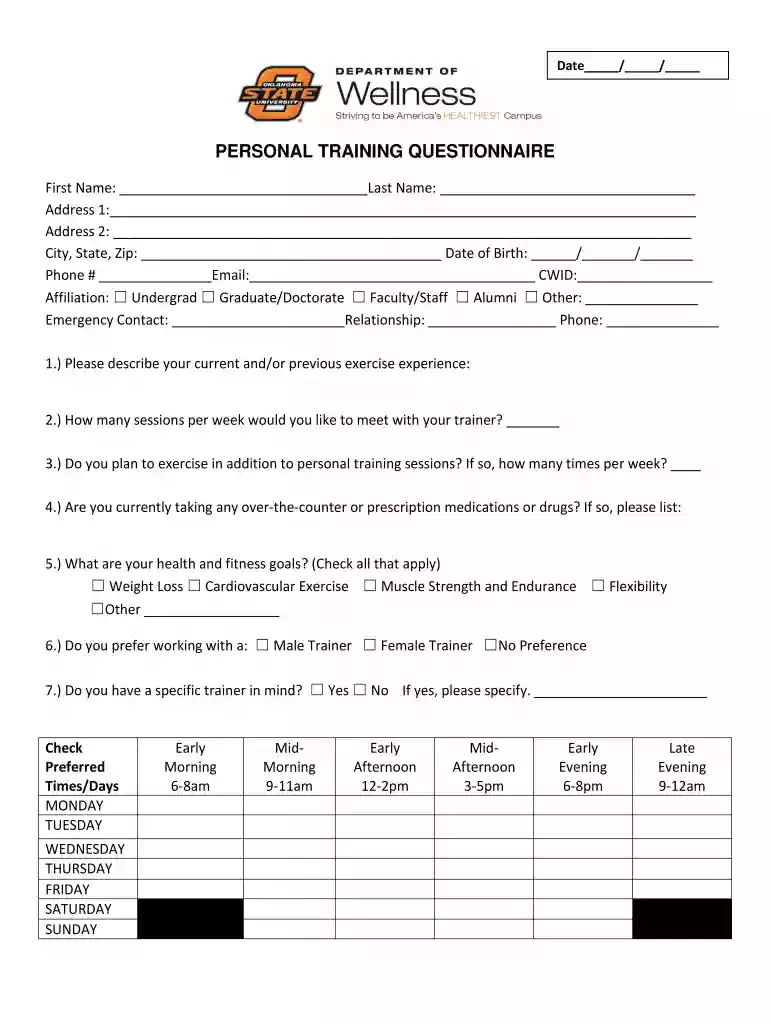
The personal training questionnaire for clients is an essential tool for fitness professionals seeking to gather comprehensive information about their clients. This form is designed to inform the trainer about various aspects of the client’s health, fitness history, and personal goals. It serves as both a foundational element for the trainer-client relationship and a crucial step in developing personalized training programs.
The personal training questionnaire typically includes several critical sections that clients must complete:
Personal Information: This section gathers basic details such as name, age, contact information, and emergency contacts. Understanding a client’s background helps trainers provide appropriate care.
Health History: Clients provide information on past injuries, surgeries, and current medical conditions. This section often includes questions about cardiovascular health, joint issues, and any medications that might affect exercise routines.
A significant goal of the questionnaire is to identify the client's fitness objectives and preferences. This section may detail:
Desired Outcomes: Clients can specify whether they aim to lose weight, gain muscle, improve endurance, or enhance overall health.
Workout Preferences: Understanding whether clients prefer group classes, one-on-one training, or specific types of exercises (e.g., weight lifting, cardiovascular) allows trainers to tailor sessions effectively.
The questionnaire often delves into the client’s previous experience with exercise, detailing:
Past Fitness Activities: Clients can list any previous workouts, sports participation, or gym experience, providing the trainer with insight into their familiarity with various fitness modalities.
Current Activity Level: This part assesses how frequently and intensely clients engage in physical activities, giving trainers a baseline to work from.
To ensure the safety of all participants, many personal training questionnaires include a Physical Activity Readiness Questionnaire. This vital assessment helps identify potential medical risks:
It is also essential for the questionnaire to lay out realistic expectations regarding the training process:
Commitment Levels: Clients should indicate their availability and willingness to commit to training schedules, enabling trainers to craft a realistic program that fits within the client's lifestyle.
Potential Challenges: A section for clients to express any barriers they foresee in achieving their fitness goals—such as time constraints, motivation issues, or lack of support—can be valuable for addressing concerns proactively.
The personal training questionnaire serves as a comprehensive tool that not only streamlines the assessment and planning process for trainers but also actively engages clients in their fitness journey. By collecting pertinent information regarding personal health, fitness goals, and past experiences, trainers can develop tailored programs that foster success and adherence to healthier lifestyles.
At DocHub, your data security is our priority. We follow HIPAA, SOC2, GDPR, and other standards, so you can work on your documents with confidence.
To provide sample needs assessment instruments, templates, and training materials, which can be adapted for future assessments. 4. To discuss dissemination ofRead more
This form is designed as a self-help questionnaire. Many health benefits are associated with regular exercise which is why the.Read more


