







Understanding the Biennial Controlled Substance Inventory Log
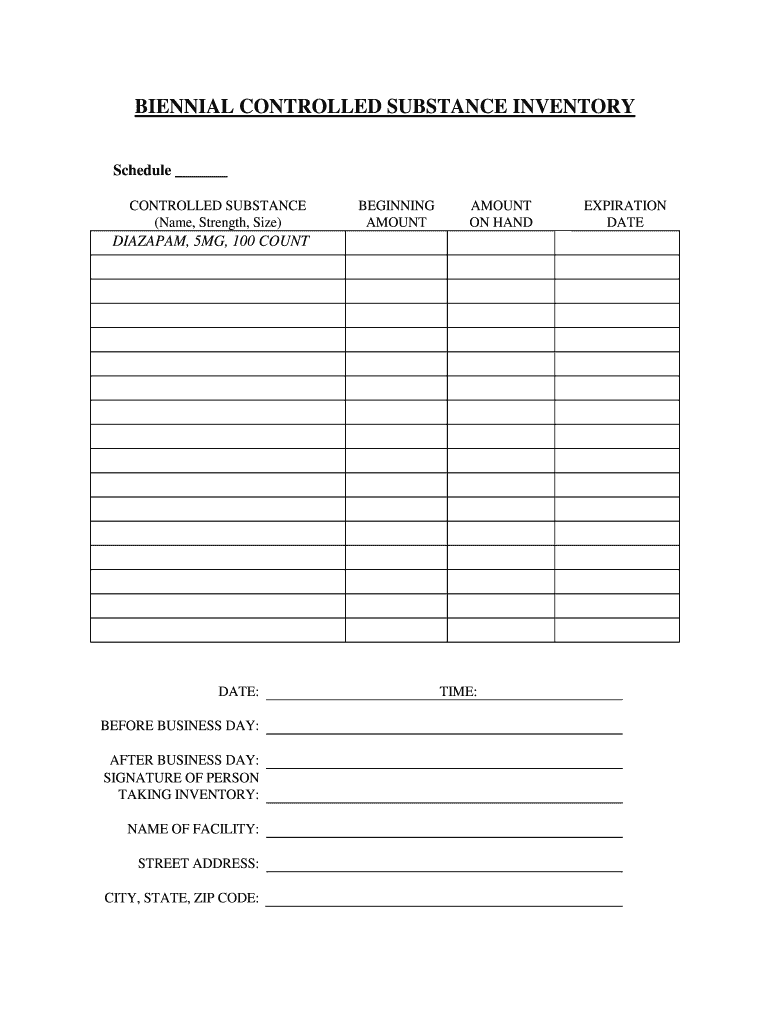
The biennial controlled substance inventory log is an essential tool for facilities that handle controlled substances. This inventory log helps in maintaining compliance with federal regulations set by the Drug Enforcement Administration (DEA). Specifically, it provides a structured format for documenting the quantities and specifics of controlled substances, ensuring that organizations properly account for these drugs every two years.
Definition and Purpose
The biennial inventory log is designed to track the amount of controlled substances on hand at any given time. Its primary purpose is to ensure accurate reporting and compliance with the requirement of conducting a comprehensive inventory every two years. This form aids organizations in identifying discrepancies, detecting theft, and preventing improper use of controlled substances.
- Key Objectives:
- Maintain accurate records of controlled substances.
- Ensure compliance with DEA regulations.
- Facilitate identification of irregularities or discrepancies.
Essential Information Required
Completing the biennial controlled substance inventory log involves documenting specific details for each controlled substance. This includes:
- Identification of the Substance:
- The drug's name and the corresponding DEA schedule classification (e.g., Schedule II, III).
- Quantity on Hand:
- Accurate count of the quantity available, accounting for units such as bottles, vials, or individual doses.
- Strength and Formulation:
- Details regarding the strength (e.g., milligrams, percent) and specific formulation (e.g., liquid, tablet).
- Expiration Dates:
- Recorded expiration dates are essential for ensuring substances are used appropriately and not past their effective period.
- Facility Information:
- The log must include the name, address, and registration number of the facility responsible for the controlled substances.
Steps to Complete the Log
Proper completion of the biennial controlled substance inventory log involves several systematic steps:
- Gather All Necessary Documentation:
- Collect records of previous inventories, purchase records, and usage logs.
- Conduct a Physical Count:
- Perform a comprehensive physical count of all controlled substances on hand in the facility.
- Document the Information:
- Fill out the log, ensuring that all required fields are accurately completed and easy to read.
- Verify Counts Against Records:
- Cross-check the physical count with existing inventory records to identify any discrepancies.
- Submit the Log:
- Depending on the facility’s requirements, submit the completed log to the appropriate regulatory body or retain it for internal review.
Compliance and Legal Considerations
It is crucial for facilities handling controlled substances to adhere closely to the legal requirements surrounding the biennial inventory process. Non-compliance can result in serious consequences, including fines and loss of licensure. Key compliance aspects include:
- Frequency of Inventory:
- The inventory must be conducted at least every two years, although some facilities may elect to do it more frequently.
- Record Keeping:
- Maintain all records for a specified period, as outlined by DEA regulations, often up to two years.
- Discrepancy Reporting:
- Any significant discrepancies should be reported immediately, and investigations should follow to address potential issues such as diversion or theft.
Common Mistakes to Avoid
When filling out the biennial controlled substance inventory log, certain pitfalls should be avoided to ensure compliance and accuracy:
- Incomplete Documentation:
- Ensure all required sections are filled in with accurate information.
- Failure to Cross-Check:
- Do not skip the verification step; discrepancies can lead to serious ramifications.
- Neglecting Expiration Dates:
- Failure to account for expired substances can endanger patient safety and compliance.
Maintaining a detailed and accurate biennial controlled substance inventory log is essential for facilities to comply with DEA regulations and ensure the safe handling of these substances. By following best practices and understanding the log's components, organizations can effectively manage their controlled substances, promoting safety and accountability.




