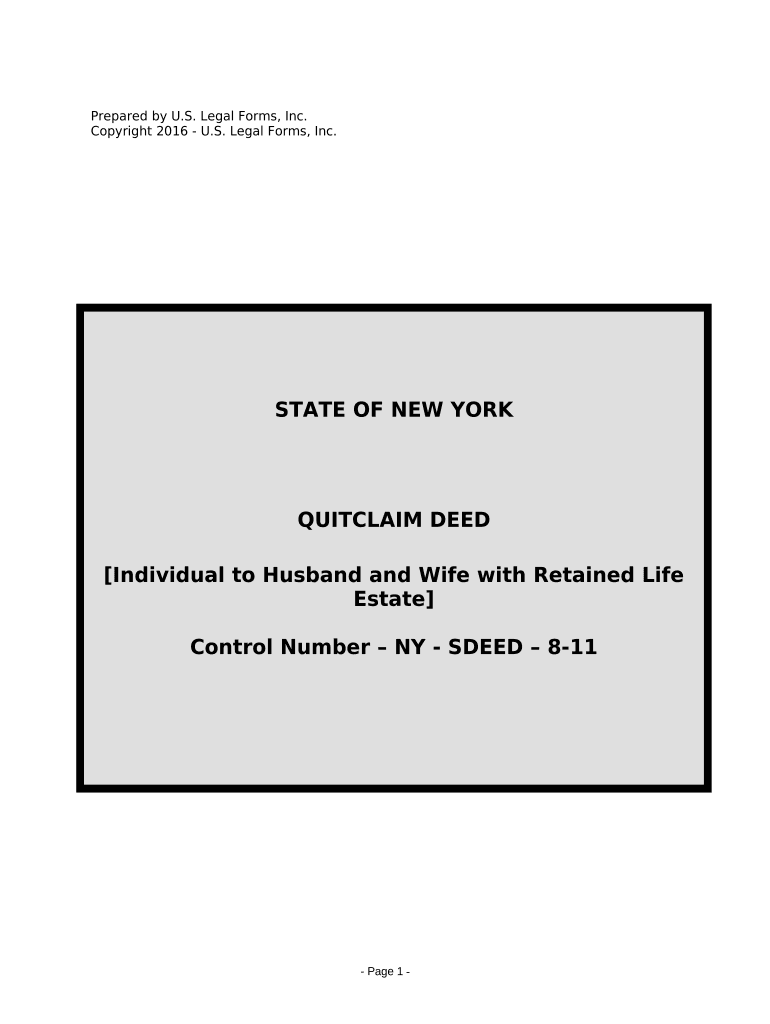
Retained life estate 2026

Get Form
retained life estate Preview on Page 1

Here's how it works

01. Edit your form online
Type text, add images, blackout confidential details, add comments, highlights and more.
02. Sign it in a few clicks
Draw your signature, type it, upload its image, or use your mobile device as a signature pad.
03. Share your form with others
Send it via email, link, or fax. You can also download it, export it or print it out.

How to use or fill out retained life estate with our platform

Form edit decoration
9.5
Ease of Setup
DocHub User Ratings on G2
9.0
Ease of Use
DocHub User Ratings on G2
  1. Click ‘Get Form’ to open the retained life estate document in the editor.
  2. Begin by filling in the Grantor's name and marital status. Ensure accuracy as this identifies the individual transferring the property.
  3. Next, enter the names of the Grantees (Husband and Wife) who will receive the property. This section is crucial for establishing joint tenancy.
  4. Provide a detailed legal description of the property in the designated area. If you have an attachment, ensure it is referenced correctly.
  5. Indicate any retained life estate by specifying who retains it. This ensures clarity on property rights post-transfer.
  6. Complete the acknowledgment section, ensuring that all signatures are obtained where required. This validates the document legally.

Start using our platform today to streamline your document editing and signing process for free!

be ready to get more

Complete this form in 5 minutes or less

Get form

Got questions?

We have answers to the most popular questions from our customers. If you can't find an answer to your question, please contact us.
Contact us
WHAT IS A RETAINED LIFE ESTATE? With a retained life estate, the donor irrevocably deeds a personal residence or farm to a charitable. organization, but retains the right to live in it for the rest of the donors life, a term of years, or a. combination of the two.
Life estates simplify the transfer of ownership in a property when you die, letting the recipient avoid dealing with a will or probate. In exchange, the grantor gives up some flexibility and rights related to owning the property. For example, they cant sell it without the grantees permission.
A life estate is a property, usually a residence, that an individual owns and may use for the duration of their lifetime. This person is called the life tenant and shares ownership of the property with a second person.
A will is a legal document outlining how someones property is to be distributed after their death. A life estate gives the owner of a property the right to live in or otherwise use the property while alive, after which ownership passes to someone else. Usually, a life estate overrides a will.
There is no simple way to reverse a life estate because a life estate deed is a legal transfer of the title of a property. This is legally binding and the transaction is complete when the life estate is executed. Essentially, in order to reverse a life estate both parties would need to agree to make it happen.

Security and compliance

At DocHub, your data security is our priority. We follow HIPAA, SOC2, GDPR, and other standards, so you can work on your documents with confidence.

Learn more
ccpa2
pci-dss
gdpr-compliance
hipaa
soc-compliance
be ready to get more

Complete this form in 5 minutes or less

Get form