






Definition and Purpose of a Disclaimer Deed Form
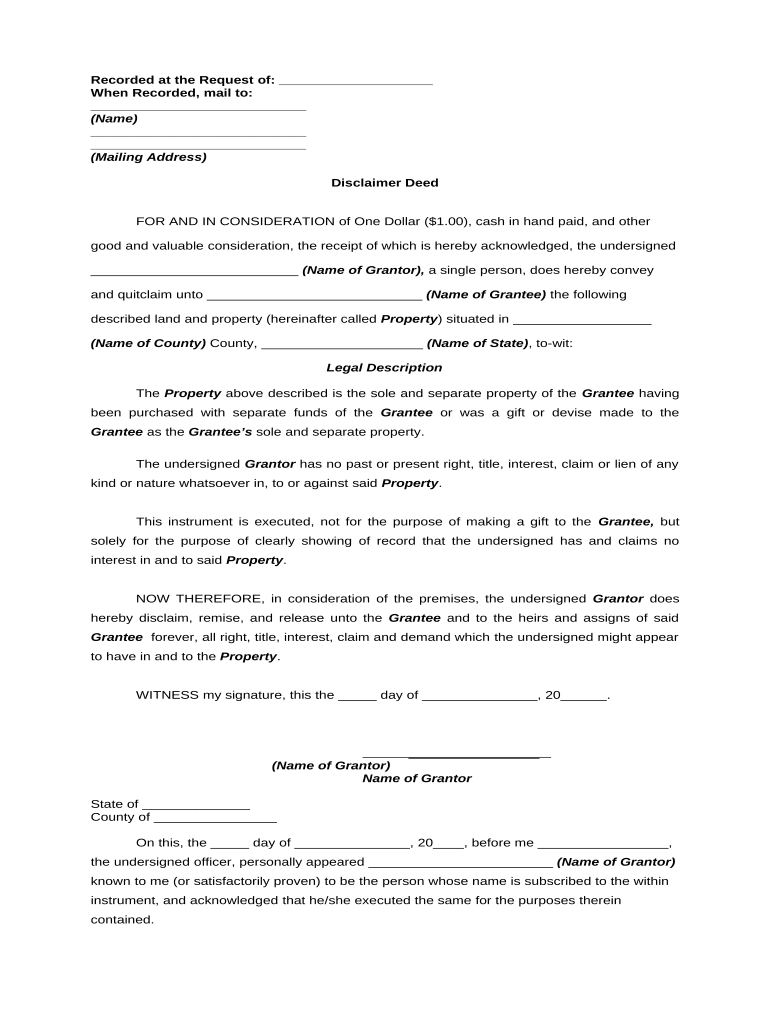
A disclaimer deed form is a legal document used to formally relinquish any claim or interest a grantor may have in a property. This deed serves to clarify that the property is solely owned by the grantee and that the grantor will no longer hold any rights or claims to it. The form typically includes essential details such as the names of both the grantor and grantee, a description of the property in question, and the date of execution.
- Primary Function: To officially declare that the grantor has no interest in the property, eliminating potential disputes regarding ownership.
- Common Uses: This type of deed is often utilized in real estate transactions where one party wishes to transfer their interest in a property, such as in divorce settlements or estate settlements.
Steps to Complete the Disclaimer Deed Form
Completing a disclaimer deed form involves several specific steps to ensure its validity and effectiveness.
- Obtain the Correct Form: Make sure you have the appropriate disclaimer deed form for your state, as requirements can vary.
- Enter the Parties' Information:
- Fill in the names and addresses of both the grantor (the person relinquishing their interest) and the grantee (the person receiving the property).
- Specify the legal description of the property to avoid any ambiguity.
- State the Consideration: This form typically requires a nominal consideration, such as one dollar, representative of the transfer of interest.
- Execution of the Deed:
- The grantor must sign the form in the presence of a notary public or witnesses, as required by state laws.
- The notary will affirm the identity of the signer and witness the signing.
- Recording the Deed: After completion, it should be filed with the appropriate local government office, often the county recorder or clerk's office, to make the disclaimer official.
Important Terms Related to the Disclaimer Deed Form
Understanding key terms associated with the disclaimer deed form is essential for effective use.
- Grantor: The individual who holds an interest in the property and is relinquishing their claims.
- Grantee: The recipient of the property, who will solely own the interest after the disclaimer is executed.
- Legal Description: A precise description of the property that distinguishes it from other parcels, often requiring a survey or property deed reference.
- Consideration: The nominal amount (often one dollar) that signifies the intent to transfer property interest.
Legal Use and Implications of the Disclaimer Deed Form
The legal use of a disclaimer deed form varies by jurisdiction, but it generally serves to:
- Clear title: By officially releasing their interest, the grantor ensures any potential claims are eliminated, benefiting the grantee in property transactions, loans, or estate settling.
- Document intentions: The deed acts as a legal validation of the grantor’s decision, providing a written record that can prevent future disputes.
Important Considerations
- State-Specific Regulations: Legal requirements and the effects of disclaimer deeds can differ significantly across states, emphasizing the importance of understanding local laws.
- Tax Implications: In certain cases, while disclaiming property, there may be tax consequences related to gift tax, which should also be evaluated in consultation with a legal or financial professional.
Examples of Using the Disclaimer Deed Form
The disclaimer deed form has various applications in real-world scenarios:
- Divorce Settlements: One party may use the disclaimer deed to transfer their interest in a marital property to the other, simplifying the divorce proceedings.
- Estate Planning: Heirs or beneficiaries may file a disclaimer deed if they wish to renounce their claim to inherited property, allowing it to pass to other heirs without complications.
- Business Transfers: Business owners might use the disclaimer deed when exiting a partnership and relinquishing their stake in business-owned properties.
Who Typically Uses the Disclaimer Deed Form?
- Individuals in Transition: People going through divorce, separation, or estate settlements frequently use this form to transfer property interests quickly and definitively.
- Executors of Estates: Individuals managing estates may utilize disclaimer deeds to handle property distribution as per the decedent's wishes or legal requirements.
- Real Estate Investors: Those acquiring properties may request disclaimer deeds to ensure clarity in ownership and avoid liabilities associated with previous claims.
Incorporating a disclaimer deed form correctly ensures a smoother transition of property rights and helps prevent potential legal complications in the future.