
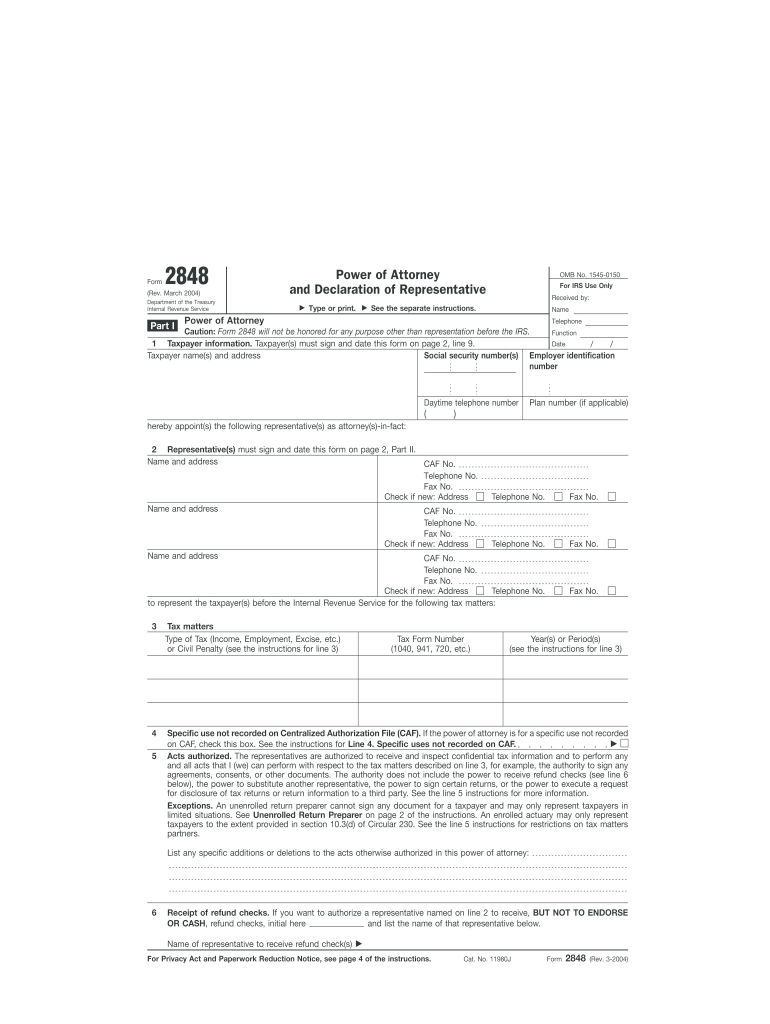







Definition and Meaning of Form 2848
Form 2848, Power of Attorney and Declaration of Representative, is an official document used by the Internal Revenue Service (IRS) in the United States. This form grants the power of attorney to an individual, typically a tax professional, to act on behalf of a taxpayer in matters related to federal taxes and interactions with the IRS. The form allows taxpayers to authorize one or more individuals to represent them in various IRS matters, which may include discussing, signing, or resolving tax issues. The representative can have access to confidential tax information and can make decisions that affect the taxpayer's fiscal standing with the IRS.
Key Components of Form 2848
- Taxpayer Information: Details like the taxpayer's name, address, and identification number.
- Representative Information: Identifying details for the person(s) authorized to act on behalf of the taxpayer.
- Tax Matters Authorized: Specification of the tax issues the representative has authority over, including specific tax forms and years.
- Acts Not Authorized: Any explicit exclusions where the representative's authority does not extend.
- Signature Requirements: Both taxpayer and representative must sign the form to validate its use.
How to Use Form 2848
To use Form 2848 effectively, taxpayers need to understand its structure and purpose. The form should be completed when a taxpayer wishes to permit another party to handle their tax-related matters. This is especially useful in situations where a taxpayer needs professional advice or representation in dealing with complex tax regulations or disputes. By allowing a representative access to IRS discussions and documents, taxpayers can ensure that their tax matters are managed competently.
Example Situations
- Tax Audits: Taxpayers undergoing audits may choose to authorize a certified public accountant (CPA) to communicate with the IRS on their behalf.
- Tax Preparer Assistance: When professional assistance is needed for preparing returns or correcting past filings.
- Legal Representation: Obtaining legal support in case of disputes with the IRS.
Steps to Complete Form 2848
- Provide Taxpayer Information: Fill in your full name, address, and tax identification number.
- Designate Representative(s): Enter the name, address, CAF number, PTIN, and telephone number of the person(s) you are authorizing.
- Specify Tax Matters: Clearly indicate which tax matters or periods the representative is authorized to handle, such as "Form 1040 for tax year 2023."
- List Authorized Acts: Detail any actions the representative is not permitted to perform under this authorization.
- Sign and Date the Form: Ensure both the taxpayer and the designated representative(s) sign and date the form accordingly.
- Submit to the IRS: Mail or fax the completed form to the IRS office where the related tax return would be filed.
Why Use Form 2848
Form 2848 is crucial for taxpayers needing representation to ensure informed and accurate handling of their tax obligations. It facilitates communication between the taxpayer's representative and the IRS, helping to efficiently manage and resolve tax issues. Using the form can help mitigate the risk of errors, oversights, or unfavorable outcomes in tax matters. It is an important tool that provides taxpayers peace of mind, knowing that experienced professionals are managing their tax issues.
Who Typically Uses Form 2848
Typically used by individual taxpayers, Form 2848 can also be employed by businesses seeking to manage tax complexities through professional assistance. Common users include:
- Individual Taxpayers: Those requiring representation in complex tax issues.
- Business Owners: Corporations and partnerships seeking expert tax advice.
- Estates and Trusts: Executors or trustees needing professional tax guidance.
- Nonprofit Organizations: Seeking expert representation for compliance and tax handling.
Practical Use Cases
- Self-Employed Individuals: Managing quarterly tax filings and handling deductions.
- Corporate Executives: Delegating tax matters to company accountants or tax attorneys.
- Retirees: Ensuring compliance with retirement income tax requirements.
Important Terms Related to Form 2848
Understanding several key terms related to Form 2848 is essential for correctly using the document:
- Principal: The taxpayer or entity granting authority to the representative.
- Representative: The individual authorized to act on behalf of the taxpayer.
- CAF Number: Centralized Authorization File number assigned to a representative by the IRS.
- Tax Matters: The specific tax issues the representative is authorized to handle.
Use in Context
- Authorization: Refers to the process of granting power to the representative to act for the principal.
- Revocation: The act of voiding the authority granted, which must be done formally to be effective.
Filing Deadlines and Important Dates
When dealing with Form 2848, awareness of deadlines and key dates is critical to ensure timely processing and avoid potential penalties. There is no universal filing deadline for Form 2848, but it should be submitted well in advance of any deadlines related to tax issues being managed by the representative. Taxpayers should keep track of any IRS communication about specific deadlines relevant to individual cases.
Penalties for Non-Compliance
While Form 2848 itself does not carry penalties, failing to file it when necessary could lead to miscommunication with the IRS and potential non-compliance with tax laws. This could result in fines, interest on unpaid taxes, or increased scrutiny from the IRS. Taxpayers should seek to address all IRS correspondence promptly and make sure their representation via Form 2848 is up-to-date to mitigate these risks.
Digital vs. Paper Version
Form 2848 can be completed and submitted electronically or as a paper document, depending on taxpayer preference. The digital version is typically faster and more convenient, particularly when using platforms like DocHub that streamline the completion and submission process.
- Digital Submission: Enables quicker processing and tracking by both the taxpayer and the IRS.
- Paper Submission: May be necessary for certain scenarios or personal preference, though it involves traditional mailing time.
Conclusively, Form 2848 is a valuable tool that ensures taxpayers can delegate authority wisely, maintaining effective communication with the IRS through trusted representatives.




