Type text, add images, blackout confidential details, add comments, highlights and more.
02. Sign it in a few clicks
Draw your signature, type it, upload its image, or use your mobile device as a signature pad.
03. Share your form with others
Send it via email, link, or fax. You can also download it, export it or print it out.
How to use or fill out Living Trust for Individual Who is Single, Divorced or Widow (or Widower) with Children - Michigan
Ease of Setup
DocHub User Ratings on G2
Ease of Use
DocHub User Ratings on G2
Click ‘Get Form’ to open it in the editor.
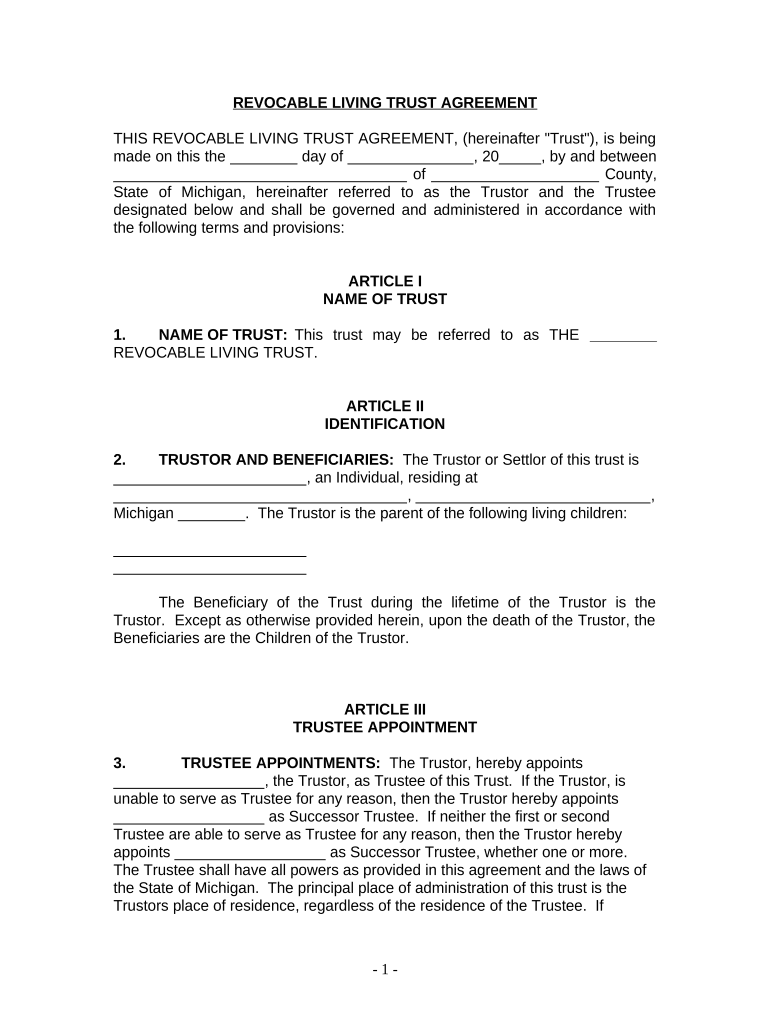
Begin by entering the date at the top of the form. This is crucial as it marks the official start of your trust.
In Article I, specify the name of your trust. This should be a unique title that reflects your intentions.
Proceed to Article II and fill in your personal details as the Trustor, including your address and information about your children who will be beneficiaries.
In Article III, appoint yourself as Trustee and designate any Successor Trustees if necessary. Ensure you provide their names clearly.
Article IV requires you to list all assets included in the trust. Attach Schedule A with detailed descriptions of these assets.
Review Articles V through XII carefully, ensuring all powers and provisions align with your wishes for asset management and distribution after death.
Finally, sign and date the document in front of a notary public to validate your trust legally.
Start using our platform today to easily create and manage your Living Trust for free!
Fill out Living Trust for Individual Who is Single, Divorced or Widow (or Widower) with Children - Michigan online It's free
Best living trust for individual who is single divorced or widow or widower with children michiganMichigan trust LawsA living trustMichigan trust documentsLiving trust forms michiganWhere to get a living trustTrust vs will in MichiganHow much does a trust cost in Michigan
Security and compliance
At DocHub, your data security is our priority. We follow HIPAA, SOC2, GDPR, and other standards, so you can work on your documents with confidence.
An estate granted to an individual for the remainder of his or her life. Living trust. A trust that becomes effective while the creator is still living. Living
Cookie consent notice
This site uses cookies to enhance site navigation and personalize your experience.
By using this site you agree to our use of cookies as described in our Privacy Notice.
You can modify your selections by visiting our Cookie and Advertising Notice.