
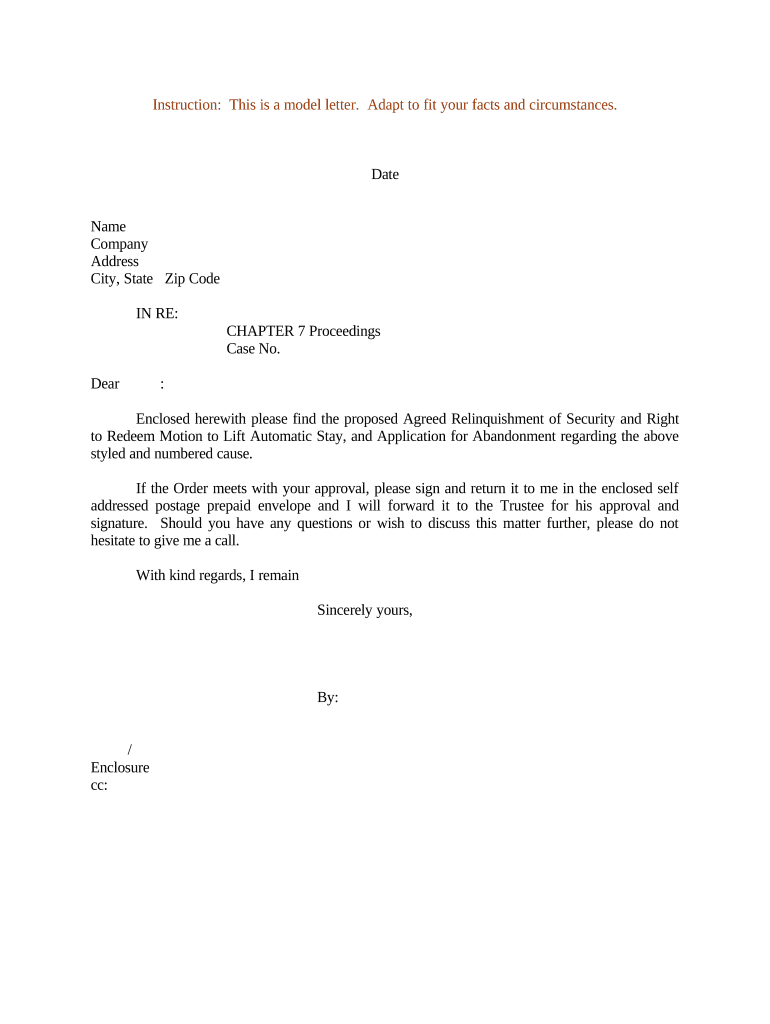







Definition and Meaning of Relinquishment Letters
A relinquishment letter, often referred to as a sample letter relinquishing rights to property, is a formal document used to voluntarily give up legal rights to a specific property or asset. This communication is essential in situations such as real estate transactions, bankruptcy proceedings, or divorce settlements. The relinquishment letter outlines the formal intent of the sender to relinquish ownership or claim over the identified asset, ensuring that the recipient understands the legal implications of this transfer.
In most cases, a relinquishment letter must include specific identifiers, such as:
- The name and address of the property owner.
- A detailed description of the property being relinquished.
- The names of all parties involved in the transaction.
- The date of the relinquishment.
- Signatures of the involved parties, often requiring notarization to enhance legal validity.
Understanding the meaning and implications of a relinquishment letter is vital for ensuring compliance with applicable laws and regulations.
Key Elements of a Relinquishment Letter
Creating a detailed relinquishment letter is crucial for clarity and legal effectiveness. Important elements include:
-
Sender's Information: Include your full name, address, and contact information.
-
Recipient's Information: Include the full name and address of the individual or entity receiving the relinquished rights.
-
Property Description: Clearly describe the property being relinquished, including address, legal description, and any relevant identifiers.
-
Intent of Relinquishment: Clearly state your intention to relinquish rights to the property. This might include phrases like, "I hereby relinquish all rights to the aforementioned property."
-
Conditions of Relinquishment: If applicable, state any conditions under which the relinquishment is effective.
-
Signatures: All parties involved should sign the letter to validate the relinquishment.
-
Notarization: Adding notarization may be necessary depending on state laws and the context of the relinquishment.
These elements ensure that the letter is both comprehensive and legally sound, helping to avoid potential disputes in the future.
Steps to Complete the Sample Letter Relinquishment
Writing a sample letter relinquishing rights to property involves clear and precise steps to ensure it meets legal standards. Follow these steps for an effective letter:
-
Identify All Parties: Clearly establish who is involved in the relinquishment. List all parties’ names and addresses to avoid confusion.
-
Describe the Property: Provide thorough details about the property being relinquished. This should include the physical address and any legal identifiers such as a property tax identification number.
-
Draft the Letter: Begin with a formal salutation, followed by your statement of intent. Be clear and assertive regarding your decision to relinquish the rights.
-
Include Legal Language: Use appropriate legal terminology where necessary to clarify your intentions.
-
Sign and Date the Document: Ensure that all parties sign and date the letter, acknowledging their agreement to the relinquishment.
-
Notarization: Consider having the document notarized for additional legal protection, especially in jurisdictions that require it.
-
Distribute Copies: Provide copies to all parties involved, and retain a signed copy for your records.
Following these steps can streamline the process and help mitigate any potential misunderstandings surrounding the relinquishment.
Legal Use of the Relinquishment Letter
Understanding the legal implications of a relinquishment letter is crucial for all parties involved. Legally, the letter serves as a formal declaration that affects ownership rights and obligations. It can be utilized in various contexts, such as:
- Bankruptcy Proceedings: A relinquishment letter might be required when a debtor wishes to abandon claims on specific assets.
- Real Estate Transactions: In property sales, sellers often issue these letters to relinquish their ownership rights formally after the sale agreement.
- Family Law Cases: In divorce proceedings, the relinquishment of property may occur through a formally drafted letter approved by both parties.
Each scenario may involve different state-specific laws; therefore, consulting a legal expert is often advisable to ensure compliance with local legislation.
Examples of Using the Relinquishment Letter in Real-World Scenarios
Several real-world scenarios illustrate how relinquishment letters are effectively used:
-
Real Estate Transfers: Upon selling a home, the seller might issue a relinquishment letter to the buyer, formally conveying their rights to the property upon closing.
-
Divorce Settlements: One spouse may draft a relinquishment letter to abandon their claim to marital property to facilitate a smoother divorce process, ensuring that the other spouse retains full rights.
-
Bankruptcy: A debtor may file a relinquishment letter as part of a motion to abandon a property during bankruptcy proceedings, formally stating their surrender of rights to the asset.
Providing these examples highlights the importance of a relinquishment letter across different situations, ensuring clarity and legal soundness in property transfers.
Important Terms Related to Relinquishment Letters
Familiarizing yourself with specific terminology related to relinquishment letters can enhance understanding and application:
- Relinquish: To voluntarily give up a claim, right, or possession.
- Notarization: The official witnessing of a signature by a notary public to make the document legally binding.
- Property Rights: Legal rights over the use and ownership of property.
- Affidavit: A written statement confirmed by oath or affirmation, often used in legal proceedings.
- Automatic Stay: A court order that halts actions by creditors to collect debts from a debtor who has declared bankruptcy.
Understanding these terms ensures better comprehension of the relinquishment process and the legal framework surrounding it.




