






Comprehensive Overview of Utility Trailer Inspection Form
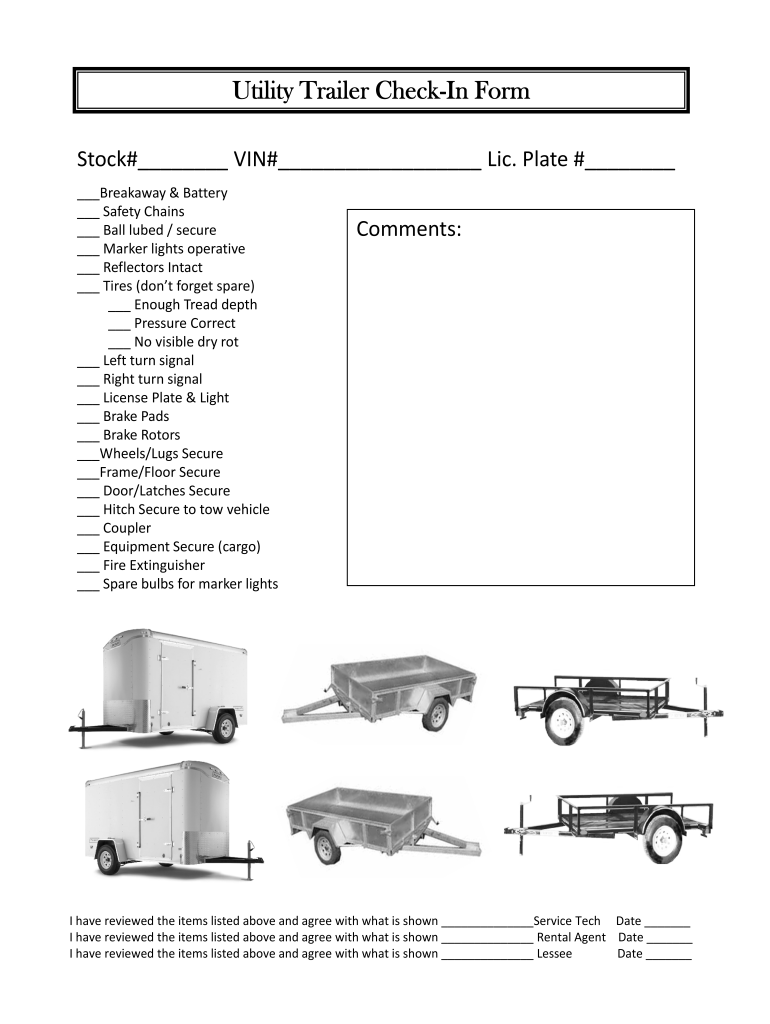
The utility trailer inspection form is vital in ensuring trailers are properly maintained and safe for use. This form is instrumental in cataloging critical details about the trailer, ensuring compliance with safety regulations, and providing a record for both users and inspectors. Understanding its components and how to effectively utilize it can enhance safety and operational efficiency.
Key Elements of the Utility Trailer Inspection Form
The utility trailer inspection form comprises several essential sections that facilitate a thorough inspection process. Each section captures crucial data and outlines the specific safety checks required.
-
Stock Number and VIN: Identifying the trailer through its stock number and Vehicle Identification Number (VIN) helps in obtaining accurate maintenance history and tracking.
-
License Plate Number: Recording the license plate number is necessary for compliance with state registration requirements.
-
Safety Check Items: Here, you examine essential components such as:
- Brakes
- Lights
- Tires
- Coupling devices
Each item should have a clear pass/fail indication to ensure compliance.
Completing the Utility Trailer Inspection Checklist
To properly utilize the utility trailer inspection checklist, follow these steps:
-
Preparation: Ensure you have the form readily available, either as a printable PDF or an electronic document.
-
Inspection: Conduct a thorough examination of the trailer, checking each specified component against the checklist items.
-
Documentation: Record findings directly on the form. Ensure you note any deficiencies that need rectification.
-
Signatures: Once completed, both the inspector and the trailer operator should sign the form, confirming all inspections have been conducted and acknowledged.
-
Review Process: Establish a process to review the checklist regularly to ensure compliance with any state or federal regulations.
Importance of Regular Inspections
Regularly utilizing the utility trailer inspection form ensures that safety issues are identified and addressed proactively. It bolsters the following:
-
Safety Compliance: Helps adhere to federal and state regulatory requirements, thus reducing liability.
-
Operational Efficiency: Identifying problems before they escalate saves time and costs associated with repairs and downtime.
-
User Confidence: When operators know vehicles are regularly inspected, it enhances their trust and willingness to use the equipment.
Legal and Compliance Considerations
Different states may have particular laws governing trailer inspections, thus ensuring that the inspection form includes all required elements for compliance is crucial.
-
State-specific Rules: It’s essential to modify the utility trailer inspection form to reflect your state's specific requirements.
-
Documentation Retention: Maintain records of inspections for a designated period to comply with legal guidelines and for potential audits.
Variations and Customizations of the Inspection Form
While the standard utility trailer inspection form covers essential elements, specific modifications can enhance its specificity. Consider:
-
Customized Sections: Adding checkboxes or fields tailored to specific trailer types, such as flatbed or gooseneck trailers.
-
Digital Formats: Transitioning to electronic formats could streamline data collection and improve record-keeping practices.
Examples of Using the Utility Trailer Inspection Form
Consider scenarios where thorough inspection records are beneficial:
-
Rental Companies: A rental company can use the form to document pre- and post-rental inspections, ensuring accountability and safety checks are made before each rental.
-
Fleet Management: For companies with multiple trailers, using standardized forms across the fleet facilitates easier tracking of safety compliance and maintenance history.
Conclusion
Establishing a consistent practice of filling out and reviewing the utility trailer inspection form enhances safety protocols and operational efficiency. By integrating all critical elements, ensuring compliance with regulations, and utilizing examples and customizations pertinent to specific needs, businesses and individuals can maintain high standards of safety and reliability in trailer usage.