







Definition & Meaning of the Wire Transfer Instructions Form
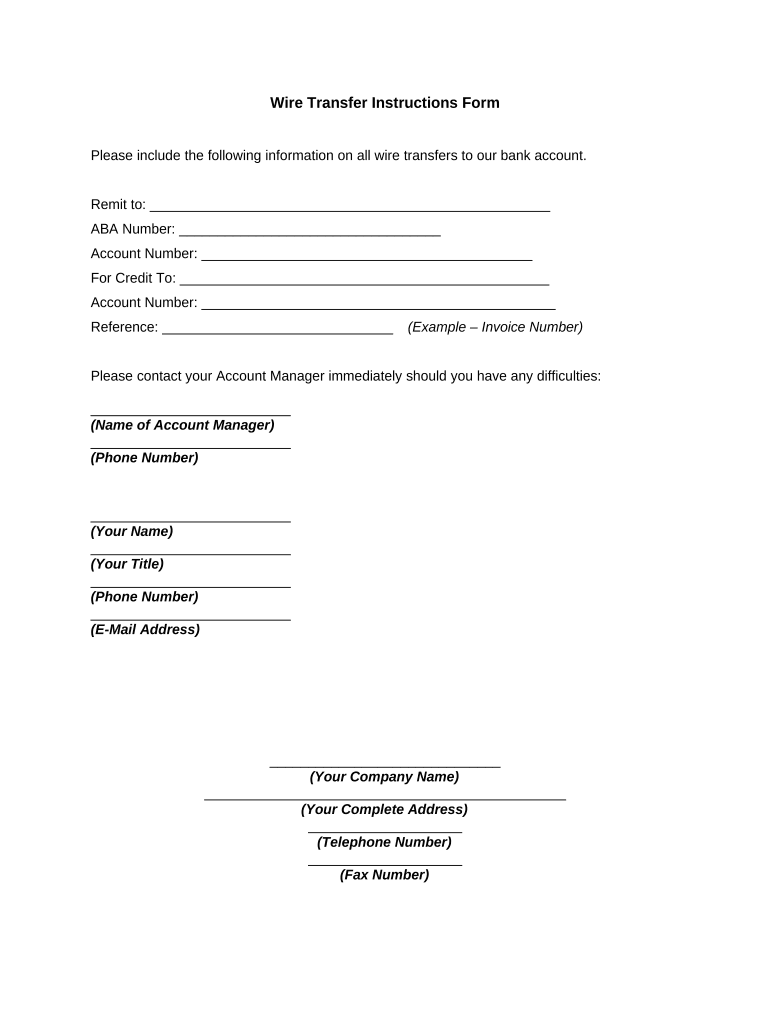
The Wire Transfer Instructions Form is a critical document that outlines the specific information necessary for executing wire transfers to a designated bank account. This form is crucial for ensuring that the funds are accurately and securely transferred. Key components of the form include:
- Remit Details: This section includes the name and address of the sender, essential for identification.
- Bank Information: Here, users must provide the receiving bank's name, address, and ABA number, which is essential for routing the transfer.
- Account Numbers: The sender must include the account number receiving the funds, ensuring that the money goes to the intended recipient.
- Reference Information: This optional field allows users to include additional notes or information that can assist the recipient in identifying the funds.
- Contact Details: It is important to include contact information for someone who can assist with any queries regarding the transfer.
Understanding these elements is vital for anyone involved in the process of wire transferring funds, as errors can lead to significant delays or misdirected funds.
How to Use the Wire Transfer Instructions Form
Using the Wire Transfer Instructions Form is essential for ensuring accurate and secure transactions. The steps involved in utilizing the form include:
- Obtain the Form: Access the form from a reliable source, such as your bank or financial institution, or download it from a trusted online platform.
- Complete the Required Fields: Fill out all necessary details, including remit information, bank details, account numbers, and any reference information.
- Review for Accuracy: Double-check the information provided to prevent errors that could delay the transfer. Focus on correct account numbers and ABA routing numbers.
- Submit the Form: This can typically be done online through your banking platform or by physically bringing the form to your bank branch.
- Retain a Copy: It is prudent to keep a copy of the completed wire instructions for your records, which can help resolve any issues that may arise post-transfer.
This structured approach helps ensure the efficacy of the wire transfer process.
Steps to Complete the Wire Transfer Instructions Form
Completing the Wire Transfer Instructions Form requires careful attention to detail to prevent mistakes. The key steps involved include:
-
Gather Relevant Information:
- Collect sender’s details, including full name and address.
- Obtain complete receiving bank information and the recipient's account number.
-
Fill Out the Form:
- Start with remit details, including sender information.
- Input the specific bank name and address, ensuring the accuracy of the ABA number.
- Include the recipient’s account number and any additional reference data.
-
Use Clear Language:
- Write legibly and clearly to avoid misunderstandings by bank personnel.
- Ensure all fields are filled accurately.
-
Verify the Information:
- Cross-check details with bank representatives or online resources.
- Look for typos, especially in account numbers and bank routing information.
-
Submit:
- Choose the preferred submission method: online through bank systems or in person at a local branch.
-
Record Keeping:
- Once submitted, print a copy of the completed form for personal records.
Ensuring each of these steps is adhered to will facilitate a smooth wire transfer process.
Key Elements of the Wire Transfer Instructions Form
The Wire Transfer Instructions Form contains several key elements that are essential for executing a wire transfer. Each element serves a specific purpose, ensuring precision in processing:
- Sender’s Information: Essential for identification purposes, this section includes the sender's full name, address, and phone number.
- Receiving Bank's Information: Users must provide comprehensive details about the receiving bank, including its name, address, and the ABA routing number to ensure proper routing.
- Recipient Account Number: This number is critical for directing the funds to the right account. Without this, the transfer might fail.
- Transfer Amount: Users must indicate the specific amount to be transferred, ensuring clarity on the transaction value.
- Reference Field: This optional part can include information that helps clarify the purpose of the transfer, which might be necessary for record-keeping purposes.
Understanding these key elements is crucial for anyone facilitating a wire transfer to ensure a successful transaction with minimal errors.
Examples of Using the Wire Transfer Instructions Form
Practical examples illustrate the various ways the Wire Transfer Instructions Form can be utilized across different scenarios:
-
Personal Transactions: An individual may use the form to send money to a family member in another state. In this case, the sanctioned bank details and the routing number must be correct to ensure the recipient receives the funds seamlessly.
-
Business Payments: A small business might use the form to pay a vendor for services rendered. Here, accuracy is critical since businesses often manage multiple payment obligations, and errors could lead to significant delays and potential penalties.
-
Real Estate Transactions: Individuals involved in buying a property may utilize wire transfers for earnest money deposits. The wire transfer instructions must encapsulate details accurately to ensure funds are received on time to secure the transaction.
-
International Transfers: When sending funds abroad, users need to be particularly attentive to the specific requirements of the receiving bank, including specific formats for SWIFT codes and international wire transfer requirements.
These examples highlight the versatility of the form and underscore the necessity of precision in completing it correctly.




