






Understanding the Letter Return: Definition and Meaning
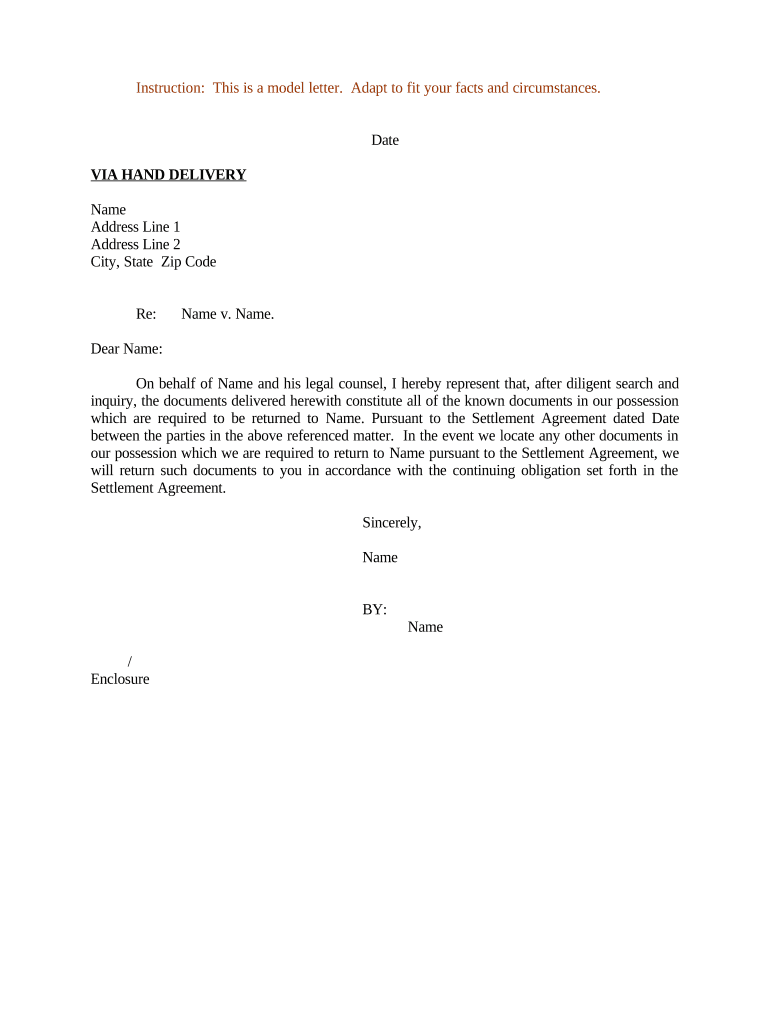
The term "letter return" refers to a formal communication primarily used to convey the return of original documents to a client or entity. This type of letter serves as a written confirmation that the documents specified within the correspondence are being returned. It is particularly relevant in legal, corporate, and financial contexts where original documents hold significant importance. The sender typically outlines the scope of the return, ensuring that both parties have a clear understanding of what documents are being exchanged.
A letter return may also address the condition of the documents, whether they remain intact or show signs of wear. Furthermore, it may include a specific request for the recipient to acknowledge receipt of the returned documents, which can serve as a safeguard against future disputes regarding documentation.
Common Uses of the Letter Return
- Legal Context: Used to communicate the return of evidence, contracts, or legal agreements.
- Corporate Settings: Employed when companies return sensitive documents to clients or partners after completing transactions.
- Academic Institutions: Utilized by schools or universities to return original documents like transcripts or diplomas back to students.
How to Write a Letter for Document Return
Writing a letter for returning documents involves several critical steps. It is essential to maintain a professional tone while ensuring that the letter is clear and concise. Here’s how to structure such a letter effectively:
- Header Information: Include your name, address, and contact information, followed by the recipient's details.
- Subject Line: State the purpose in the subject line, such as "Return of Original Documents."
- Greeting: Use a formal greeting, addressing the recipient appropriately.
- Body of the Letter:
- Introduction: Briefly explain the purpose of the letter.
- Details of the Return: Specify which documents are being returned and any relevant dates or references.
- Acknowledgment Request: Mention if you would like the recipient to confirm receipt.
- Closing: Use a formal closing, such as "Sincerely," followed by your name and signature.
Example Structure for Clarity
-
Header:
- John Smith
- 123 Main St.
- Anytown, NY 12345
- Date
-
Recipient's Info:
- Jane Doe
- 456 Oak Rd.
- Othertown, NY 54321
-
Subject: Return of Original Documents
-
Greeting: Dear Ms. Doe,
-
Body: “I am writing to confirm that I am returning the following original documents…”
Key Elements of a Letter Return
When drafting a letter return, it is essential to include specific key elements to ensure clarity and professionalism. These elements aid in creating a comprehensive document:
- Document List: Clearly enumerate the items being returned to avoid confusion.
- Condition Statement: Note the condition of the documents, especially if they are original or sensitive in nature.
- Reference Information: Include any relevant reference numbers or prior correspondence relating to the documents.
- Signature Requirement: Specify if the recipient needs to sign or acknowledge receipt, adding a layer of accountability.
Legal Use of the Letter Return
The letter return is often used in legal scenarios and must adhere to specific guidelines to ensure its validity. Here are critical aspects to consider:
- Compliance with Regulations: Ensure the letter complies with relevant local or state laws, particularly regarding confidentiality and documentation handling.
- Retention of Copies: Keep a copy of the letter and any accompanying documents for internal records, as this could serve vital in any legal discussions.
- Secure Delivery Methods: Utilize a secure delivery method that provides proof of receipt, such as certified mail or a reputable courier service.
Examples of Letter Return in Practice
Several real-world cases illustrate the utility of letter returns in various settings:
- Legal Correspondence: An attorney may send a letter returning original evidence to the court after a trial.
- Employment Verification: An employer might return documents like I-9 forms to an employee after completing background checks.
- Business Transactions: A financial institution may send back signed loan documents to a client once processing is complete.
Template Example
Subject: Return of Original Documents
Dear [Recipient's Name],
I am writing to formally return the original documents as discussed...
This type of formal template can be adapted for specific situations, ensuring that all necessary information is included.
Conclusion
Understanding the complexities and proper format for a letter return ensures that all parties involved in document transactions maintain legal compliance and clarity. Whether in a corporate, legal, or academic setting, these letters serve as fundamental tools for effective communication.