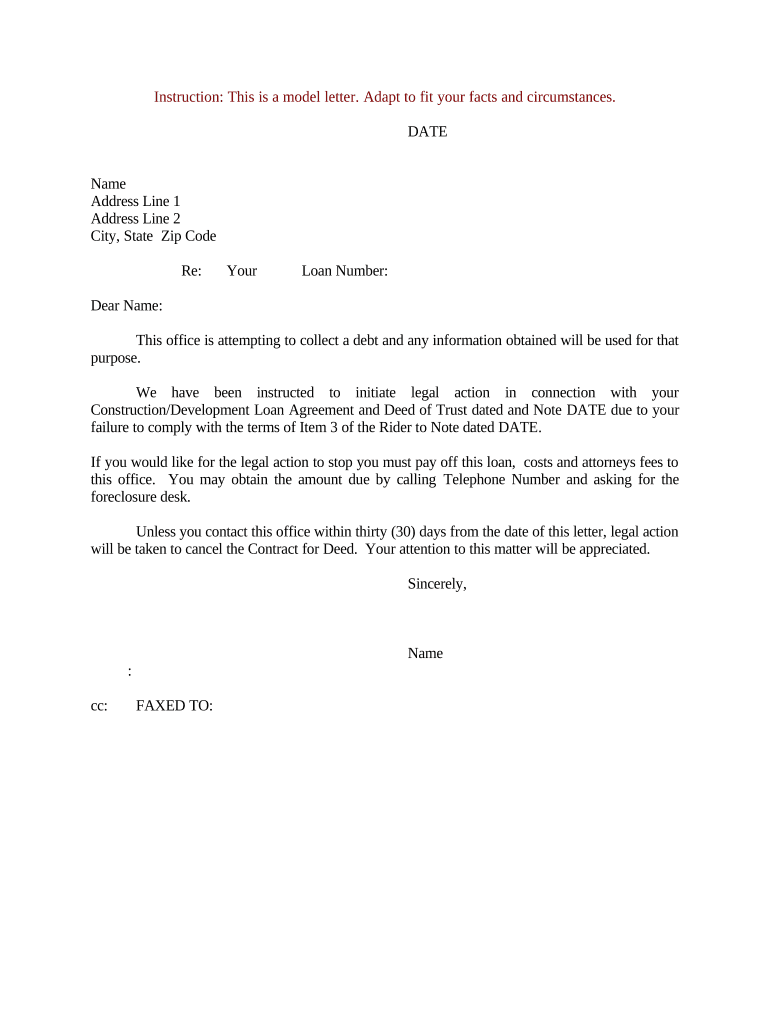
Collect legal action 2026

Get Form
collect legal action Preview on Page 1

Here's how it works

01. Edit your form online
Type text, add images, blackout confidential details, add comments, highlights and more.
02. Sign it in a few clicks
Draw your signature, type it, upload its image, or use your mobile device as a signature pad.
03. Share your form with others
Send it via email, link, or fax. You can also download it, export it or print it out.

How to use or fill out collect legal action with our platform

Form edit decoration
9.5
Ease of Setup
DocHub User Ratings on G2
9.0
Ease of Use
DocHub User Ratings on G2
  1. Click ‘Get Form’ to open the collect legal action document in the editor.
  2. Begin by entering the date at the top of the form. This is crucial as it establishes the timeline for your communication.
  3. Fill in your name and address details accurately. Ensure that all information is current to avoid any delays in processing.
  4. In the 'Re:' section, specify the subject of your letter, which should include your loan number for easy reference.
  5. Address the recipient appropriately, using their name as indicated in your records.
  6. Clearly state the purpose of this letter, emphasizing that it pertains to a debt collection and potential legal action.
  7. Provide instructions on how they can resolve their debt, including contact information for further inquiries.
  8. Conclude with a polite closing statement and ensure you sign off with your name and any necessary cc's.

Start using our platform today to streamline your document editing and ensure efficient completion of your legal forms!

be ready to get more

Complete this form in 5 minutes or less

Get form

Got questions?

We have answers to the most popular questions from our customers. If you can't find an answer to your question, please contact us.
Contact us
Collections legal action refers to the process by which a creditor or collection agency files a lawsuit against a debtor to recover an unpaid debt. In the case of tax debt, this involves the CRAs collections department taking formal legal steps to collect on the debt owed to them.
If the court rules against you and orders you to pay the debt, the debt collector may be able to garnish or take money from your wages or bank account, or put a lien on your property, like your home.
You will not go to jail. Collections for bills are a civil matter. If you receive a summons and a complaint from the creditor, the answer should be handled by an attorney but you can file the answer on your own if you feel you are well equipped to do so.

Security and compliance

At DocHub, your data security is our priority. We follow HIPAA, SOC2, GDPR, and other standards, so you can work on your documents with confidence.

Learn more
ccpa2
pci-dss
gdpr-compliance
hipaa
soc-compliance
be ready to get more

Complete this form in 5 minutes or less

Get form