Definition and Importance of the Employee Termination Form
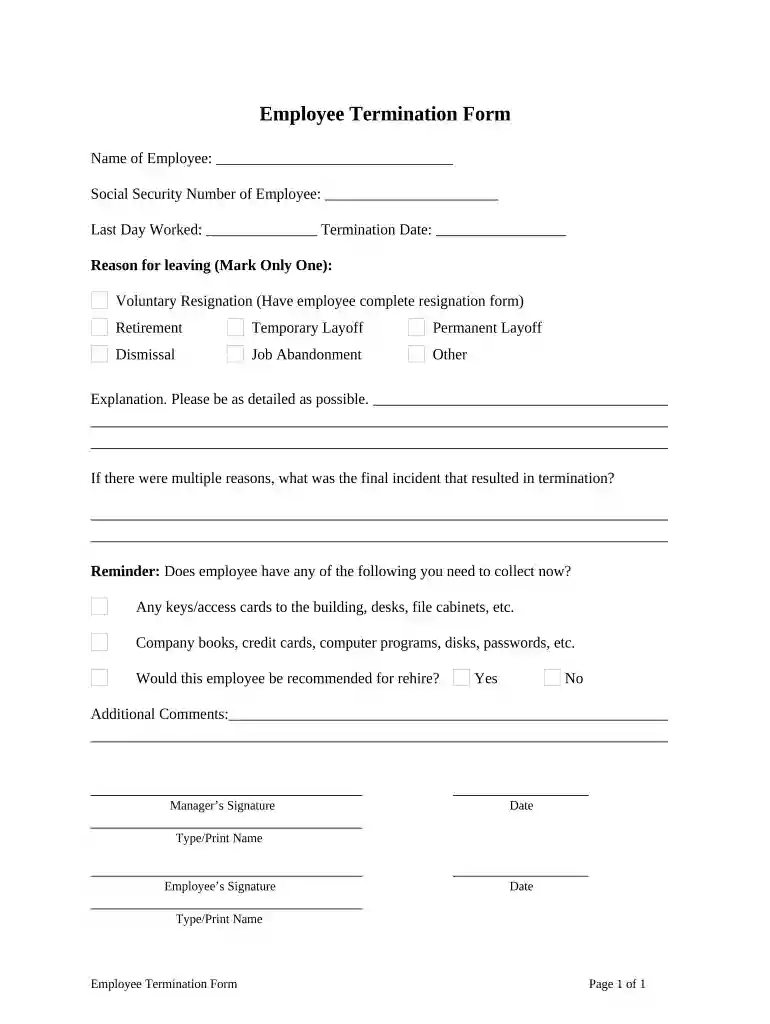
The employee termination form serves as a crucial document that officially records the end of an employee's service with a company. It typically includes critical information such as the employee's name, position, the date of termination, and the reason for the termination. This form not only assists in maintaining transparent employment practices but also helps protect the organization legally, should disputes arise later about the termination.
Key Reasons for Using an Employee Termination Form
- Documentation: It provides a formal record that outlines the circumstances and reasons for termination, which can be vital for future references or if legal disputes arise.
- Clarity: It helps clarify the terms of the employee's departure, ensuring that both parties understand the implications, such as final paychecks and benefits.
- Consistency: Using a standard form ensures that the termination process is uniform across the organization, which helps uphold internal policies and compliance with labor laws.
How to Use the Employee Termination Form Effectively
To utilize the employee termination form effectively, follow a defined process to ensure completeness and compliance with organizational policies and legal standards.
Steps to Implement the Employee Termination Form
- Gather Necessary Information: Collect all relevant details, including performance records and previous disciplinary actions, if applicable.
- Complete the Form: Fill out all sections of the employee termination form accurately. This may include:
- Employee's personal information
- Reason for termination (e.g., voluntary resignation, misconduct)
- Company property return checklist
- Review the Document: Have an HR representative or legal advisor review the form to ensure it adheres to standing policies and legal requirements.
- Submit the Form: Ensure that the form is submitted in accordance with company protocols, and provide copies to relevant stakeholders, such as HR and payroll departments.
Important Elements Included in an Employee Termination Form
An employee termination form typically encompasses several key elements that provide comprehensive information regarding the termination.
Common Sections Found in the Form
- Employee Information: Names, titles, and identification numbers to clearly identify the departing employee.
- Termination Date: The effective date of the termination is critical for both payroll and benefits purposes.
- Reasons for Termination: Specific reasons help clarify the basis for the decision, which can include performance issues, layoff, or other reasons.
- Property Return Acknowledgment: This section may outline any company items (e.g., laptops, keys) that need to be returned.
- Final Distributions and Benefits: Details on final paychecks, accrued vacation time, or severance pay can be included to ensure clarity about employee compensation upon departure.
Legal Considerations for Employee Termination Forms
Complying with local, state, and federal laws is paramount when using and retaining employee termination forms.
Regulations to Consider
- Documentation Retention: Businesses should store termination forms securely and for a specified duration, often dictated by state laws, to provide evidence in case of disputes.
- Non-Discrimination Laws: Ensure that termination forms clearly align with anti-discrimination laws to prohibit bias based on race, gender, age, or other protected statuses.
- Union Agreements: For unionized employees, certain collective bargaining agreements may dictate specific processes for termination that must be respected whenever a termination form is completed.
Practical Examples of Employee Termination Form Use
Utilizing case studies can help clarify circumstances leading to an employee’s termination and how the termination form functions within those contexts.
Scenarios Showing Form Application
- Layoff for Economic Reasons: In cases of economic downturn, companies may use the form to document layoffs due to budget cuts, clearly defining the reasons and outlining the severance processes.
- Performance-Based Termination: A poorly performing employee could receive input throughout their employment, and the form can encapsulate the lack of improvement despite multiple warnings, ensuring that the documentation reflects the entire employment history.
- Voluntary Resignations: When an employee resigns voluntarily, the termination form serves as an official acknowledgment of their departure, helping facilitate the return of company property and final payroll calculations.
These various aspects simulate the comprehensive nature and necessity of an employee termination form in the workplace.