
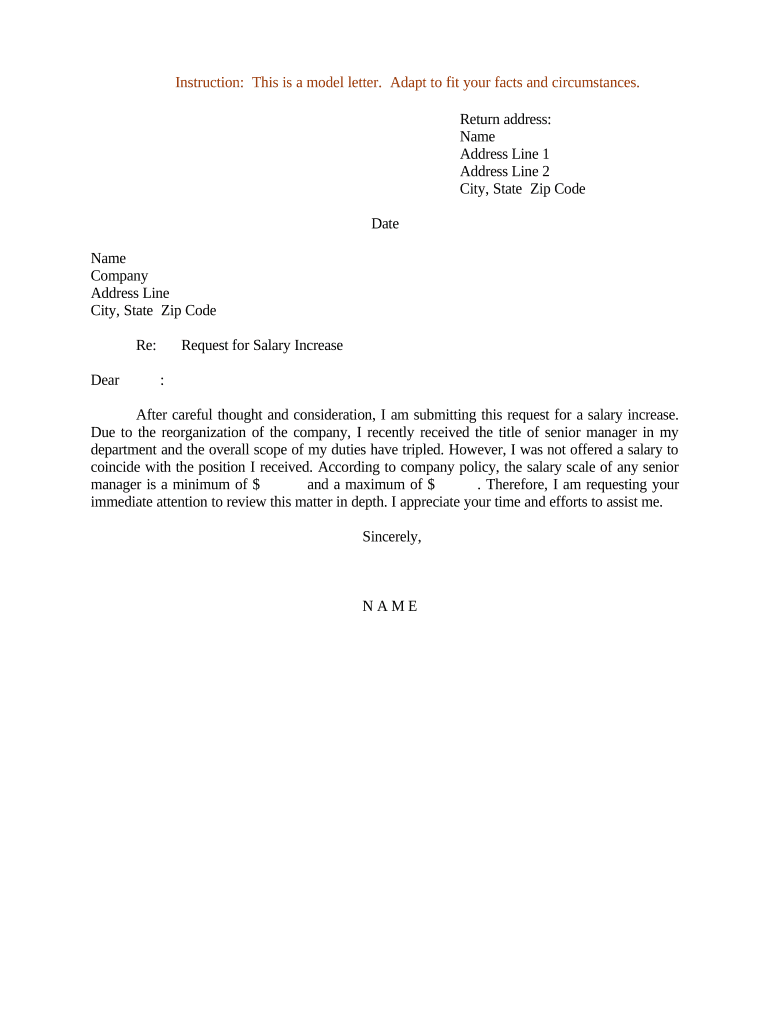







Understanding the Letter for Salary Increase
Salary increase letters are formal documents used by employees to request a salary adjustment based on various factors like performance, market changes, or new responsibilities. These letters are pivotal in clearly communicating the request to management and ensuring that all relevant points are presented comprehensively.
Structure of a Salary Increase Letter
A well-organized letter can significantly improve the chances of a favorable outcome. It should generally contain the following sections:
- Introduction: Briefly state the purpose of the letter.
- Current Position Overview: Describe your current role, responsibilities, and noteworthy achievements.
- Justification for Increase: Provide reasons for your request, including market trends, personal performance, and additional responsibilities you have taken on.
- Conclusion: Politely request a discussion about your salary and express appreciation for consideration.
Key Considerations Before Writing
There are several important aspects to consider before initiating your salary increase request:
- Timing: Ensure that your request comes at an appropriate time, such as after completing a significant project or during performance review periods.
- Company Policies: Familiarize yourself with your company’s salary policies and salary increase history.
- Market Research: Gather information on salary benchmarks for similar positions within your industry to support your request effectively.
Crafting the Justification Section
Justifying your request is vital. This section should include specific examples and data:
- Performance Metrics: Document your achievements with quantifiable results. For instance, highlighting how you improved a process that saved the company time or money strengthens your argument.
- Increased Responsibilities: If your job role has expanded since your last salary adjustment, clearly outline your new duties and their impact on the team or company.
- Market Comparisons: Provide evidence of salary ranges for similar roles in your industry. Websites like Glassdoor and PayScale can serve as references.
Sample Salary Increase Letter Template
A template can help structure your thoughts. Here is a concise example modeled on professional standards:
[Your Name]
[Your Address]
[City, State, Zip Code]
[Email Address]
[Phone Number]
[Date]
[Manager's Name]
[Company's Name]
[Company's Address]
[City, State, Zip Code]
Dear [Manager's Name],
I am writing to formally request a salary increase based on my contributions to the team over the past [time period]. In my role as [Your Job Title], I have undertaken significant additional responsibilities, including [list any additional duties or projects]. These efforts have resulted in [mention specific outcomes or benefits to the company].
According to my research, the industry average for my position is [mention average salary or salary range], and I believe that an adjustment is warranted to reflect my contributions and market standards.
I would appreciate the opportunity to discuss this matter further. Thank you for considering my request.
Sincerely,
[Your Name]
Follow-Up Strategies
After sending your request, a follow-up can reinforce your intentions. Consider the following:
- Timeframe: Wait one to two weeks before following up unless you’ve been given a specific timeframe for a response.
- Professional Tone: Maintain professionalism in any communications. Thank your manager for their time and consideration.
- Meeting Request: If your initial request is well received, propose a meeting to discuss further details about your request and other aspects of your position.
Common Pitfalls to Avoid
When preparing your salary increase letter, be mindful of these potential oversights:
- Vagueness: Avoid vague statements; use specific examples and data to support your request.
- Entitlement Tone: Ensure your letter does not come across as entitled or demanding. Express appreciation for your current role and the opportunities it provides.
- Lack of Research: Failing to perform due diligence on market salaries can weaken your request.
By following these structured guidelines and considerations, you can formulate a detailed, compelling letter that increases the likelihood of a salary adjustment in your favor.




