Seller disclosure agreement 2026

Get Form
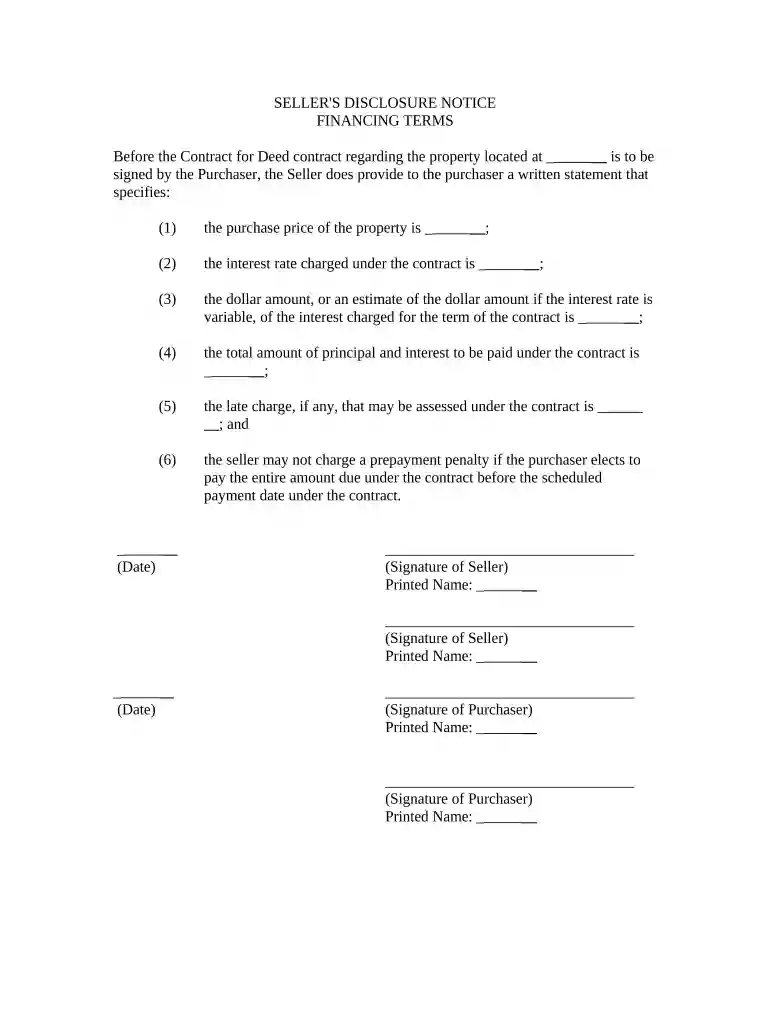
seller disclosure agreement Preview on Page 1

Here's how it works

01. Edit your form online
Type text, add images, blackout confidential details, add comments, highlights and more.

02. Sign it in a few clicks
Draw your signature, type it, upload its image, or use your mobile device as a signature pad.
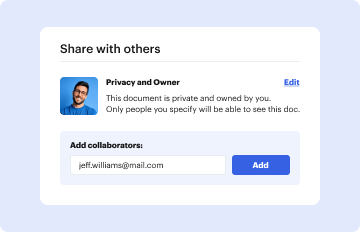
03. Share your form with others
Send it via email, link, or fax. You can also download it, export it or print it out.

How to use or fill out seller disclosure agreement with our platform

Form edit decoration
9.5
Ease of Setup
DocHub User Ratings on G2
9.0
Ease of Use
DocHub User Ratings on G2
  1. Click ‘Get Form’ to open the seller disclosure agreement in the editor.
  2. Begin by entering the property location in the designated field. This is crucial for identifying the specific property involved in the transaction.
  3. Next, fill in the purchase price of the property. This amount should reflect what you and the purchaser have agreed upon.
  4. Input the interest rate charged under the contract. If this rate is variable, provide an estimate of what it may be over time.
  5. Detail the total dollar amount of interest that will be charged throughout the term of the contract, ensuring accuracy for transparency.
  6. Complete the section regarding total principal and interest payments due under the contract. This gives a clear picture of financial obligations.
  7. Indicate any late charges that may apply if payments are not made on time, as well as confirming that no prepayment penalties will be assessed.
  8. Finally, ensure all signatures are collected from both seller and purchaser along with their printed names and dates to finalize the document.

Start using our platform today to easily complete your seller disclosure agreement online for free!

be ready to get more

Complete this form in 5 minutes or less

Get form

Got questions?

We have answers to the most popular questions from our customers. If you can't find an answer to your question, please contact us.
Contact us
In the real estate industry, the duty of disclosure refers to the legal obligation of real estate agents and sellers to provide accurate and complete information about a property to potential buyers. This duty is essential for ensuring transparency and fairness in real estate transactions.
Most Common Disclosures in Real Estate Natural Hazards Disclosure. First on the list is the natural hazards disclosure. Market Conditions Advisory (MCA) Market Conditions Advisory, also known as MCA, covers items more financial in nature. State Transfer Disclosure. Local Transfer Disclosure. Megans Law Disclosures.
June 25, 2025 by Marissa Crum. A sellers disclosure, also called a property disclosure, is a document that sellers are legally required to provide to potential buyers. It outlines any known issues or defects with the home that could affect its value or safety.
Confidential Disclosure Agreements (CDAs)/NDAs CDAs are commonly executed when two parties are considering a relationship/collaboration together and need to understand the others processes, methods, or technology solely for the purpose of evaluating the potential for a future relationship.
Most seller property disclosures are required for residential properties and vacant land. This means that when selling a residential property, the seller is legally obligated to disclose any known defects or issues with the property to potential buyers.

Security and compliance

At DocHub, your data security is our priority. We follow HIPAA, SOC2, GDPR, and other standards, so you can work on your documents with confidence.
Learn more

People also ask

It ensures that all parties involved have a clear understanding of material facts, potential risks, liabilities, and obligations. The intent is to promote transparency and prevent misunderstandings or disputes.
An NDA is a legal agreement which defines information that the parties wish to protect from dissemination and outlines restrictions on use. NDAs are also valuable to protect the ability to patent an invention, something that can be compromised if a disclosure of the invention becomes public knowledge.

Related links