

Transfer death revocable 2026

Get Form
transfer death revocable Preview on Page 1

Here's how it works

01. Edit your form online
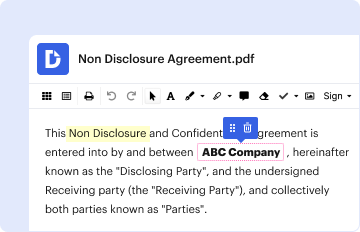
Type text, add images, blackout confidential details, add comments, highlights and more.
02. Sign it in a few clicks
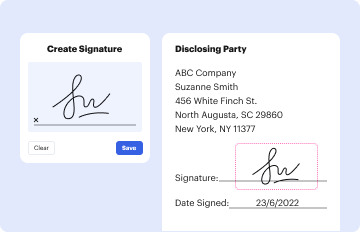
Draw your signature, type it, upload its image, or use your mobile device as a signature pad.
03. Share your form with others
Send it via email, link, or fax. You can also download it, export it or print it out.

How to use or fill out transfer death revocable with our platform

Form edit decoration
9.5
Ease of Setup
DocHub User Ratings on G2
9.0
Ease of Use
DocHub User Ratings on G2
  1. Click ‘Get Form’ to open the transfer death revocable deed in the editor.
  2. Begin by entering the Owner/Transferor's name and address in the designated fields. Ensure accuracy as this information is crucial for legal purposes.
  3. Next, specify the property being transferred by providing its legal description. This can typically be found on your property deed.
  4. Designate beneficiaries by entering their names and mailing addresses. If there are multiple beneficiaries, ensure they are listed in equal shares.
  5. Select how the property will be handled if a beneficiary does not survive you. Choose between passing the entire property to surviving beneficiaries or allowing the deceased beneficiary's interest to pass to their heirs.
  6. Finally, sign and date the document where indicated. Make sure to have two disinterested witnesses sign as well, ensuring compliance with Nebraska law.

Start using our platform today for free to complete your transfer death revocable deed effortlessly!

be ready to get more

Complete this form in 5 minutes or less

Get form

Got questions?

We have answers to the most popular questions from our customers. If you can't find an answer to your question, please contact us.
Contact us

Microsoft Word doesn’t have signing tools to generate valid eSignatures and enforceable documents. Luckily, DocHub is an online eSignature-compliant editor that works with different document formats, including .doc files. Sign in to your account and add the Word version of your transfer death revocable from your device and cloud, or URL - our editor will automatically turn it into an editable PDF. Make all essential adjustments in your form and click Sign to generate your own legally-binding electronic signature. You will find four signing methods from which to choose.

Having a swift editing system like DocHub, you do not need anything but a web browser and internet connection to edit your transfer death revocable on the internet swiftly. Add your document or find the relevant form in DocHub’s catalog, open our editor with one click, and complete it digitally. To revise your forms anytime, register a free profile with DocHub.

This is also called a transfer-on-death deed, and may be completed without an attorney, if desired. Naming a transfer-on-death beneficiary allows you to choose someone to inherit your home, may offer tax benefits, and bypasses probate.
There are times when a TOD or POD account is a good way to avoid probate, but you arent always able to take care of the full scope of issues that tend to arise when someone passes away. A revocable trust may still be the best choice if there are complications like unpaid debts, taxes, and other expenses.
TOD Deeds Open the Door to Unintended Consequences Without careful coordination, TOD deeds can also disinherit heirs you intended to provide for, result in unnecessary taxes, complicate matters for a surviving spouse, or cause other negative ripple effects. Once recorded, the deed is very difficult to undo.

Security and compliance

At DocHub, your data security is our priority. We follow HIPAA, SOC2, GDPR, and other standards, so you can work on your documents with confidence.

Learn more
ccpa2
pci-dss
gdpr-compliance
hipaa
soc-compliance

People also ask

A Revocable Living Trust offers several advantages over a TOD Deed, including greater control over your assets, the ability to manage and distribute a wider range of assets, and protection from probate.
The Revocable Transfer on Death Deed, also called TOD Deed or beneficiary deed, is a simple way to leave a residence to your beneficiaries without the need for probate.
An irrevocable trust offers your assets the most protection from creditors and lawsuits. Assets in an irrevocable trust arent considered personal property. This means theyre not included when the IRS values your estate to determine if taxes are owed.

Related links