

Letter from Tenant to Landlord containing Notice to landlord to cease retaliatory threats to evict or retaliatory eviction - Illinois 2026

Get Form
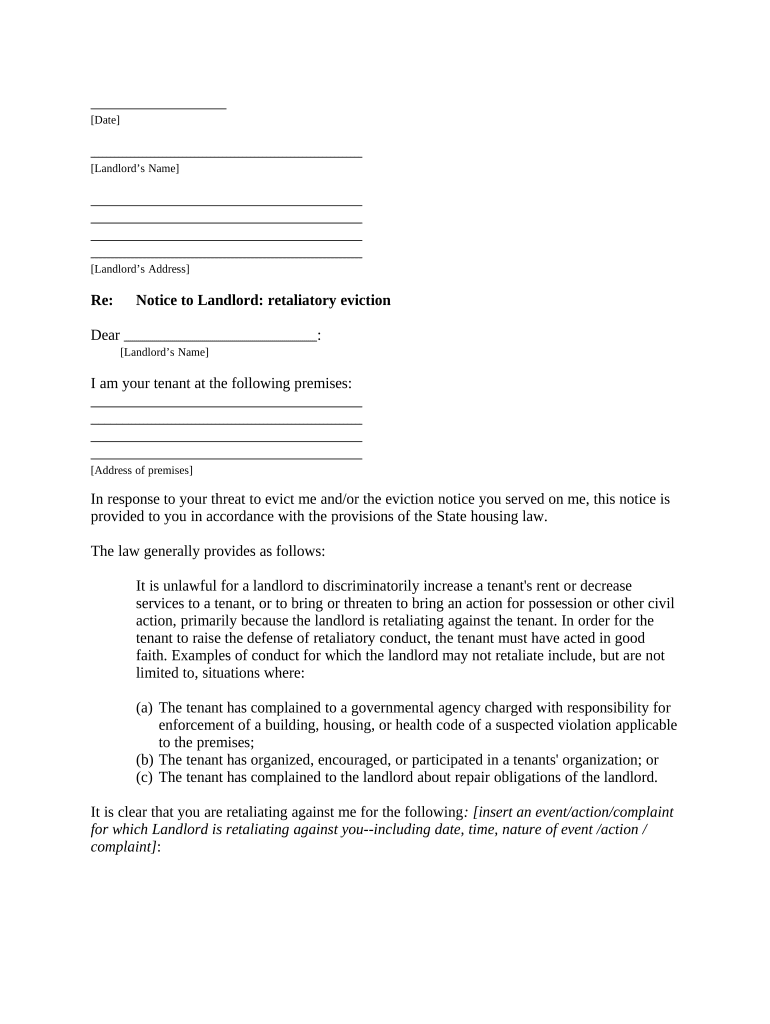
retaliatory eviction punitive damages Preview on Page 1

Here's how it works

01. Edit your retaliatory eviction punitive damages online
Type text, add images, blackout confidential details, add comments, highlights and more.
02. Sign it in a few clicks
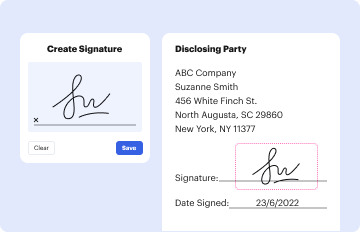
Draw your signature, type it, upload its image, or use your mobile device as a signature pad.
03. Share your form with others
Send how to delay eviction in illinois via email, link, or fax. You can also download it, export it or print it out.

How to use or fill out Letter from Tenant to Landlord containing Notice to landlord to cease retaliatory threats to evict or retaliatory eviction - Illinois

Form edit decoration
9.5
Ease of Setup
DocHub User Ratings on G2
9.0
Ease of Use
DocHub User Ratings on G2
  1. Click ‘Get Form’ to open it in the editor.
  2. Begin by entering the date at the top of the document. This sets the context for your notice.
  3. Fill in the landlord’s name and address in the designated fields. Ensure accuracy for effective communication.
  4. In the greeting, address your landlord directly using their name, which personalizes your message.
  5. Provide your address as a tenant in the specified section. This confirms your identity and residence.
  6. Clearly state the reason for this notice, referencing any threats or eviction notices received. Be specific about dates and actions taken by you that may have prompted retaliation.
  7. List examples of protected tenant actions that may have led to retaliation, ensuring you highlight your good faith efforts.
  8. Conclude with a demand for withdrawal of any eviction attempts and mention potential defenses against retaliatory eviction if necessary.
  9. Sign and date the document at the bottom, ensuring it is ready for delivery.
  10. Complete the Proof of Delivery section by selecting how you delivered this notice and signing it accordingly.

Start using our platform today to easily fill out and manage your documents online for free!

be ready to get more

Complete this form in 5 minutes or less

Get form

Got questions?

We have answers to the most popular questions from our customers. If you can't find an answer to your question, please contact us.
Contact us
Other Retaliatory Actions Landlords cant decrease services (like snow removal), increase security deposits, impose unreasonable fees, or change lease terms to harass tenants. They can also not threaten to sue tenants who are acting in good faith.
If severe or repeated harassment continues despite warnings, the landlord has the right to evict tenants. In less extreme cases, avoiding eviction can reduce legal risks.
Dear () , I () have been a tenant at () since (). I am writing because I have been subject to harassment, intimidation, and threats by you and your agents. I demand that you cease this unlawful conduct immediately.
Whether you can sue your landlord for emotional distress depends on the specific facts of your case. In general, to win a lawsuit for emotional distress, you must prove that your landlords conduct was intentional or reckless, and that it caused you severe emotional distress.
Dear (NAME OF LANDLORD) , I (NAME OF TENANT) have been a tenant at (TENANT ADDRESS) since (DATE TENANCY BEGAN). I am writing because I have been subject to harassment, intimidation, and threats by you and your agents. I demand that you cease this unlawful conduct immediately.

Security and compliance

At DocHub, your data security is our priority. We follow HIPAA, SOC2, GDPR, and other standards, so you can work on your documents with confidence.

Learn more
ccpa2
pci-dss
gdpr-compliance
hipaa
soc-compliance

People also ask

Stay Calm and Professional: Maintain your composure when interacting with your landlord. Responding with anger or frustration can escalate the situation. Document Everything: Keep detailed records of all interactions with your landlord, including dates, times, and the nature of the conversations.
Tenant harassment, in this context, refers to any act or behavior by a tenant that is intended to intimidate, threaten, or cause distress to a property manager or landlord. This can take various forms such as verbal abuse, assault, property damage, or even stalking.
The Landlord Retaliation Act 1, prohibits landlords from taking retaliatory action against a tenant. This legislation repeals the Retaliatory Eviction Act of 1963, which was a narrower declaration that landlords who refuse to renew tenancy for retaliatory purposes were acting against public policy.

Related links