






Printable Bowel Movement Tracking Chart Overview
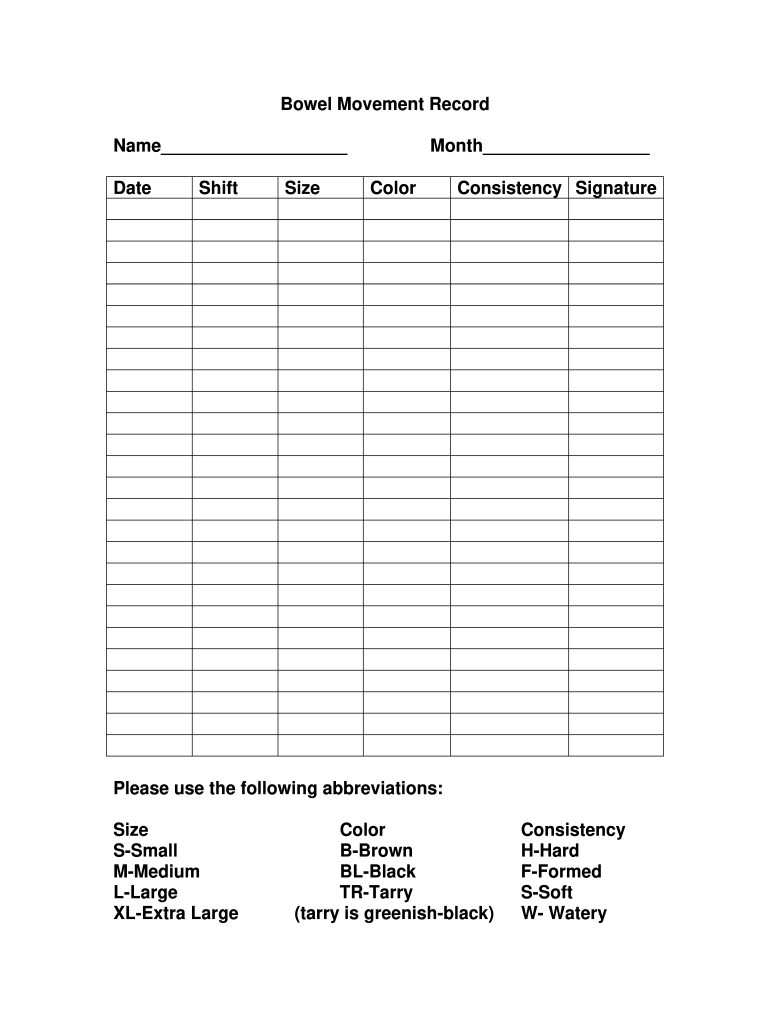
The printable bowel movement tracking chart serves as a valuable tool for individuals looking to monitor their bowel health effectively. This chart aids in documenting essential details about bowel movements, including frequency, consistency, color, and size. Individuals can print this chart and fill it out manually, providing an easy way to keep a record over time. Proper tracking can assist healthcare providers in diagnosing potential gastrointestinal issues, making this form instrumental for personal health management.
Key Features of the Tracking Chart
-
Structured Layout: The tracking chart typically includes sections for date, size, color, and consistency. Each category has defined parameters to guide users on what to record.
-
Measurement Options: Users can note the size of bowel movements using abbreviations for small (S), medium (M), large (L), and extra-large (XL). This simple format helps in standardizing reports for clinical review.
-
Color and Consistency Indicators: The chart often features a color key (B for brown, BL for black, TR for transparent) and consistency categories (H for hard, F for formed, S for soft, W for watery), allowing users to describe their bowel movements comprehensively.
How to Use the Printable Chart
To make effective use of the printable bowel movement tracking chart, follow these steps:
-
Download and Print: Access the chart document from a reliable source and print multiple copies, ensuring a supply for daily tracking.
-
Fill Out Daily: After each bowel movement, record the relevant details on the chart. Document the date, size, color, and consistency as per the above indicators.
-
Review Regularly: At the end of each week or month, review your entries to identify trends or changes in bowel habits. This information can help highlight any necessary adjustments to diet or lifestyle.
-
Consult Healthcare Providers: Bring the completed charts to medical appointments. These records can facilitate discussions regarding gastrointestinal health and any symptoms or concerns.
Benefits of Tracking Bowel Movements
-
Increased Awareness: Documenting bowel habits helps individuals become more aware of their gastrointestinal health. This awareness can lead to timely medical intervention if necessary.
-
Improved Communication: The chart serves as a handy reference for doctors. It enhances the quality of consultations by providing precise data on bowel habits, which is crucial for diagnosis.
-
Personal Health Monitoring: By tracking bowel movements, individuals can identify dietary impacts, reactions to medications, or lifestyle changes affecting their health.
Variations of the Chart
-
Digital Formats: In addition to printed versions, some may prefer a digital stool monitoring chart that can be filled out on tablets or smartphones. These versions can offer features such as reminders and automatic data calculations.
-
Bristol Stool Chart Tracking: Integrating the Bristol stool chart into the tracking process allows individuals to describe the consistency of their stools more descriptively. Many charts available include a side reference to the Bristol stool chart for easy comparison.
Considerations for Using Bowel Movement Charts
-
Regularity in Tracking: Consistent tracking is key for accurate health monitoring. A sporadic record may lead to misleading assessments.
-
Privacy Concerns: Since the chart contains personal health information, ensure it is stored securely. Digital formats should be password-protected if sensitive information is included.
-
Consultation with Professionals: While self-monitoring is beneficial, seeking professional guidance based on the data collected is paramount for addressing any health concerns.
By utilizing a printable bowel movement tracking chart effectively, individuals can take proactive steps toward understanding and managing their gastrointestinal health.