




Here's how it works

01. Edit your form online
Type text, add images, blackout confidential details, add comments, highlights and more.

02. Sign it in a few clicks
Draw your signature, type it, upload its image, or use your mobile device as a signature pad.

03. Share your form with others
Send it via email, link, or fax. You can also download it, export it or print it out.
How to use or fill out uniform minors with our platform

- Click ‘Get Form’ to open it in the editor.
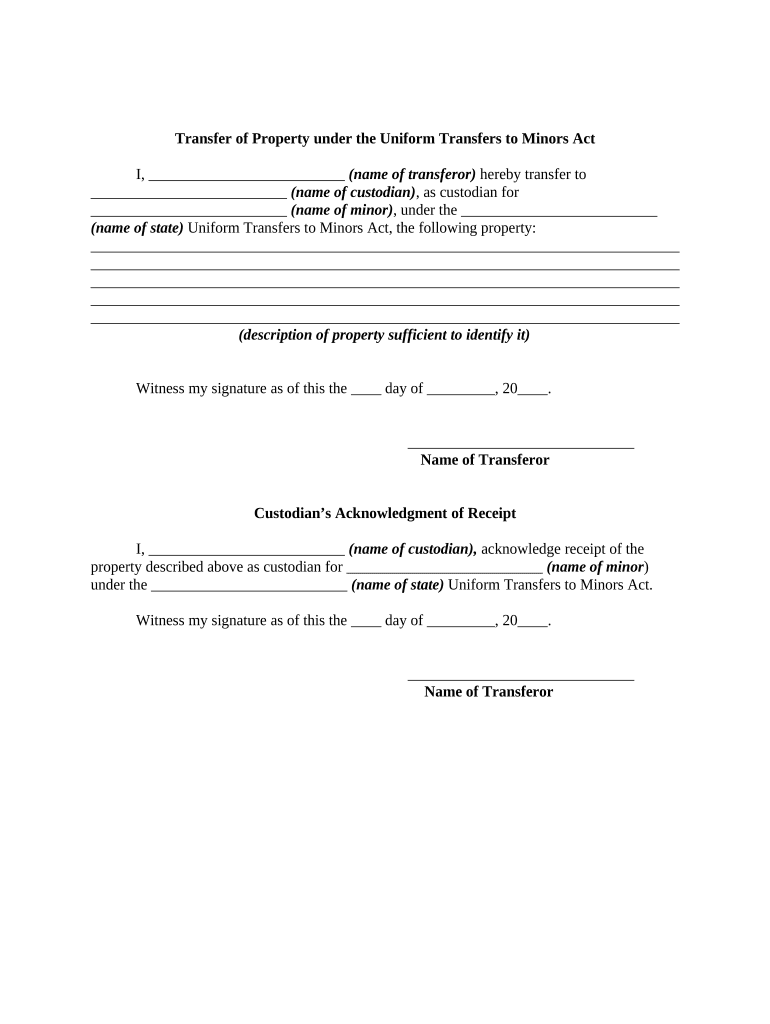
- Begin by entering the name of the transferor in the designated field. This is the individual transferring property.
- Next, input the name of the custodian who will manage the property for the minor. Ensure this is accurate as it holds legal significance.
- In the following field, specify the name of the minor who will benefit from this transfer.
- Indicate your state by filling in the appropriate section regarding which state's Uniform Transfers to Minors Act applies.
- Provide a detailed description of the property being transferred. This should be clear enough to identify it without ambiguity.
- Finally, sign and date at the bottom of the form to validate your transfer. The custodian must also acknowledge receipt by signing in their section.
Start using our platform today for free to streamline your document editing and signing process!
Fill out uniform minors online
It's free
It's free
Security and compliance
At DocHub, your data security is our priority. We follow HIPAA, SOC2, GDPR, and other standards, so you can work on your documents with confidence.
Learn more




