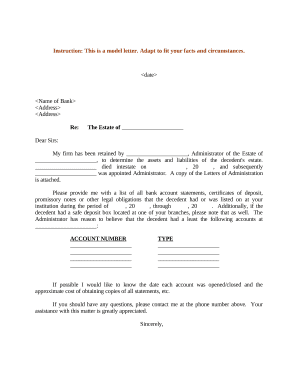
01. Edit your inheritance letter sample online
Type text, add images, blackout confidential details, add comments, highlights and more.

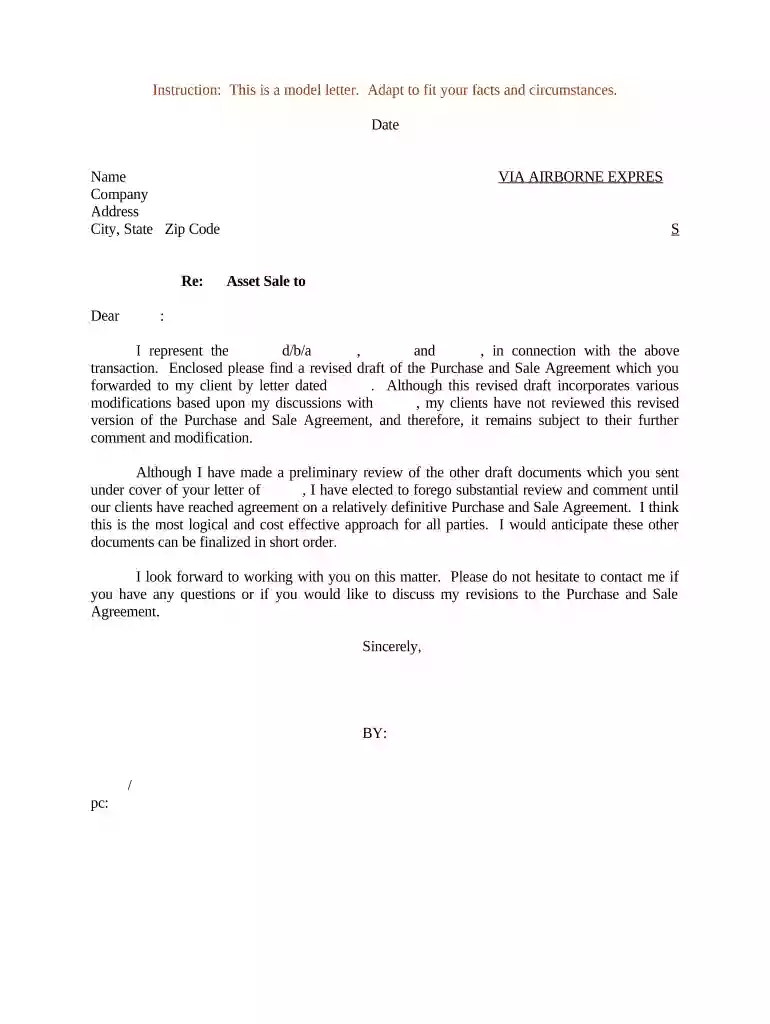
Type text, add images, blackout confidential details, add comments, highlights and more.

Draw your signature, type it, upload its image, or use your mobile device as a signature pad.

Send letter of inheritance via email, link, or fax. You can also download it, export it or print it out.
The letter of inheritance is a formal document that serves as a notification to beneficiaries regarding their rights to inherit assets after a person's death. This communication is typically initiated by the executor of the estate or the attorney representing the estate. The letter traditionally outlines the relationship between the deceased and the beneficiaries, the assets being inherited, and the legal implications of accepting the inheritance.
A letter of inheritance generally includes several key components:
In practical applications, consider these common scenarios when crafting a letter of inheritance:
After the Death of a Parent: A letter may be sent to adult children outlining their share of the family home and other assets.
Distribution Amidst Complications: If there are disputes among heirs, the letter should address how assets are allocated to mitigate confusion and potential conflict.
When Assets are in Trust: In instances where the deceased set up a trust, the letter needs to explain the role of trustees and stipulations governing the trust.
Drafting an inheritance letter requires attention to detail and an understanding of both emotional and legal impacts. Follow these guidelines:
Use Professional Language: Maintain a formal tone throughout the letter. This respects the gravity of the situation and the legalities involved.
Provide Clear Instructions: Include any steps beneficiaries should follow to claim their inheritance—this can cover filing for probate or obtaining necessary documentation.
Include Documentation: Attach copies of important documents, such as the will or trust agreement, which substantiate the inheritance claims.
Legal requirements for a letter of inheritance can vary significantly from state to state. In some jurisdictions, additional documentation may be required to validate the claims. Key legal phrases to consider include:
Probate Process: Specify if the estate needs to go through probate, which is a judicial process required in many cases to authenticate the will.
Tax Implications: Inform beneficiaries about potential tax liabilities associated with their inheritance, such as estate or inheritance taxes, depending on the value of the estate.
Here are some foundational templates that can serve as starting points for drafting a letter of inheritance:
Basic Inheritance Notification: A simple letter outlining who inherits what and how the distribution will occur.
Detailed Inheritance Agreement: A comprehensive letter that includes not only distribution but also mentions possible debts or claims against the estate that may affect inheritances.
Executor’s Letter to Beneficiaries: A formal communication from the executor detailing the probate process, next steps, and timelines for distribution.
A well-crafted letter of inheritance is crucial in ensuring that all parties involved understand their rights and responsibilities. Clarity in communication can prevent disputes and ensure a smooth transition during what is often a difficult time for families. Using structured templates and understanding the necessary components ensures that the communication is comprehensive, complete, and legally sound.
At DocHub, your data security is our priority. We follow HIPAA, SOC2, GDPR, and other standards, so you can work on your documents with confidence.