Assignment of Deed of Trust by Individual Mortgage Holder - Arizona 2026

Get Form
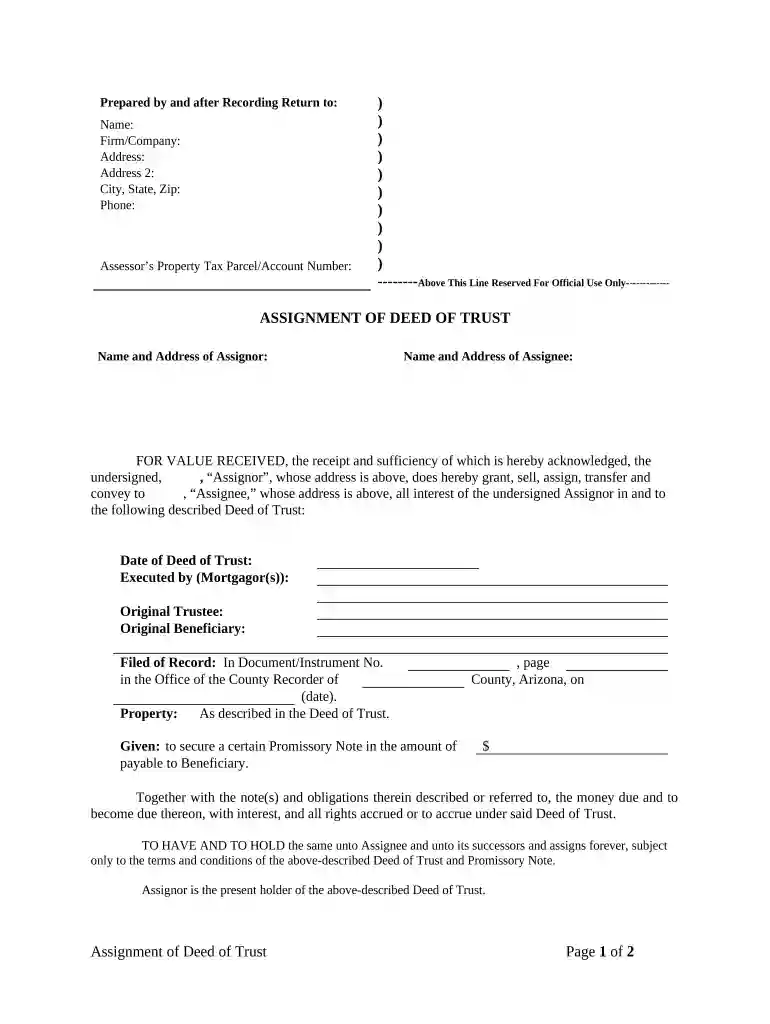
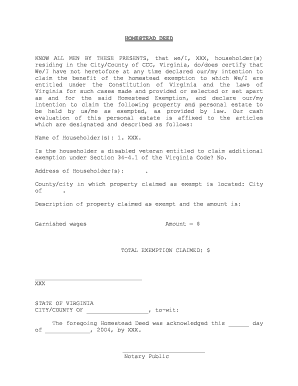
Assignment of Deed of Trust by Individual Mortgage Holder - Arizona Preview on Page 1

Here's how it works

01. Edit your form online
Type text, add images, blackout confidential details, add comments, highlights and more.

02. Sign it in a few clicks
Draw your signature, type it, upload its image, or use your mobile device as a signature pad.

03. Share your form with others
Send it via email, link, or fax. You can also download it, export it or print it out.

How to use or fill out Assignment of Deed of Trust by Individual Mortgage Holder - Arizona with our platform

Form edit decoration
9.5
Ease of Setup
DocHub User Ratings on G2
9.0
Ease of Use
DocHub User Ratings on G2
  1. Click ‘Get Form’ to open it in the editor.
  2. Begin by filling in the 'Prepared by and after Recording Return to' section. Enter your name, firm/company, address, city, state, zip code, and phone number.
  3. Next, provide the Assessor’s Property Tax Parcel/Account Number for accurate identification of the property involved.
  4. In the 'ASSIGNMENT OF DEED OF TRUST' section, enter the names and addresses of both the Assignor (you) and Assignee (the recipient).
  5. Fill in details regarding the Deed of Trust including its date, executed by whom (Mortgagor(s)), original trustee, original beneficiary, and where it was filed.
  6. Specify the amount secured by the Promissory Note and ensure all relevant information is accurately captured.
  7. Finally, sign and date the document. Ensure that a notary public acknowledges your signature as required.

Start using our platform today to streamline your document editing process for free!

be ready to get more

Complete this form in 5 minutes or less

Get form

Got questions?

We have answers to the most popular questions from our customers. If you can't find an answer to your question, please contact us.
Contact us
For real estate, you will need to prepare and execute a new deed transferring the property to the trust. This deed is typically called a Quitclaim Deed or a Warranty Deed depending on the circumstances. If the property owner has a mortgage make sure to consult with the mortgage lender beforehand.
A Deed of Assignment is a legal document used to transfer ownership of a specific asset or right from one party to another. In various situations, a Deed of Assignment can provide several benefits, such as legal protection, clarity of ownership, and streamlined processes.
Transfer is of titles whereas the Assignment is for obligations and rights. certificate. Assign is generally associated with intangible properties such as a debt, or benefits arising from contracts for example rental income under a lease agreement.
What Is Assignment in a Deed of Trust? In real estate law, assignment is simply the transfer of a deed of trust from one party to another. This usually happens when the beneficiary of a trust deed sells their loan to another lender.
As a private financing agreement, a trust deed requires loan servicing and cant be liquidated like stock. When necessary, the promissory note can be sold to regain capital and reinvest elsewhere, but liquidity is not instantaneous.

Security and compliance

At DocHub, your data security is our priority. We follow HIPAA, SOC2, GDPR, and other standards, so you can work on your documents with confidence.
Learn more
ccpa2
pci-dss
gdpr-compliance
hipaa
soc-compliance

People also ask

Under Arizona law, breach of contract claims must be brought within six years of default. This time limitation applies to Deed of Trust default actions. Therefore, Deed of Trust lenders must act promptly if they want to enforce their rights.
Are you familiar with the deed of trust? In Arizona, this is the primary financial security document thats used when purchasing a home.
Arizona Assignment of Deed of Trust Overview The Truth and lending act requires that borrowers be notified when their deed of trust debt has been sold, transferred, or assigned to a new creditor. Generally, within 30 days to avoid up to $2,000.00 in statutory damages, plus reasonable attorneys fees.

Related links