







Definition & Meaning of a Release of Lien Form in Texas
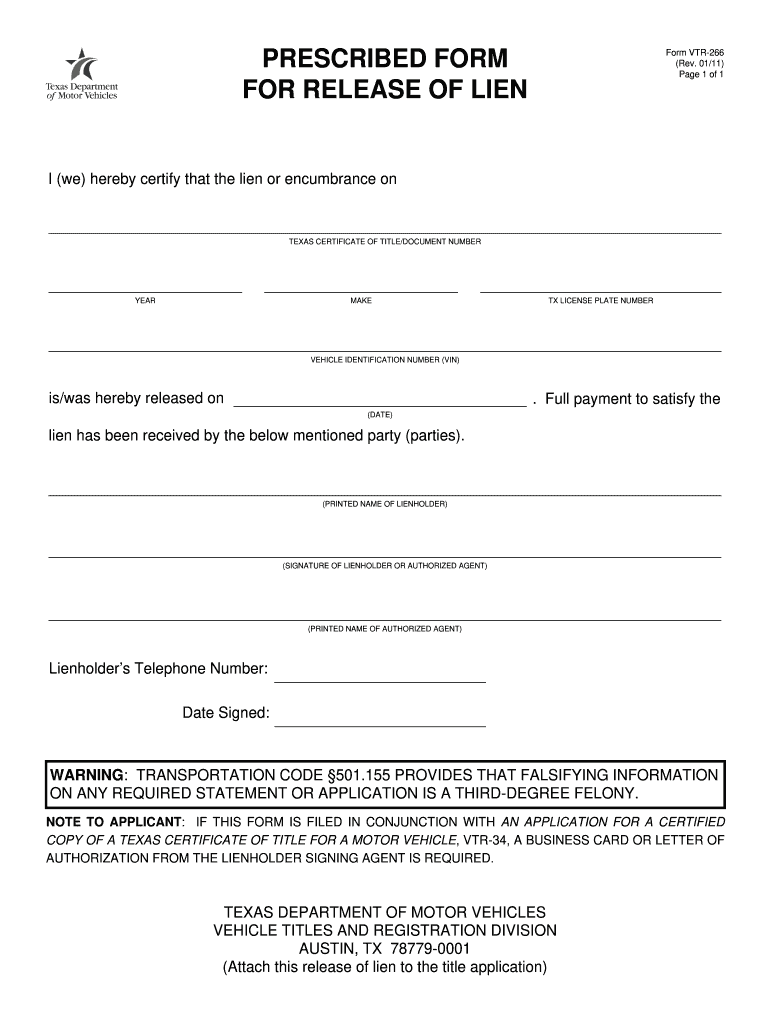
A release of lien form in Texas serves as a legal document certifying that a lien on a property or vehicle has been released, meaning the debt has been paid in full. This form is crucial in real estate and vehicle transactions, allowing property owners or vehicle buyers to clear any claims against the asset. In Texas, this document is often referred to as the VTR-266 form for vehicles. It captures essential details such as the vehicle's title number, make, license plate number, and Vehicle Identification Number (VIN) or property details in case of real estate.
The importance of this form lies in its ability to provide legal proof that a lienholder—the entity that financed the purchase—can no longer claim an interest in the property. Once the release is filed, it enables owners to use or sell their property without encumbrances.
Key Elements of a Release of Lien Form in Texas
When filling out a release of lien form, several critical elements must be included:
- Lienholder Information: This section typically requires the name and address of the lienholder—this can be a bank, financial institution, or individual.
- Borrower/Owner Information: The full name and address of the owner who repaid the lien must be accurate to ensure proper identification.
- Property Details: For vehicles, this includes the make, model, year, VIN, and title number. For real estate, it involves the property address and legal description.
- Date and Signatures: The form must be dated and signed by the lienholder or an authorized representative.
- Statement of Release: There should be language clearly stating that the lien is being released upon full payment of the obligation.
Steps to Complete a Release of Lien Form in Texas
Completing a release of lien form involves a structured approach:
- Obtain the Correct Form: Acquire the VTR-266 for vehicle releases or the appropriate form for real estate from the Texas Department of Motor Vehicles or a local authority.
- Fill out Lienholder Details: Provide the lienholder's name, address, and other required information.
- Enter Borrower/Owner Information: Accurately detail the full name and address of the borrower who fulfilled the obligations.
- Describe the Asset: Include specifics about the vehicle (e.g., make, model, year, VIN) or property (e.g., address, legal description).
- Signature and Date: The form must be signed by the lienholder, confirming that the lien has been released, and dated.
- Submit the Form: Depending on the asset type, submit the signed release form to the appropriate authority—this could be the local DMV for vehicles or deed records office for real estate.
Legal Use of the Release of Lien Form
The legal implications of a release of lien form cannot be understated. Once executed, the release:
- Transfers ownership without claims: This allows the owner the freedom to sell, transfer, or further mortgage the asset.
- Provides protection against claims: If the document is properly recorded, it protects the owner from future claims based on the previously existing lien.
- Serves as evidence in disputes: Should any disputes arise concerning ownership or debt obligations, the release serves as legal proof that the lien has been satisfied, reducing complexities in legal proceedings.
Differences Between Digital vs. Paper Version of the Release of Lien Form
Many states, including Texas, permit electronic submissions, making it essential to understand the differences:
- Accessibility: Digital forms can be filled out and submitted online, allowing for quicker processing and easier access. Paper forms oftentimes require visits to municipal offices.
- Record Keeping: Electronic submissions may provide immediate confirmation of filing for records, while paper documents must be tracked manually.
- Cost and Efficiency: Digital submissions can reduce overall costs associated with mailing and printing, and minimize delays in processing.
Examples of Situations Requiring a Release of Lien Form
The release of lien form may be needed in several contexts, including:
- Vehicle Transactions: When a seller pays off a car loan and must release the title to a buyer, ensuring the buyer is free of previous liens.
- Real Estate Sales: Following mortgage payoff, a homeowner needs to file a release so that future buyers can acquire the property without existing debts attached.
- Contractor Liens: When a contractor has fulfilled obligations and the homeowner pays the dues, the contractor must file a release of lien form to clear the homeowner’s title from any claims.
Important Terms Related to a Release of Lien Form
Understanding the terminology associated with the use of a lien release can assist users in effectively navigating the process:
- Lien: A legal right or interest that a lender has in a borrower's property, granted until the obligation owed by the borrower is satisfied.
- Beneficiary: The individual or entity benefiting from the lien, typically the lender or contractor in property or vehicle transactions.
- Authorization: Written consent that enables a designated individual to sign on behalf of the lienholder.
- Secured Debt: A debt backed by collateral to reduce the risk associated with lending.
Knowing these terms can enhance comprehension and facilitate a smoother interaction with the release of lien process in Texas.




