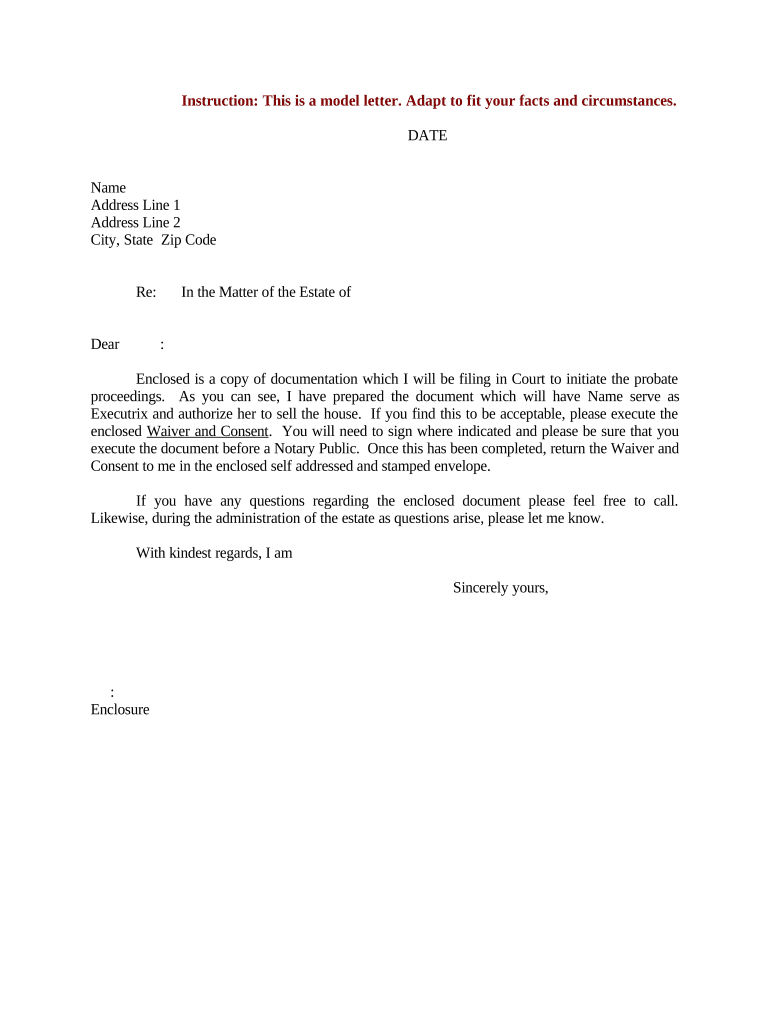







Understanding the Estate Probate Form
The estate probate form is a critical document utilized in legal proceedings to validate a deceased person’s will and manage the distribution of their estate. This process is essential in ensuring that the wishes of the deceased, as outlined in their will, are honored while also making sure that any outstanding debts and taxes are settled. The estate probate form serves as the foundation for initiating probate proceedings in court, which can vary in complexity depending on the size of the estate and the number of heirs.
Essential Components of the Estate Probate Form
The estate probate form typically includes several key components that must be filled out accurately:
-
Decedent's Information: This section requires the full name, residence, and date of death of the deceased. It is important to gather all necessary details related to the decedent to ensure proper identification.
-
Executor/Appointee Information: The form will need the name and address of the individual who is nominated to serve as the executor or personal representative of the estate. This person is responsible for executing the will and ensuring that the estate is administered according to legal protocols.
-
Assets and Liabilities: To properly assess the estate’s value, the form includes a comprehensive list of the decedent's assets (property, bank accounts, investments) and liabilities (debts, mortgages). This information is crucial for calculating the estate's worth and formulating a transparent estate distribution plan.
-
Waivers and Consents: If applicable, the form may ask for waivers from other heirs regarding the probate process. Obtaining these waivers can simplify the court's approval.
Steps to Use the Estate Probate Form
Utilizing the estate probate form involves several steps to ensure it is completed and submitted correctly:
-
Gather Required Information: Collect all necessary documents, including the will, death certificate, and identification of the deceased and executor.
-
Complete the Form: Fill out each section of the estate probate form thoroughly. Ensure accuracy and transparency to avoid potential delays in the probate process.
-
File the Form with the Appropriate Court: Determine the correct probate court in your jurisdiction and submit the completed form along with any required fees. Filing may differ based on county regulations.
-
Attend the Hearing: In some instances, you may need to attend a court hearing where the judge will review the estate probate form and make a ruling regarding the legitimacy of the will and the appointment of the executor.
Common Users of the Estate Probate Form
The estate probate form is typically used by individuals involved in the following situations:
-
Executors or Personal Representatives: Those appointed to manage the deceased's estate are the primary users. They must navigate the legal requirements of probate to fulfill their responsibilities.
-
Heirs or Beneficiaries: Individuals who stand to inherit from the estate may need to refer to the estate probate form to understand their rights and the probate process.
-
Estate Attorneys: Legal professionals specializing in probate law may assist clients in preparing the estate probate form, ensuring compliance with local regulations and protocols.


Legal Use and Importance of the Estate Probate Form
The estate probate form is not merely a procedural step; it has substantial legal implications:
-
Validation of the Will: By filing this form, the court can officially recognize the will as valid, thereby allowing for the legal distribution of assets in alignment with the decedent's wishes.
-
Protection of Heirs' Rights: The form serves to protect the rights of heirs and beneficiaries, providing them a legal recourse to challenge any discrepancies or disputes regarding the estate.
-
Facilitation of Asset Management: With this form, executors receive the legal authority to manage and distribute the estate’s assets, ensuring that debts are paid and properties are transferred lawfully to the rightful heirs.
State-Specific Variances in the Estate Probate Form
Probate laws can differ significantly from one state to another, which may lead to variations in how the estate probate form is structured and utilized:
-
Filing Fees: Different states may impose varying fees for filing the estate probate form, impacting the overall cost of the probate process.
-
Documentation Requirements: Some jurisdictions may require additional documentation or specific forms to accompany the estate probate form, such as a notice to heirs or an inventory of assets.
-
Probate Process Duration: The timeframe for the probate process can vary widely, affected by state laws governing the management and distribution of estates.
Example Scenarios for Using the Estate Probate Form
Many real-world instances illustrate the necessity and application of the estate probate form:
-
Example One: Simple Estate: A person named as the executor in a straightforward will files the estate probate form in a state with minimal asset management requirements. The court quickly validates the will, leading to an expedited distribution of assets to heirs.
-
Example Two: Complex Estate Dispute: In contrast, a contested will involving multiple heirs leads to a more complicated filing. In this case, the estate probate form initiates not only the validation of the will but also a court hearing to resolve disputes among family members, requiring legal representation for all parties involved.
By understanding these components and considerations associated with the estate probate form, individuals can navigate the probate process more effectively, ensuring compliance with legal requirements while achieving fair and just outcomes for all parties involved.