






Definition & Meaning of Motion for Change of Venue
A motion for change of venue is a formal request submitted to a court seeking to transfer a legal case from one jurisdiction to another. This type of motion is frequently utilized in both civil and criminal proceedings when a party believes that an impartial trial cannot be conducted in the current location due to factors such as pretrial publicity, convenience of the parties, or potential bias from the local community. The foundation of such a motion rests on the principle that all litigants are entitled to a fair and unbiased trial.
When considering a motion for change of venue, courts typically assess several factors, including:
- Fairness: Whether local public sentiment might unduly sway the proceedings.
- Location Convenience: The proximity of witnesses, evidence, and legal resources to the desired venue.
- Complexity of the Case: The nature of legal issues involved can affect venue appropriateness.
How to Use the Motion for Change of Venue
To utilize a motion for change of venue effectively, the requesting party must follow a defined process, which typically includes:
- Research: Understand the local rules and precedents related to change of venue in your jurisdiction.
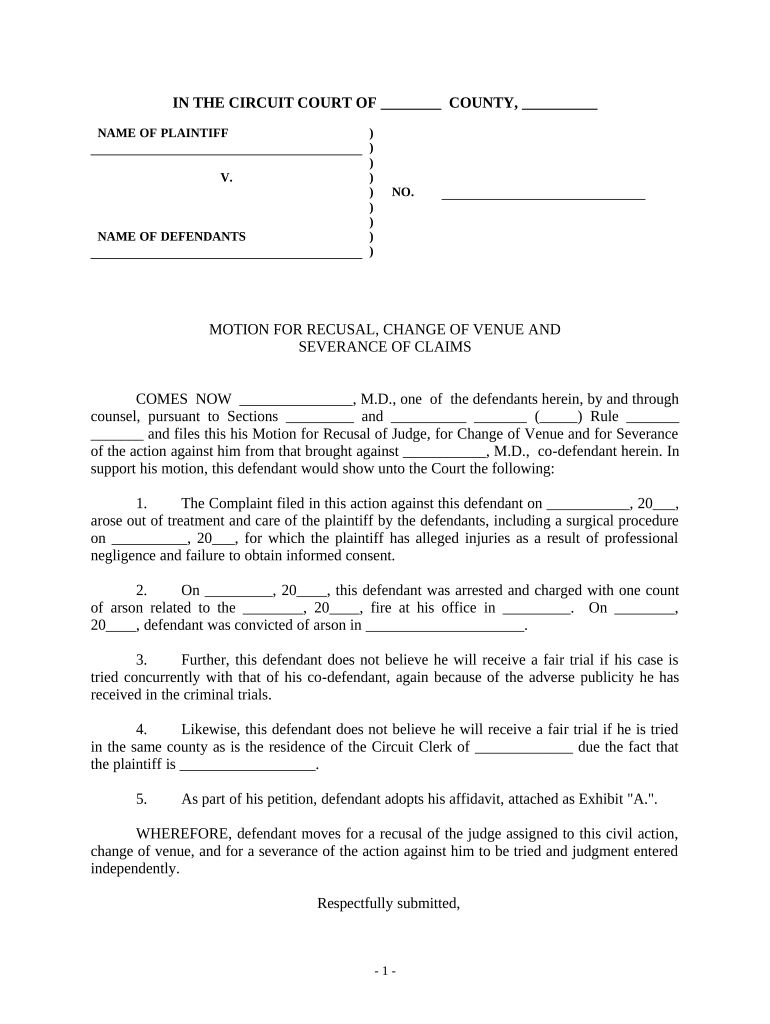
- Drafting the Motion: Clearly state the reasons for the requested change, supported by factual evidence. This may include affidavits and case law references.
- Filing the Motion: Submit the motion along with any necessary supporting documents to the court where the case is currently pending. Ensure compliance with local filing rules.
After the motion is filed, it often needs to be served to the opposing party, giving them an opportunity to respond. If a hearing is scheduled, parties may argue their positions regarding the appropriateness of the requested venue.
Key Elements of a Motion for Change of Venue
Crafting an effective motion for change of venue involves including several essential elements:
- Title: A clear title specifying it as a motion for change of venue.
- Introduction: A brief overview stating the motion's purpose and legal basis.
- Reasons for Change: Detailed rationale for the request, supported by facts and context—such as pretrial publicity or juror bias.
- Supporting Evidence: Affidavits, witness statements, or other tangible proof supporting the need for a venue change.
- Conclusion: A succinct statement requesting the court to grant the motion.
Each element plays a significant role in creating a compelling argument for why the venue should be changed. When presenting legitimate concerns, the court is more likely to consider the motion favorably.
Important Terms Related to Motion for Change of Venue
Understanding key terminology associated with motion for change of venue is crucial:
- Jurisdiction: The authority given to a legal body to administer justice within a defined area or subject matter.
- Venue: The specific location or court where a case is tried.
- Prejudice: An unfair bias or preconceived opinion affecting a party's right to a fair trial.
- Affidavit: A written statement confirmed by oath, used as supporting evidence in court.
- Civil Procedure: The body of law governing the methods and practices of civil litigation in courts.
Familiarity with these terms helps individuals navigate legal discussions and create accurate documentation.
Examples of Using a Motion for Change of Venue
Practical examples of when to file a motion for change of venue include:
- High-Profile Criminal Cases: If a defendant is charged with a crime that has garnered extensive media coverage, they might request a change to a different jurisdiction where the publicity hasn’t influenced public opinion.
- Local Bias: In cases involving disputes between neighbors, a party might argue that a small-town jury could favor local residents, meriting a transfer to a more neutral location.
- Witness Location: In a family law case, if most witnesses reside in a different county, a motion to change the venue could be justified based on convenience.
Assessing case specifics helps attorneys advise clients on when a change might be judicious.
State-Specific Rules for Motion for Change of Venue
Regulations surrounding a motion for change of venue can vary widely from state to state. Important aspects to consider:
- Time Limits: Many states impose strict deadlines for filing a motion for change of venue, often aligned with initial pleadings or before the trial commences.
- Grounds for Change: Different states may recognize specific grounds under which a venue change is appropriate, impacting how motions should be framed.
- Local Court Procedures: Each jurisdiction may have its rules governing the filing process, including formatting and required notice to other parties.
Understanding these variances is essential for successful navigation through different judicial systems.
By grasping the definition, utility, structure, and variations of motions for change of venue, parties can better prepare themselves for legal proceedings, ensuring their right to a fair trial is upheld.