




01. Edit your waiver of final accounting and consent to distribution with receipt and release online
Type text, add images, blackout confidential details, add comments, highlights and more.

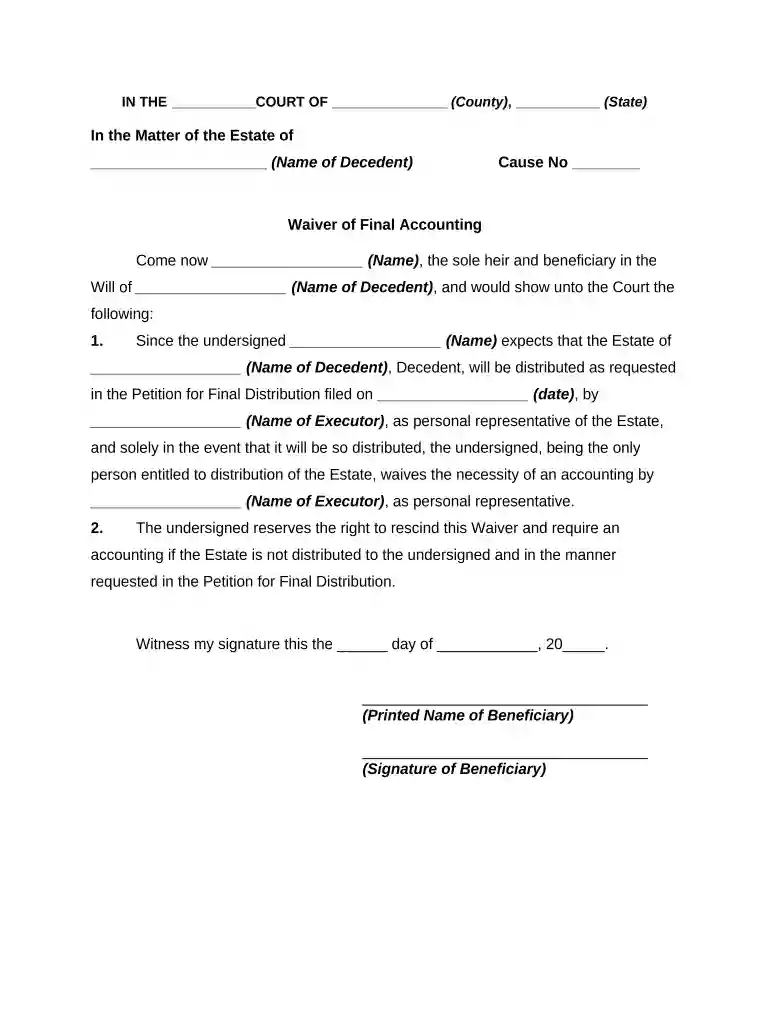
Type text, add images, blackout confidential details, add comments, highlights and more.

Draw your signature, type it, upload its image, or use your mobile device as a signature pad.

Send probate waiver of accounting form via email, link, or fax. You can also download it, export it or print it out.
A waiver of final accounting is a legal document primarily used in the probate process, where a sole heir or beneficiary consents to forgo the requirement for an executor to submit a final accounting of the estate's financial transactions. This waiver is typically contingent upon the condition that the estate's distribution aligns with the terms laid out in the distribution petition. Should the distribution not occur as specified, the beneficiary retains the right to withdraw or rescind the waiver, thus preserving their eligibility to request an accounting in the future.
The waiver serves several purposes:
Understanding the nuances of this important legal instrument is essential for beneficiaries involved in estate matters.
Several critical components make up a waiver of final accounting. Each element must be precisely detailed to ensure the waiver's validity and effectiveness:
These elements collectively ensure that the waiver is legally binding and protects the interests of both the beneficiary and the executor.
Completing a waiver of final accounting requires careful adherence to steps to ensure legality and clarity. Below are detailed instructions to guide you through the process:
Obtain the Waiver Form: The beneficiary should procure the appropriate waiver form. This form can often be found online or through legal aid resources and must comply with state-specific requirements.
Fill in Personal Information:
Specify Distribution Terms:
Include the Rescind Clause:
Review and Revise:
Sign and Date:
File the Waiver:
Following these steps carefully will help ensure compliance and protect the beneficiary's rights throughout the estate settlement process.
The waiver of final accounting must be executed legally to ensure it is enforceable. The following points underscore the legal framework surrounding its use:
Understanding these legal aspects ensures that all parties involved can navigate estate processes with clarity and assurance.
The waiver of final accounting is primarily utilized by:
This waiver simplifies interactions between beneficiaries and executors while also safeguarding the interests of all parties involved in the estate settlement process.


At DocHub, your data security is our priority. We follow HIPAA, SOC2, GDPR, and other standards, so you can work on your documents with confidence.





The purpose of this report is to provide a summary of. Technical Impracticability (TI) waivers that have been issued by U.S. Environmental Protection Agency.Read more
by WF Locke-Paddon 1965 Scope of the Comment. The executor or administrator of a decedents estate has a general duty to account to the beneficiary; a duty based in common.Read more
Request and Order for Waiver of Accounting (GC-410). Ask the court for permission to waive the need for an accounting that would otherwise be due.Read more


