
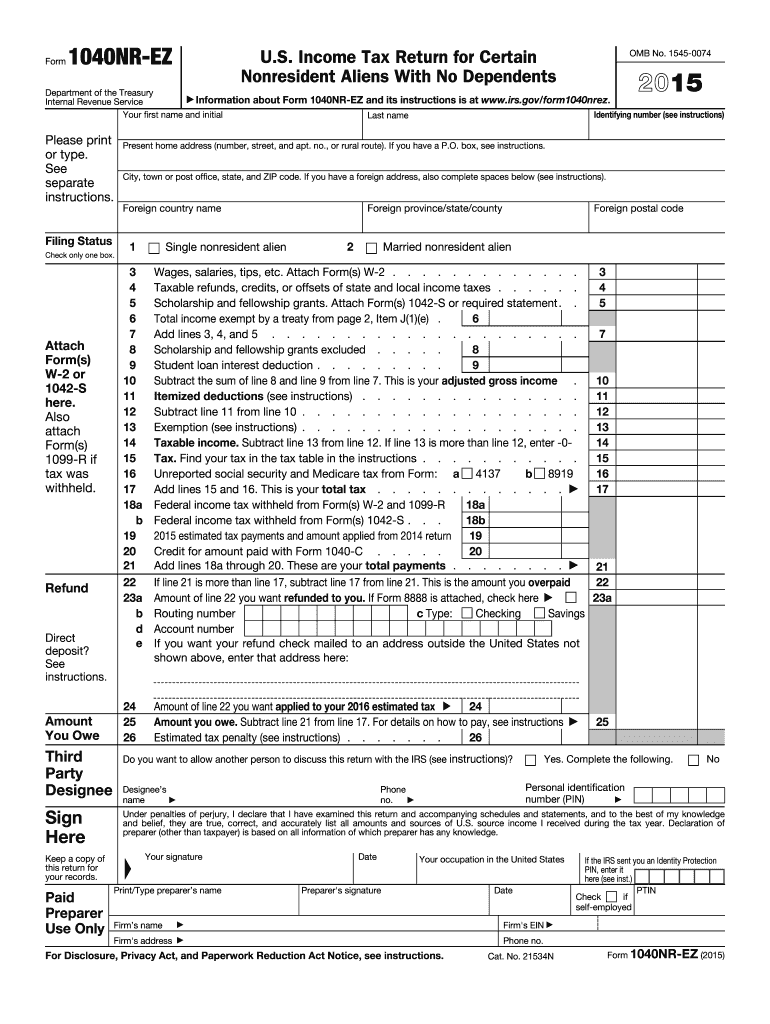







Definition and Meaning
The 2015 Form 1040NR is a tax document designed for nonresident aliens who have income from U.S. sources. It is used to report income, calculate taxes owed, and claim any applicable deductions or treaty benefits. This form is crucial for ensuring compliance with U.S. tax laws for individuals who do not qualify as residents but still earn money within the country. Understanding its purpose and requirements is essential for nonresidents to avoid potential legal issues and penalties associated with inaccurate filing.
How to Use the 2015 Form 1040NR
To correctly utilize the 2015 Form 1040NR, it's important to first determine your status as a nonresident alien and your need to file. Once confirmed, gather all necessary documentation, such as W-2s, 1099s, and records of any other U.S.-sourced income. The form requires you to report your personal information, income details, deductions, and any claimed treaty benefits. Follow the IRS instructions for completing each section, ensuring accuracy and completeness as you fill out the form to avoid errors that could delay processing or lead to penalties.
Key Sections of the Form
- Personal Information: Enter your name, address, and taxpayer identification number (TIN).
- Income Information: Report wages, salaries, tips, and other forms of U.S.-sourced income.
- Deductions and Adjustments: List any deductions you are eligible for under U.S. tax law.
- Tax Computation and Credits: Calculate the tax owed and any credits that may apply, such as the foreign tax credit if applicable.
- Additional Taxes: Report any additional taxes you may be liable for under specific circumstances.
How to Obtain the 2015 Form 1040NR
The 2015 Form 1040NR can be obtained directly from the IRS website, ensuring that you have the most up-to-date version. It may also be available through tax preparation software or services that handle nonresident alien tax matters. Be sure to download the accompanying instructions, as they provide detailed guidance on completing each section correctly. For those without internet access, you can request a paper form from the IRS by calling their helpline or visiting a local IRS office.
Steps to Complete the 2015 Form 1040NR
- Collect Documentation: Gather all relevant tax documents, including income statements, records of expenses, and any prior correspondence from the IRS.
- Fill Out Personal Information: Complete the top section with your personal details and taxpayer identification number.
- Report Income: List all U.S.-sourced income in the appropriate sections, ensuring accuracy and completeness.
- Claim Deductions and Credits: Identify applicable deductions and credits in line with IRS guidelines.
- Calculate Tax Liability: Use the tax tables provided in the form instructions to compute your total tax owed.
- Review and Sign: Double-check all entries for accuracy before signing and dating the form.
Who Typically Uses the 2015 Form 1040NR
Nonresident aliens who have U.S.-sourced income need to use this form. This includes foreign nationals working in the U.S. on temporary visas, students under certain visa programs, and professionals with income from U.S. companies. Understanding your tax status is essential, as it determines which specific sections of the form apply to your situation and what income needs to be reported.


IRS Guidelines for the 2015 Form 1040NR
The IRS provides detailed guidelines on who must file and how to properly complete the Form 1040NR. It specifies the types of income that must be reported, allowable deductions, and any provisions for claiming treaty benefits. The IRS guidelines also include helpful examples and scenarios to clarify complex rules. It is advisable to thoroughly review these guidelines or consult with a tax professional to ensure compliance and accuracy in your filing.
Filing Deadlines and Important Dates
Nonresident aliens must adhere to strict filing deadlines for the Form 1040NR. The deadline is typically April 15th each year for calendar year filers, though it can vary if facing special circumstances or if an extension is filed. An extension allows for additional time to file but must be requested prior to the original deadline. It's crucial to mark these dates on your calendar to avoid late filing penalties and interest on any taxes due.
Required Documents for Filing
To file the 2015 Form 1040NR, you will need essential documents such as:
- Form W-2: If you earned wages from a U.S. employer.
- Form 1099: For other types of income, like independent contractor payments or dividends.
- Visa Information: Documentation of your visa status and duration of stay in the U.S.
- Treaty Benefit Documents: Any paperwork supporting claims for treaty exemptions or benefits.
- Bank Statements: If reporting interest income or needing proof of financial transactions.
These documents help ensure every aspect of your tax situation is accurately represented on the form.
Penalties for Non-Compliance
Failing to file the Form 1040NR when required can result in significant penalties, including fines and interest on any taxes owed. Additional penalties may apply if the IRS determines there was an intentional disregard for the rules or fraudulent activity. It's essential to understand the filing requirements and to fully complete the form to avoid these potential financial and legal consequences.
Form Submission Methods
The 2015 Form 1040NR can be submitted to the IRS via several methods:
- Mail: Paper forms can be mailed to the IRS with the appropriate address listed in the form’s instructions.
- Online: Some tax preparation platforms allow for electronic filing of the 1040NR.
- In-Person: Though less common, some may choose to submit forms directly at an IRS office.
Selecting the correct submission method is important for ensuring timely receipt and processing by the IRS.




