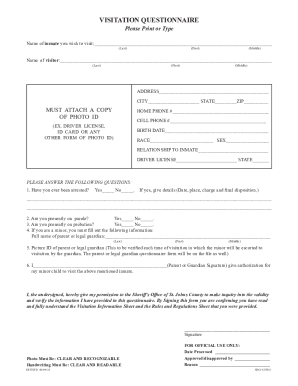
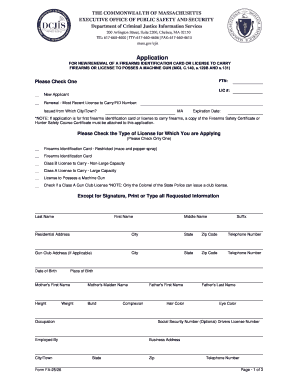
Oregon deed 2026

Get Form
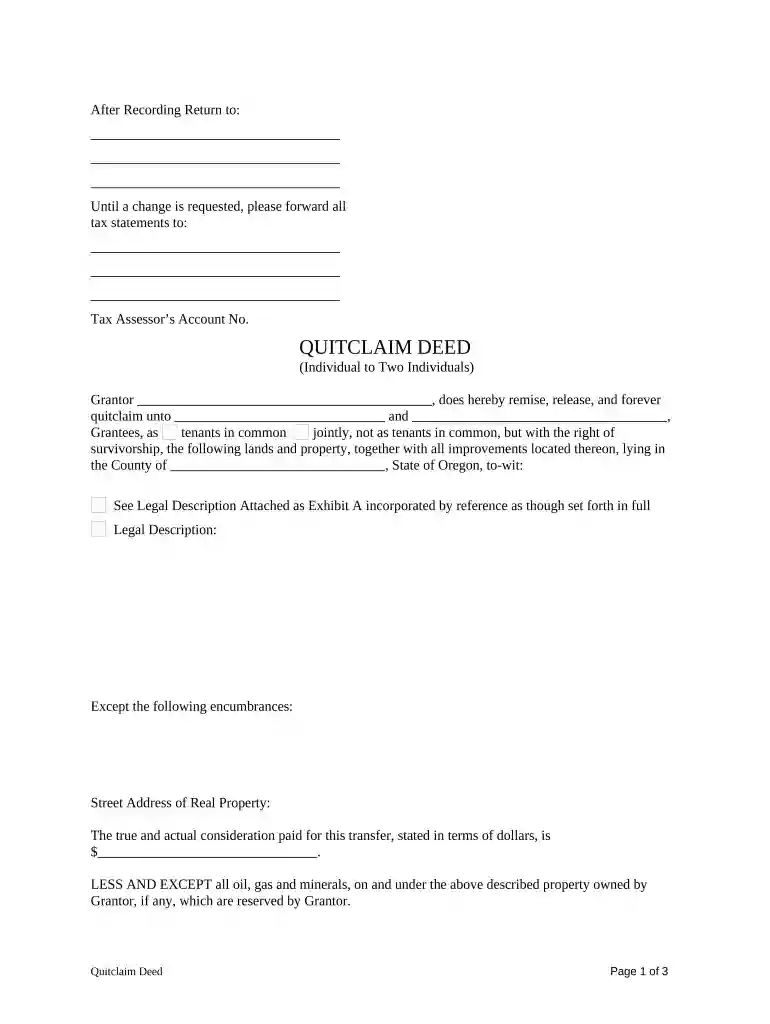
oregon deed Preview on Page 1

Here's how it works

01. Edit your form online
Type text, add images, blackout confidential details, add comments, highlights and more.

02. Sign it in a few clicks
Draw your signature, type it, upload its image, or use your mobile device as a signature pad.

03. Share your form with others
Send it via email, link, or fax. You can also download it, export it or print it out.

How to use or fill out Oregon Deed with our platform

Form edit decoration
9.5
Ease of Setup
DocHub User Ratings on G2
9.0
Ease of Use
DocHub User Ratings on G2
  1. Click ‘Get Form’ to open the Oregon Quitclaim Deed in the editor.
  2. Begin by filling in the Grantor's name, who is transferring the property. Ensure accuracy as this identifies the current owner.
  3. Next, enter the names of the Grantees, specifying whether they will hold the property as tenants in common or joint tenants with rights of survivorship.
  4. Provide a detailed legal description of the property being transferred. If you have an attachment (Exhibit A), ensure it is included and referenced correctly.
  5. Fill in any encumbrances that may affect the property, along with the street address for clarity.
  6. State the actual consideration paid for this transfer in dollars, ensuring compliance with local regulations.
  7. Complete tax proration details based on your agreement with Grantees regarding who will pay taxes for the year.
  8. Finally, sign and date the document. Ensure a notary public acknowledges your signature to validate the deed.

Start using our platform today to streamline your Oregon Deed process for free!

be ready to get more

Complete this form in 5 minutes or less

Get form

Got questions?

We have answers to the most popular questions from our customers. If you can't find an answer to your question, please contact us.
Contact us
Cons of a Contract for Deed Risk of Seller Default: Limited Legal Protections: Higher Interest Rates: Lack of Immediate Ownership Rights: Potential for Disputes:
A Title Deed is the most important document as far as property ownership is concerned. It is a legal document which confirms or proves that one is the owner of a property after having been transferred into ones name.
A deed for a house sometimes known as a property deed is a written document, typically drawn up by a real estate attorney, that moves property ownership from the seller (grantor) to the buyer (grantee). House deeds are important because they show who has legal ownership interest in a property.
No, the State of Oregon is a Tax Deed state rather than a tax lien state. Only the property owner and any lienholder(s) have the right to redeem the property from tax foreclosure.
A deed is a legal document that transfers property ownership from the grantor (the seller or current owner) to the grantee (the buyer or new owner). It serves as the written proof of a transfer of ownership, detailing the specifics of the property being conveyed and identifying the parties involved.

Security and compliance

At DocHub, your data security is our priority. We follow HIPAA, SOC2, GDPR, and other standards, so you can work on your documents with confidence.
Learn more
ccpa2
pci-dss
gdpr-compliance
hipaa
soc-compliance
be ready to get more

Complete this form in 5 minutes or less

Get form

People also ask

A deed transfers the title of an asset to a new owner, and it is usually recorded in the local county clerks office. Recording is a way to protect title and ownership because it puts the public on constructive notice as to the buyers ownership. In real estate transactions, a deed is usually delivered at closing.
Disadvantages of Warranty Deeds Title companies will research the chain of deeds, past court judgments, and unpaid taxes before green-lighting the transfer. The grantor also remains on the hook long after the sale. If a forgotten lien surfaces, the buyer can pull the grantor into court for damages and legal fees.
This information can be accessed through the Division of Assessment, Recording and Taxations Public Research Room. Online information can be found through their two online databases: MultCoPropTax and MultCoRecords. You can also find basic property information, including ownership information, through Portland Maps .

Related links