Dancer independent contractor 2026

Get Form
do strippers pay taxes Preview on Page 1

Here's how it works

01. Edit your do strippers pay taxes online
Type text, add images, blackout confidential details, add comments, highlights and more.
02. Sign it in a few clicks
Draw your signature, type it, upload its image, or use your mobile device as a signature pad.
03. Share your form with others
Send how do strippers pay taxes via email, link, or fax. You can also download it, export it or print it out.

How to use or fill out dancer independent contractor with our platform

Form edit decoration
9.5
Ease of Setup
DocHub User Ratings on G2
9.0
Ease of Use
DocHub User Ratings on G2
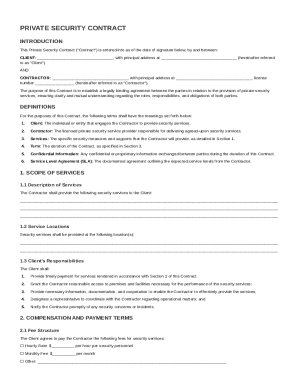
  1. Click ‘Get Form’ to open the dancer independent contractor agreement in the editor.
  2. Begin by filling in the Employer's name and the Dancer's name at the top of the form. This establishes who is entering into the agreement.
  3. In the 'Scope of Services' section, clearly outline the specific services that the Dancer will perform. Be as detailed as possible to avoid any misunderstandings.
  4. Next, specify the 'Term of Employment' by entering the start date and completion date for when services are expected to be performed.
  5. Fill in any applicable 'Liquidated Damages' amount that may be incurred if services are not performed as agreed upon.
  6. Enter the payment amount that will be compensated to the Dancer upon completion of work in the designated field.
  7. Review and confirm that you understand that taxes are the responsibility of the Dancer, ensuring compliance with tax obligations.
  8. Finally, both parties should sign and date at the bottom of the form to finalize this agreement.

Start using our platform today for free to streamline your document editing and signing process!

be ready to get more

Complete this form in 5 minutes or less

Get form

Got questions?

We have answers to the most popular questions from our customers. If you can't find an answer to your question, please contact us.
Contact us
A Private Dancer is a professional entertainer who performs sensual or artistic dances for clients in a private or semi-private setting. Their work often takes place in clubs, private events, or exclusive venues, where they provide personalized performances.
An independent contractor is someone who works for themselves. They are also sometimes called freelancers, self-managed artists, independent artists, sole traders or contractors. Independent contractors run their own businesses and are their own boss.
The general rule is that an individual is an independent contractor if the person for whom the services are performed has the right to control or direct only the result of the work and not what will be done and how it will be done. If you are an independent contractor, then you are self-employed.
These days, most clubs classify dancers as independent contractors, but do not give dancers the benefits that independent contractor status are supposed to have.
If you are a performing artist, such as an actor, dancer or musician, payments that you receive from someone who is not your employer (for example, payments for freelance work) may be considered income from self-employment and reportable on Schedule C, Profit or Loss from Business.

Security and compliance

At DocHub, your data security is our priority. We follow HIPAA, SOC2, GDPR, and other standards, so you can work on your documents with confidence.

Learn more
ccpa2
pci-dss
gdpr-compliance
hipaa
soc-compliance

People also ask

Make sure to keep receipts for anything you purchase for work, including your stage fee receipts. Additionally, your club should provide you with a 1099 form.
The IRS regulations for worker classification are strict, and security guard roles very rarely qualify for independent contractor status. However, there could be some limited scenarios where a 1099 classification might be defensible.

proof of income for exotic dancers