
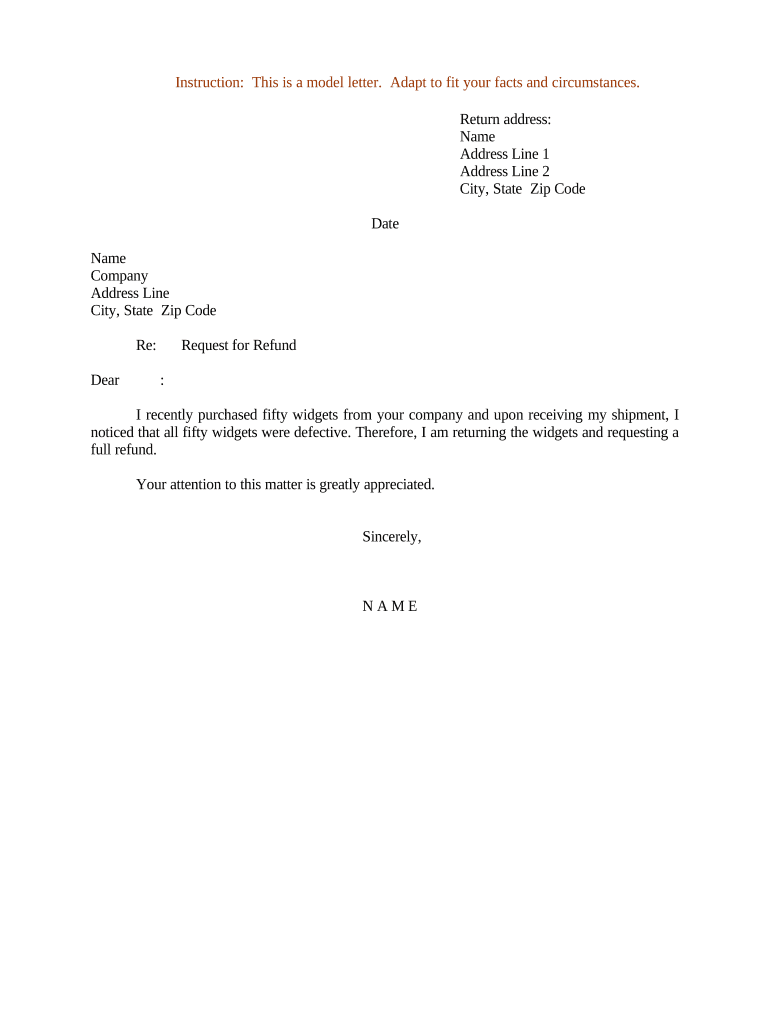







Understanding the Refund Request Letter
A refund request letter is a formal way for individuals or businesses to ask for a reimbursement of funds, typically following a purchase that did not meet expectations. Common scenarios that warrant a refund request include defective products, overpayments, services not rendered, or dissatisfaction with an item. Drafting this type of letter with clarity and professionalism increases the likelihood of a successful resolution.
Key Elements of a Refund Request Letter
When composing a refund request letter, it's essential to include specific elements to enhance its effectiveness. Key components consist of:
-
Sender Information: Clearly state your name, address, and contact details at the top of the letter.
-
Recipient Details: Include the name of the company or individual you are addressing, along with their postal address.
-
Subject Line: Use a clear subject line, such as "Request for Refund" or "Refund Request for Order [Order Number]."
-
Date: Make sure to add the date the letter is being submitted.
-
Body of the Letter: Provide a detailed explanation of why you're requesting a refund. Be specific about the issue encountered, citing product details and transaction information, such as order numbers.
-
Amount Requested: Clearly state the amount you are requesting for a refund.
-
Closing Statement: Request a prompt response and provide your contact information for any follow-up.
-
Signature: End with your signature followed by your typed name.
Incorporating these components ensures that the letter is not only informative but also professional, making it easier for recipients to process the request.
Steps to Complete the Refund Request Letter
-
Gather Information: Collect all necessary documents related to the transaction, such as orders, receipts, and previous correspondence.
-
Choose the Format: Decide whether to use a printed letter format or a digital one, depending on the company’s preferences.
-
Draft the Letter: Start filling in the elements discussed above, ensuring that the language is polite and the request is straightforward.
-
Personalize the Content: Tailor your request to address any specific nuances related to your situation, which helps to strengthen your position.
-
Review and Edit: Check for any spelling or grammatical errors, ensuring that the letter is professional and concise.
-
Send the Letter: Deliver the letter via the method specified by the company—whether by email, postal service, or an online form—they provided for such queries.
Examples of Using the Refund Request Letter
Several scenarios call for the use of a refund request letter:
-
Defective Product: If you purchased a gadget that malfunctioned shortly after opening, you would detail the issue in the letter and request a full refund based on the warranty policies.
-
Subscription Services: When a subscription service fails to deliver its promised value, such as unlimited access to a streaming service that restricts content, you can request a refund citing specific terms agreed upon during sign-up.
-
Overpayment: If a double payment was made by mistake, a letter can address the transaction, clarifying that a refund for the extra charge is being requested.
In all cases, being clear and direct while providing relevant supporting details enhances the likelihood of a quick and favorable response.
Common Mistakes When Writing a Refund Request Letter
When drafting a refund request letter, avoid:
-
Vague Language: Be precise about why you are unhappy—avoid generic statements that may lead to misunderstandings.
-
Emotional Tone: Maintain a professional demeanor. While you may feel frustrated, before communicating, focus on facts instead of emotions.
-
Incomplete Information: Ensure that all necessary details, such as tracking numbers, dates, and amounts, are included. Omitting them can lead to delays.
-
Ignoring Policy Guidelines: If the company has specific procedures for refunds, ensure you adhere to those while writing your request.
Addressing these common pitfalls can make a significant difference in the outcome.
State-Specific Rules for the Refund Request Letter
While a refund request letter follows general guidelines, individual states may impose specific requirements or terms regarding refunds, especially for services or sales governed by law. Understanding consumer protection laws specific to your state can provide valuable context, such as:
-
Timeframes for Refunds: Many states mandate that refunds must be processed within a specific period, which can range from 14 to 30 days.
-
Consumer Rights: Familiarize yourself with local consumer rights laws that protect against unfair practices, which can bolster the strength of your request.
-
Requirements for Certain Products: States may have rules pertaining to industries, such as travel or auto sales, which impose additional conditions for refunds.
Reviewing these state-specific guidelines can enhance the effectiveness of your refund request letter and ensure compliance with applicable laws.




