






Definition and Meaning of Notice of Abandoned Personal Property
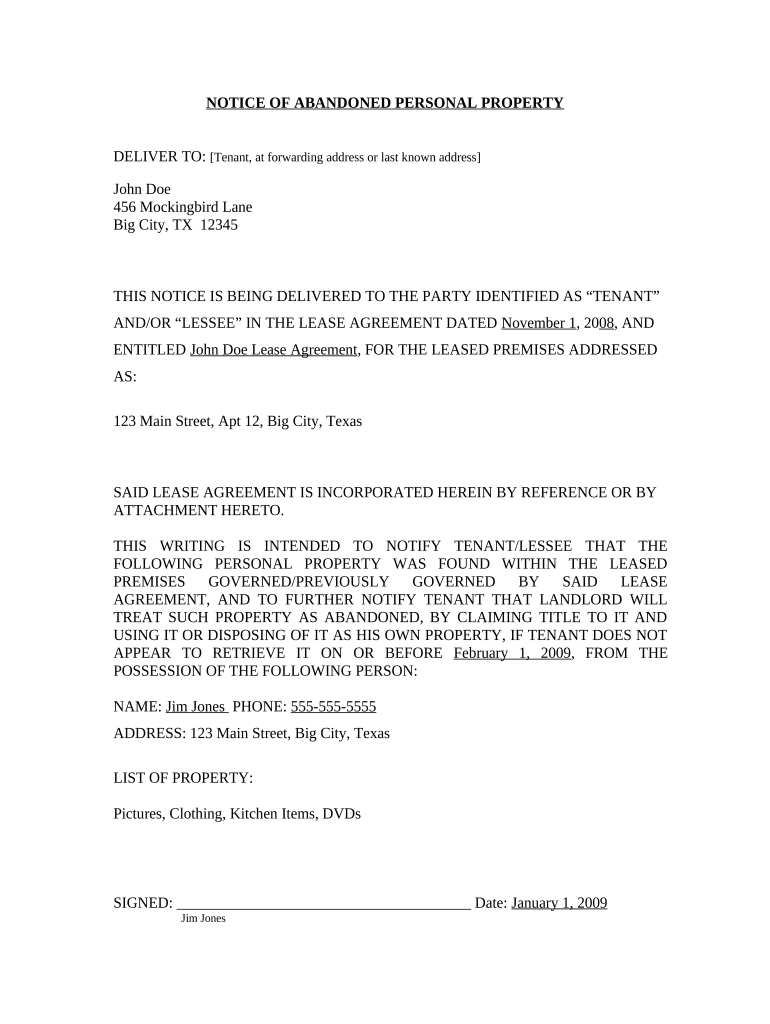
A Letter from Landlord to Tenant as Notice of Abandoned Personal Property in Texas serves as a formal communication from a landlord to a tenant, indicating that the tenant has left personal property behind after vacating the rental premises. This notice typically informs the tenant of the items found, advises them of their rights regarding retrieval of the belongings, and outlines the potential consequences if the property is not reclaimed within a specified timeframe.
Under Texas law, landlords are obligated to send this notice when they believe that a tenant has abandoned their rental property and any personal belongings within it. The notice must detail the items in question and give the tenant a reasonable period—often at least 30 days—to reclaim their possessions. Failing to comply with the notice can result in the landlord claiming ownership of the property and potentially disposing of it.
Key Elements of the Letter from Landlord to Tenant
When drafting the Letter from Landlord to Tenant as Notice of Abandoned Personal Property in Texas, several key elements must be included to ensure legal compliance and clarity:
- Identification of Parties: Clearly state the landlord's name and contact information as well as the tenant's name and address of the rental property.
- Description of Items: Provide a detailed inventory of the abandoned personal property, including descriptors such as brand names, types of items (e.g., furniture, appliances), and quantities.
- Notification of Abandonment: Explicitly inform the tenant that their possessions are considered abandoned in accordance with Texas Property Code.
- Recovery Instructions: Include directions for how the tenant can reclaim their property, such as dates and times for pickup, or contact information for arrangements.
- Timeframe for Retrieval: Specify a deadline for when the tenant must collect their belongings, which should comply with state law, often no less than 30 days after the notice is served.
- Consequences of Non-Compliance: Clearly describe what will happen if the tenant fails to retrieve their items by the specified date, including the landlord’s legal right to dispose of the items.
Legal Use of the Notice of Abandoned Property in Texas
The legal standing of the notice is grounded in Texas Property Code, which outlines the procedures landlords must follow when tenants leave personal property behind. Understanding the legal framework helps landlords structure their notices correctly and avoid liabilities.
- Tenant’s Rights: Texas law protects tenants by giving them a defined timeframe to retrieve their personal property after a landlord has issued a notice of abandonment.
- Landlord’s Obligations: Landlords must ensure that the notice is served correctly, typically in person, by mail, or through an appropriate electronic method. Failure to follow proper procedures might render the notice invalid.
- Compliance with Legal Guidelines: The notice must adhere to specific legal requirements, including language and format, to be enforceable in court.
How to Use the Letter from Landlord to Tenant Effectively
Using the Letter from Landlord to Tenant as Notice of Abandoned Personal Property is straightforward but requires attention to detail:
- Prepare the Document: Utilize templates that meet Texas legal requirements. Ensure clarity in language, especially on key facts.
- Serve the Notice: Deliver the notice to the tenant in a legally acceptable manner. This could involve mailing the notice or providing it in person, ensuring proper documentation is kept.
- Follow-Up: If the tenant does not respond within the allocated timeframe, document all attempts made to reach out, and be prepared to take appropriate actions, including the disposal of the items listed.
- Record Keeping: Maintain a copy of the notice and all related communications for your records in case future legal matters arise.
Examples of Situations Requiring a Notice of Abandonment
Several scenarios may prompt a landlord to issue a Letter from Landlord to Tenant as Notice of Abandoned Personal Property:
- Eviction or Non-Payment: After an eviction process or failure to pay rent, a landlord might find personal items left behind.
- Unexpected Vacancy: A tenant may vacate the property suddenly, leaving behind furniture or household goods.
- Incapacity or Transitional Move: Situations where a tenant may be unable to return to the property due to medical or personal issues, requiring landlords to intervene.
These examples underscore the importance of using the notice appropriately to facilitate lawful management of abandoned items according to Texas law.
Important Terms Related to Abandoned Property Notices
Familiarity with key terms enhances understanding of the eviction and abandoned property context:
- Abandoned Property: Belongings left behind in a rental unit without the tenant’s intention to retrieve them.
- Landlord’s Lien: The legal right of landlords to retain tenant property as security for the payment of rent or damages.
- Property Code: The Texas legislation that outlines rights, responsibilities, and procedures regarding rental properties, including abandonment notices.
- Notice to Remove Property: A document that communicates to the tenant about the abandoned items and provides a deadline for their retrieval.
Understanding these terms aids landlords in navigating the complexities of property management and the legal requirements of abandonment notices in Texas.