Type text, add images, blackout confidential details, add comments, highlights and more.
02. Sign it in a few clicks
Draw your signature, type it, upload its image, or use your mobile device as a signature pad.
03. Share your form with others
Send it via email, link, or fax. You can also download it, export it or print it out.
How to use or fill out complaint judgment with our platform
Ease of Setup
DocHub User Ratings on G2
Ease of Use
DocHub User Ratings on G2
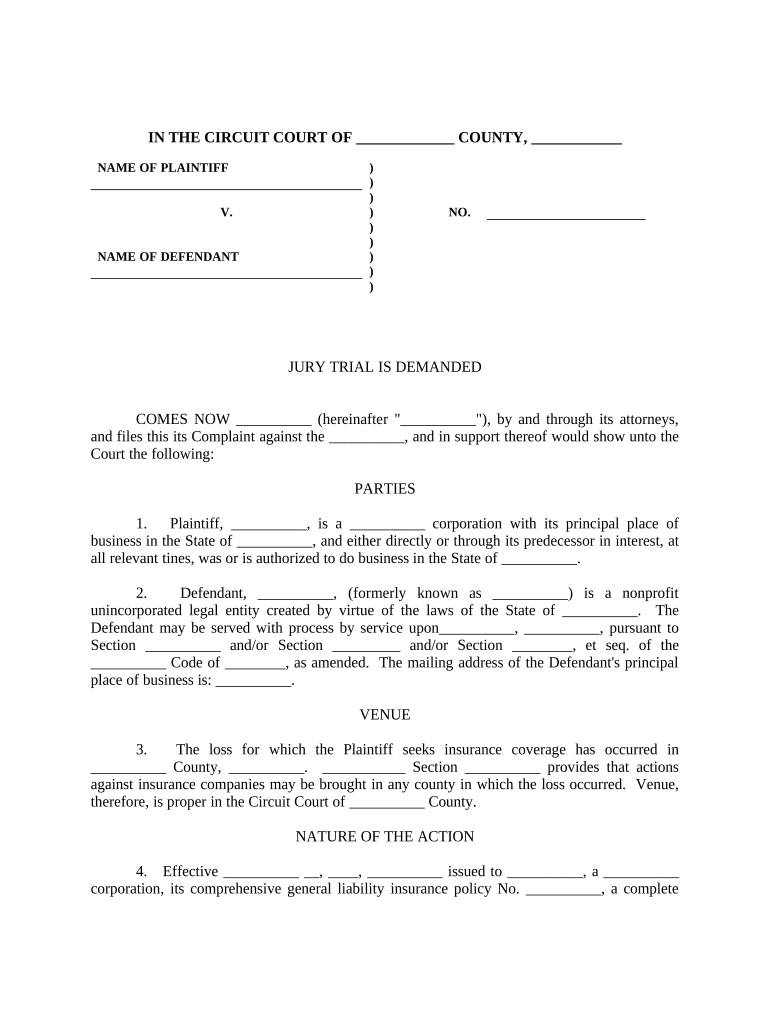
Click ‘Get Form’ to open the complaint judgment document in the editor.
Begin by filling in the names of the plaintiff and defendant in the designated fields at the top of the form. Ensure accuracy as these details are crucial for identification.
In the 'Parties' section, provide detailed information about both parties, including their legal status and business addresses. This establishes jurisdiction and context for your case.
Complete the 'Venue' section by specifying where the incident occurred, which is essential for determining where to file your complaint.
In 'Nature of the Action', summarize your claims succinctly, referencing any relevant insurance policies attached as exhibits. This helps clarify your position.
Fill out the 'Underlying Action' section with specifics about any environmental issues or liabilities that pertain to your case, ensuring all claims are well-documented.
Finally, review all sections for completeness and accuracy before saving or exporting your document. Utilize our platform’s features to sign and share your completed form seamlessly.
Start using our platform today to streamline your complaint judgment process for free!
Is filing a complaint the same as filing a lawsuit?
In essence, a legal complaint initiates a lawsuit, while a lawsuit encompasses the entire process of resolving the dispute in court. The existence of a lawsuit and its course through the judicial process is also referred to as litigation.
What is the difference between a case and a complaint?
By definition, lawsuit refers to the legal process (that is, the court case) by which a court of law makes a decision on an alleged wrong (as exhibited in the statement a complex lawsuit that may take years to resolve), whereas complaint refers to the initial document, or pleading, submitted by a plaintiff against a
What is the meaning of complaint in court?
Complaint: The complaint is the legal action in which one party (the plaintiff) sues another party (the defendant). Federal civil cases begin with the filing of a complaint.
What counts as a complaint?
A complaint is the pleading that starts a case . Essentially, a document that sets forth a jurisdictional basis for the courts power, the plaintiffs cause of action , and a demand for judicial relief . A plaintiff starts a civil action by filing a pleading called a complaint.
What is filing a complaint in court?
A complaint is the pleading that starts a case . Essentially, a document that sets forth a jurisdictional basis for the courts power, the plaintiffs cause of action , and a demand for judicial relief .
Related Searches
What happens when you file a complaint against a judgeJudicial misconduct complaint formHow to file a complaint against a court clerkJudicial Council complaint formHow to file a complaint against a Family Court judgeHow to file a complaint against a judge in MarylandHow to file a complaint on a judgeHow to find complaints against judges
Security and compliance
At DocHub, your data security is our priority. We follow HIPAA, SOC2, GDPR, and other standards, so you can work on your documents with confidence.
A complaint is an objection to something that is unfair, unacceptable, or otherwise not up to normal standards. If your neighbors have a complaint about noise, they want you to be more quiet. A complaint is voiced objection to something, like a complaint about cold or disgusting-tasting food in a restaurant.
Is a complaint a court filing?
Overview. Most civil cases are started by one party (the party suing, called the plaintiff) filing a complaint with the court. A complaint is a document that describes what the plaintiff wants (money or some other type of relief) and why she believes she is entitled to that relief.
Related links
Rule 12. Defenses and Objections: When and How Presented
A defendant must serve an answer: (i) within 21 days after being served with the summons and complaint; or (ii) if it has timely waived service under Rule 4(d)Read more
Cookie consent notice
This site uses cookies to enhance site navigation and personalize your experience.
By using this site you agree to our use of cookies as described in our Privacy Notice.
You can modify your selections by visiting our Cookie and Advertising Notice.