Type text, add images, blackout confidential details, add comments, highlights and more.
02. Sign it in a few clicks
Draw your signature, type it, upload its image, or use your mobile device as a signature pad.
03. Share your form with others
Send it via email, link, or fax. You can also download it, export it or print it out.
How to use or fill out irrevocable benefit with our platform
Ease of Setup
DocHub User Ratings on G2
Ease of Use
DocHub User Ratings on G2
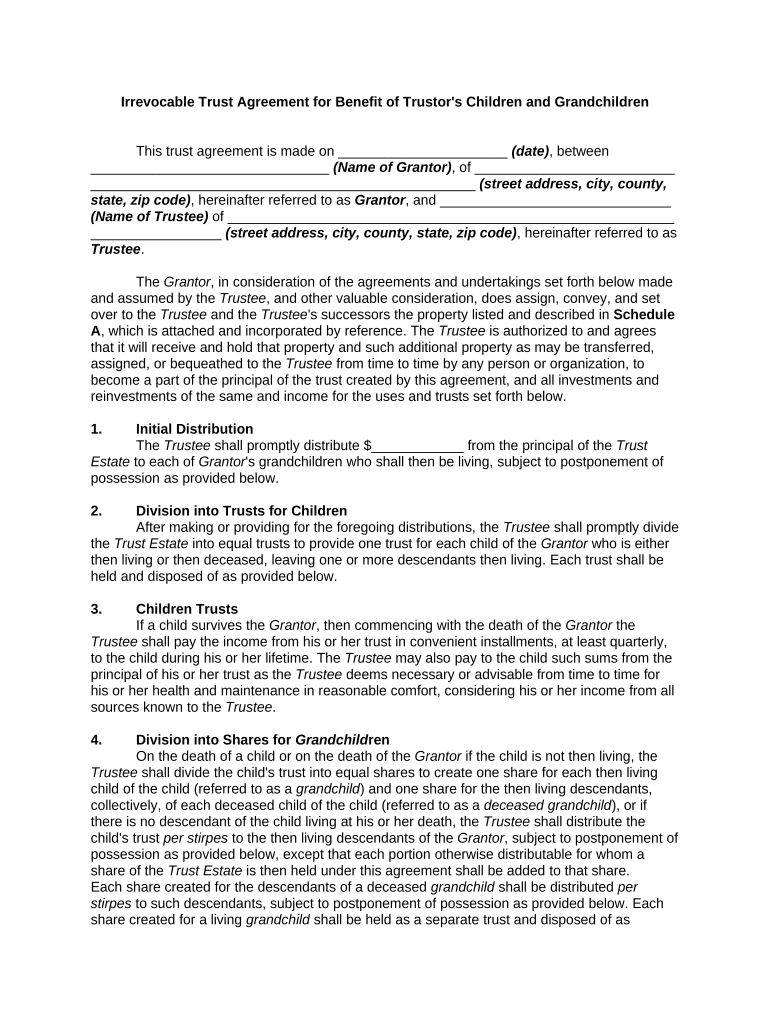
Click ‘Get Form’ to open the Irrevocable Trust Agreement in the editor.
Begin by entering the date of the agreement in the designated field at the top of the form.
Fill in the name and address of the Grantor, ensuring all details are accurate for legal purposes.
Next, input the name and address of the Trustee. This section is crucial as it identifies who will manage the trust.
In Section 1, specify the amount to be distributed to each grandchild from the principal of the Trust Estate.
Continue through each section, providing necessary details such as trust divisions for children and grandchildren, rights of withdrawal, and any specific provisions regarding distributions.
Review all entries for accuracy before finalizing your document. Utilize our platform's editing tools to make any necessary adjustments.
Start filling out your irrevocable benefit form today for free using our platform!
Irrevocable benefit exampleDangers of irrevocable trustIrrevocable beneficiary vs revocableWhy would someone want an irrevocable trustIrrevocable living trustWho owns the property in an irrevocable trustIrrevocable willIrrevocable trust vs revocable trust
Security and compliance
At DocHub, your data security is our priority. We follow HIPAA, SOC2, GDPR, and other standards, so you can work on your documents with confidence.
Types of Trusts for Your Estate: Which Is Best for You?
Nov 17, 2024 Irrevocable trust. Once you create an irrevocable trust you cannot change or terminate it. You can establish an irrevocable trust during theRead more
irrevocable trust | Wex | US Law | LII / Legal Information Institute
Irrevocable trust refers to any trust where the grantor cannot change or end the trust after its creation. Grantors may choose a trust with such limitations toRead more
Differences between Irrevocable Trust and Revocable Trust
Feb 28, 2026 This type of trust is often used to minimize estate taxes for individuals whose net worth exceeds the federal estate tax exemption, which isRead more
Cookie consent notice
This site uses cookies to enhance site navigation and personalize your experience.
By using this site you agree to our use of cookies as described in our Privacy Notice.
You can modify your selections by visiting our Cookie and Advertising Notice.