01. Edit your sample motion to quash subpoena california online
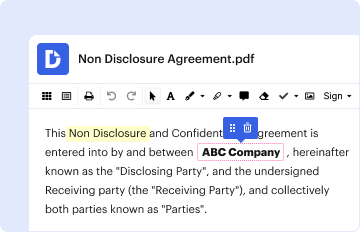
Type text, add images, blackout confidential details, add comments, highlights and more.
02. Sign it in a few clicks
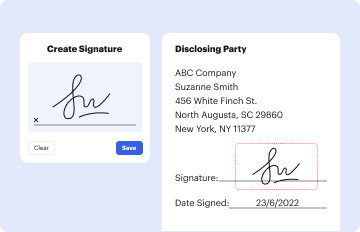
Draw your signature, type it, upload its image, or use your mobile device as a signature pad.
03. Share your form with others
Send motion to quash subpoena template via email, link, or fax. You can also download it, export it or print it out.
How to use or fill out motion quash subpoena sample with DocHub
Ease of Setup
DocHub User Ratings on G2
Ease of Use
DocHub User Ratings on G2
Click ‘Get Form’ to open the motion quash subpoena sample in our editor.
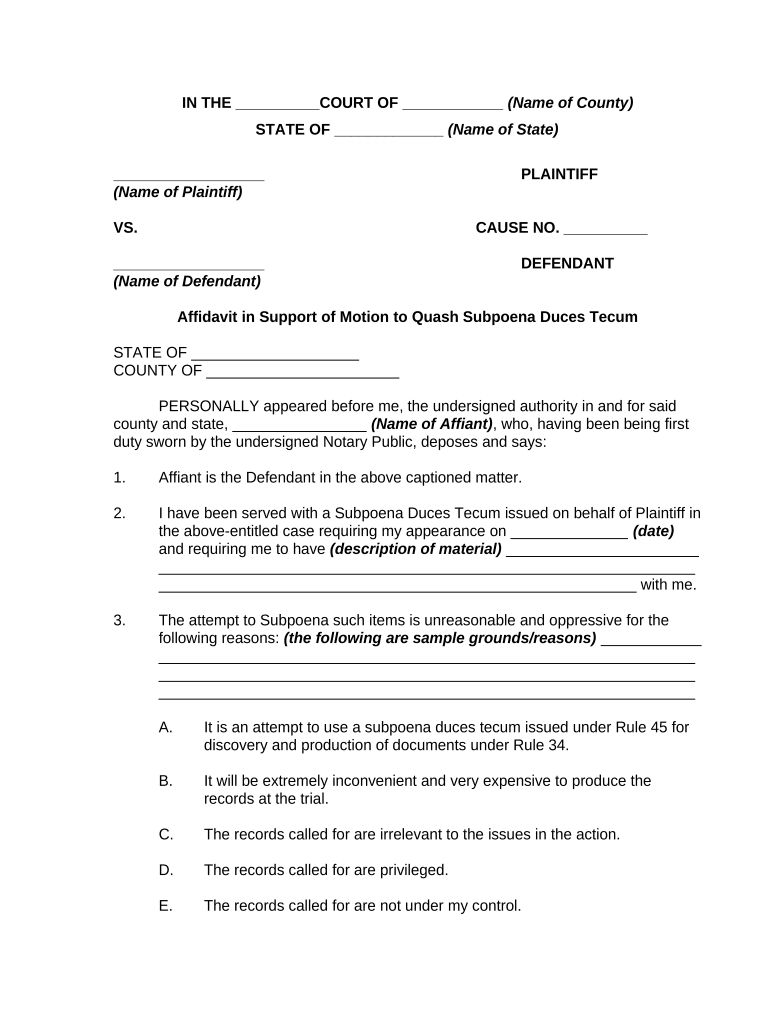
Begin by filling in the court name and county at the top of the form. This sets the context for your motion.
Next, enter the names of the plaintiff and defendant along with their respective case numbers. Ensure accuracy as this information is crucial.
In the Affidavit section, input your name as the affiant and confirm your status as the defendant in this matter.
Specify the date you were served with the subpoena and describe any materials requested. Be detailed to avoid ambiguity.
List your reasons for quashing the subpoena in a clear manner. Use bullet points for clarity, addressing each ground provided in the template.
Complete your printed name and signature at the bottom of the affidavit section, ensuring it is properly notarized.
Finally, fill out the Certificate of Service section by entering your name and providing details of how you served a copy of this motion to opposing counsel.
Start using our platform today to streamline your document editing process for free!
Fill out motion quash subpoena sample online It's free
A motion to quash typically is only two or three paragraph long. Start with a paragraph that briefly summarizes the basic facts of the case and identifies the subject of your motion. Then tell the judge exactly what you want them to do and why. A motion is persuasive writing.
What are the elements for motion to quash?
Common grounds for filing a motion to quash are that the individual is outside the subpoena range, or that the items to be produced are unavailable within the specified time or at the specified location. Other common grounds for filing a motion to quash include undue burden and expense.
What type of motion is a motion to quash?
A motion to quash is a request to a court or other tribunal to render a previous decision or proceeding null or invalid. The exact usage of motions to quash depend on the rules of the particular court or tribunal. In some cases, motions to quash are requests to nullify a decision made by the same or a lower court.
What is the reason for motion to quash?
The purpose of filing a motion to quash is to challenge the legal sufficiency or validity of the document or proceeding in question. When a motion to quash is filed, the court will review the arguments and evidence presented by the party filing the motion, as well as any opposing arguments.
What does it mean when a case is quashed?
Quash means to set aside or to void . In a legal context, quash can be used to describe the process of terminating proceedings or motions or to describe the exclusion of evidence from trial .
motion to quash subpoena example
Motion to quash subpoena FloridaMotion to QUASH SUBPOENA pdfWhat are the grounds for a motion to quashMotion to quash subpoena duces tecumFederal motion to quash subpoenaGrounds for motion to quash subpoenaMotion to modify subpoenaMotion to quash subpoena for medical records
Security and compliance
At DocHub, your data security is our priority. We follow HIPAA, SOC2, GDPR, and other standards, so you can work on your documents with confidence.
Most motions to quash a subpoena will object to timeliness, improper court or improper form of the subpoena, undue burden (which includes relevancy, overbreadth of the request, and other factors relevant to balancing the burden and probative nature of the evidence, see Smart Code), and invasion of the attorney-client
Whats the difference between a motion to quash and a motion to dismiss?
A motion to quash is most commonly filed at the beginning of a trial, or an appeal as a pretrial motion. It may be considered as somewhat similar to a motion to dismiss. However, a motion to quash asks the court to nullify a previous court ruling, whereas a motion to dismiss requests the same of a current filing.
What are valid reasons to quash a subpoena?
There are four grounds for moving to quash for which the court must grant the motion: (1) when the subpoena provides an unreasonable time for compliance, (2) when the subpoena requires a person to travel beyond the 100-mile limit set out in Rule 45(c), (3) when the subpoena seeks privileged or other protected material,
motion to quash subpoena california
Motion to Quash
Quash the subpoena served upon. requiring production of any alleged information and/or records and files allegedly in the possession of Movant. 2. In theRead more
May 2, 2024 Jason Bowles of Bowles Law Firm, hereby files a motion to quash a Subpoena Duces. Tecum served upon him by the State of New Mexico, and inRead more
Cookie consent notice
This site uses cookies to enhance site navigation and personalize your experience.
By using this site you agree to our use of cookies as described in our Privacy Notice.
You can modify your selections by visiting our Cookie and Advertising Notice.