


Mutual release agreement real estate indiana 2026

Get Form
real estate mutual release form Preview on Page 1

Here's how it works

01. Edit your real estate mutual release form online
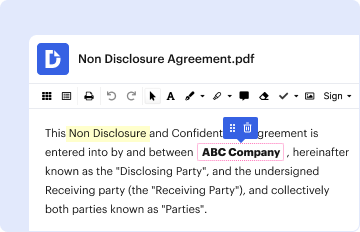
Type text, add images, blackout confidential details, add comments, highlights and more.
02. Sign it in a few clicks
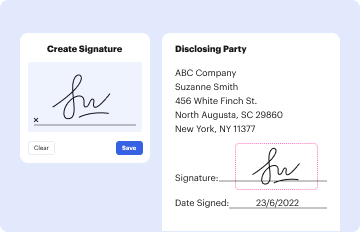
Draw your signature, type it, upload its image, or use your mobile device as a signature pad.
03. Share your form with others
Send mutual release real estate via email, link, or fax. You can also download it, export it or print it out.

How to use or fill out mutual release agreement real estate Indiana

Form edit decoration
9.5
Ease of Setup
DocHub User Ratings on G2
9.0
Ease of Use
DocHub User Ratings on G2
  1. Click ‘Get Form’ to open the mutual release agreement in our editor.
  2. Begin by entering the date at the top of the form. This is crucial as it marks when the agreement takes effect.
  3. Fill in the names of the Buyer(s) and Seller(s) in their respective fields. Ensure that all parties involved are accurately represented.
  4. Specify the property details, including its address and zip code, to clearly identify which property this release pertains to.
  5. Indicate how the earnest money deposit will be handled by checking one of the options provided: returned to Buyers, paid to Seller, or other. Enter the amount in dollars.
  6. Review the section regarding electronic signatures. Confirm that all parties understand and agree that digitally transmitted signatures are binding.
  7. Finally, ensure all parties sign and print their names where indicated. Include dates for each signature to validate the agreement.

Start using our platform today for free to streamline your document editing and signing process!

be ready to get more

Complete this form in 5 minutes or less

Get form

Got questions?

We have answers to the most popular questions from our customers. If you can't find an answer to your question, please contact us.
Contact us
Real Estate Mutual Release Agreement. Updated April 21, 2025. A real estate mutual release agreement allows two parties involved in a property-related contract to release each other from claims or liability. Commonly, this is signed when a buyer no longer wishes to purchase real estate.
A mutual release is a legal document to resolve disputes and settle legal issues between parties. It can wipe out mutual obligations and claims and give everyone a clean slate.
A mutual release is a document designed to be signed by both the buyers and sellers to cancel an agreement of purchase and sale. When executed, this document cancels the agreement and releases all parties from any future liabilities or claims.
Each Party hereby releases, acquits and forever discharges the other Party and the other Partys affiliates and its and their respective former and present directors, officers, employees, representatives, partners and managers from any and all claims, counterclaims, demands, causes of actions, liabilities, promises or
The WB-45 Cancellation Agreement and Mutual Release is a form which permits the parties to an agreement or contract to cancel the contract and to authorize any real estate broker holding funds on behalf of the parties to disburse those monies.

Security and compliance

At DocHub, your data security is our priority. We follow HIPAA, SOC2, GDPR, and other standards, so you can work on your documents with confidence.

Learn more
ccpa2
pci-dss
gdpr-compliance
hipaa
soc-compliance

People also ask

Effective July 1, 2024, a new Indiana law requires all licensed real estate brokers to have written agreements to formalize their professional (agency) relationships with homebuyers.
A mutual agreement: Both sides must agree to be bound by their contract and must agree on the essential terms. An offer and an acceptance: One side makes a clear or definite offer and agrees to be bound by the contract and the other side clearly accepts that offer and to be bound by the contract.
If a seller backs out of a signed real estate contract, the buyer might have legal recoursebut the path forward depends on the circumstances. In many cases, the buyer can recover their earnest money deposit, especially if the seller is backing out without a valid contractual reason.

mutual release from purchase agreement indiana