
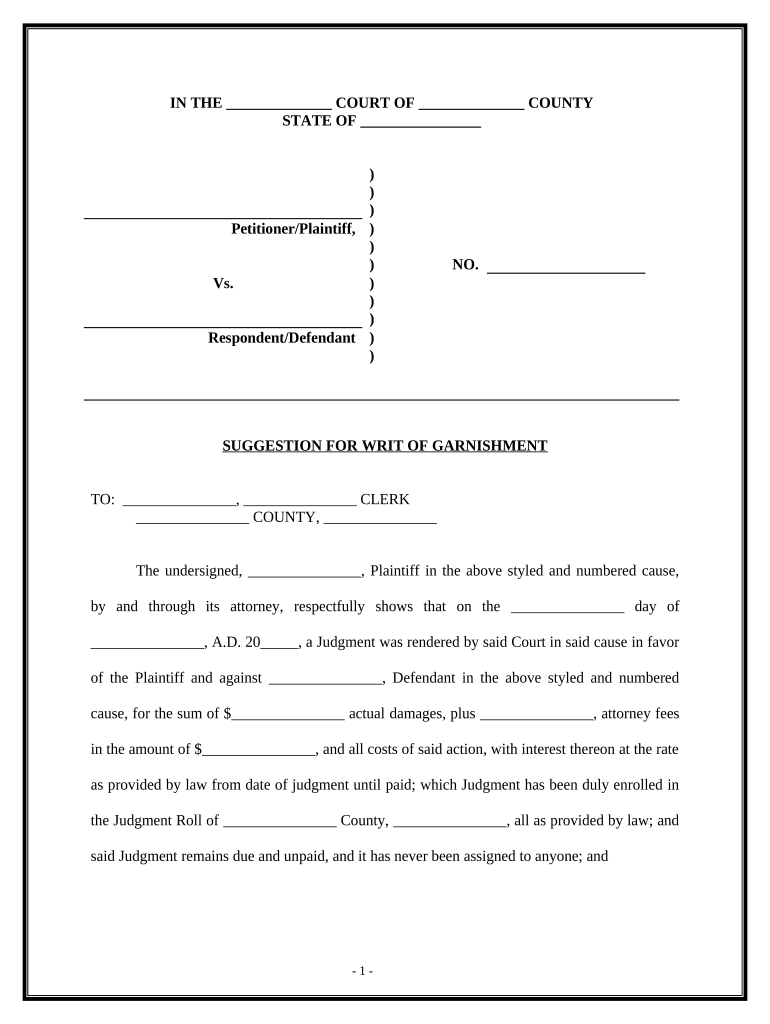







Understanding Garnishment Templates
A garnishment template is a legal document used to initiate the process of wage garnishment against a debtor's earnings or bank accounts after a court judgment has been issued. This template is essential for creditors who need to collect owed debts in a structured and legal manner.
Importance of Garnishment Templates in Debt Collection
Utilizing a garnishment template streamlines the legal process for creditors. It provides a standardized format that ensures compliance with legal requirements. This is important because improper documentation can lead to delays or dismissals in court.
- Uniformity: A standard format ensures all necessary information is captured consistently.
- Legal Compliance: Following established templates helps creditors adhere to state and federal regulations.
- Efficiency: Templates save time, allowing creditors to focus on recovery efforts rather than document creation.
Key Components of a Garnishment Template
A comprehensive garnishment template includes several critical elements that must be addressed for it to be effective and legally binding.
- Court Information: Section for detailing the court that issued the judgment.
- Creditor and Debtor Details: Fields for the names, addresses, and contact information.
- Garnishee Information: Identification of the party (usually an employer or bank) that will be directed to withhold funds.
- Amount Owed: Clear specification of the total debt, including any interest, fees, or additional charges that may apply.
- Instructions for Garnishee: Step-by-step directions on how the garnishee should respond or remit the withheld funds.
Process for Using a Garnishment Template
The process for utilizing a garnishment template involves several steps. Following these steps carefully can help ensure that the garnishment process is executed properly.
- Obtain the Template: Acquire a documented garnishment template that complies with local and federal laws.
- Fill Out the Template: Complete the fields with accurate information regarding the creditor, debtor, and garnishee.
- File with the Court: Submit the completed template to the appropriate court along with any required filing fees.
- Serve the Garnishee: Deliver a copy of the garnishment order to the garnishee, ensuring they understand their obligations.
- Monitor Compliance: After the garnishee has been served, monitor their actions to ensure compliance with the garnishment order.
Common Mistakes When Using a Garnishment Template
Even with the right template, mistakes can occur that potentially undermine the garnishment process. Awareness of these common pitfalls can help mitigate errors.
- Incomplete Information: Missing crucial details can delay processing and hinder enforcement.
- Incorrect Court Procedures: Each state has specific rules for filing garnishment orders; failing to adhere can result in rejections.
- Improper Service: Garnishee must be served correctly to ensure they recognize their responsibility.
- Ignoring State Regulations: Each state has different laws regarding wage garnishments; overlooking these can invalidate the garnishment.
Variations in Garnishment Procedures by State
Garnishment laws can vary significantly from one state to another. It is crucial to understand these variations to effectively navigate the garnishment process.
- Percentage Limits: Many states place limits on the percentage of wages that can be garnished, which affects how creditors structure their requests.
- Exemptions: Certain income types, such as Social Security and retirement benefits, may be exempt from garnishment in some jurisdictions.
- Notification Requirements: Some states mandate that debtors must be notified of garnishment actions ahead of time, impacting the timeliness of collections.
Additional Resources for Creditors
Creditor resources can further assist in the effective use of garnishment templates and related legal procedures.
- Law Libraries: Local law libraries often provide access to legal books and resources that detail state-specific garnishment processes.
- Legal Assistance: Consulting with legal professionals can provide tailored advice for complex situations.
- State Websites: Official state court websites typically offer guidelines and forms related to wage garnishments.
- Credit Counseling Services: Organizations that offer financial advice can help creditors understand debtor situations, potentially aiding in methods aside from garnishment.
Conclusion
A garnishment template is a versatile and necessary tool for creditors seeking to recover debts through wage garnishment. When utilized correctly, it ensures compliance with legal standards and provides a structured approach to debt recovery. Understanding the key components, common mistakes, state-specific regulations, and available resources will enhance the effectiveness of the garnishment process, making it smoother for all parties involved.




