
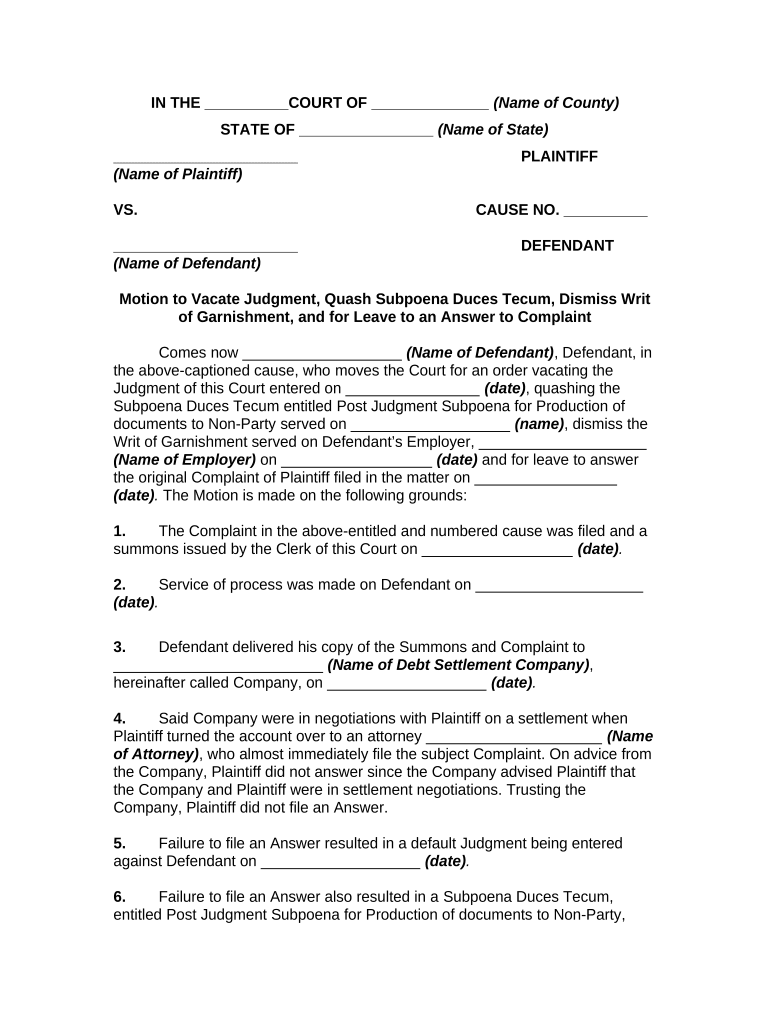







Definition and Meaning
The term "file answer complaint" refers to the formal process by which a defendant responds to a complaint filed against them in a court of law. This document, known as an answer, outlines the defendant's position regarding the allegations made by the plaintiff. Filing an answer is critical, as it enables the defendant to present their arguments, defenses, and any counterclaims they may have. By doing so, the defendant effectively begins their side of the litigation process.
- Purpose of the Answer: The primary objective is to address each allegation presented in the complaint, admitting, denying, or stating a lack of knowledge about them.
- Legal Importance: Failing to file an answer may result in a default judgment against the defendant, which means the court could rule in favor of the plaintiff without considering the defendant's position.
Steps to Complete the File Answer Complaint
Completing an answer to a complaint involves several critical steps that ensure the document is legally sound and appropriately structured.
-
Review the Complaint: Begin with a thorough examination of the complaint to identify the specific claims made against you.
-
Prepare the Answer:
- Introduce the title of the document as "Answer to Complaint" and include the case name and number.
- Respond to each numbered paragraph of the complaint by specifying whether you admit, deny, or lack sufficient knowledge to respond.
-
Include Defenses: After the responses, list any affirmative defenses that may negate liability. Common defenses include the statute of limitations or lack of jurisdiction.
-
Counterclaims: If applicable, present any counterclaims against the plaintiff, stating facts supporting your claims for relief.
-
Sign and Date: The answer must be signed and dated by you or your attorney. This is crucial for validating the document.
-
File with the Court: Submit the completed answer to the appropriate court, ensuring it is filed within the stipulated timeframe set by local court rules.
Important Terms Related to File Answer Complaint
Several key terms are associated with the process of filing an answer to a complaint that anyone involved in a legal dispute should understand:
- Defendant: The individual or entity being sued in a legal proceeding.
- Plaintiff: The party who initiates the lawsuit by filing the complaint.
- Affirmative Defense: A response in which the defendant admits the facts of the complaint but asserts an independent reason why the plaintiff's claims should not prevail.
- Counterclaim: A claim made by the defendant against the plaintiff within the same action, essentially a lawsuit within a lawsuit.
- Default Judgment: A ruling granted by a court if one party fails to respond to a complaint in the required time frame, favoring the party that filed the complaint.
Legal Use of the File Answer Complaint
Filing an answer to a complaint is governed by various legal rules and regulations, reflecting its significance in civil litigation. The legal implications include:
- Preserving Rights: By filing an answer, the defendant preserves their right to contest the allegations and mount a defense, which is fundamental to due process in the legal system.
- Timeline Compliance: Each jurisdiction imposes strict deadlines for filing an answer, typically ranging from twenty to thirty days after service of the complaint. Adherence to these timelines is essential to avoid default.
- Potential Outcomes: A well-prepared answer can lead to settlement discussions, mediation, or trial, depending on the circumstances of the case and the responses provided.
Examples of Using the File Answer Complaint
Practical examples of filing an answer to a complaint can help clarify how the process operates:
- Civil Litigation: In a civil lawsuit regarding breach of contract, the defendant receives a complaint alleging non-performance. The defendant files an answer admitting some aspects but denying others, also including a counterclaim for damages incurred due to the breach.
- Personal Injury Cases: A defendant accused of negligence in a car accident case may file an answer denying liability, asserting that the plaintiff contributed to the incident through their actions.
- Employment Disputes: An employer facing a wrongful termination lawsuit files an answer denying the allegations and asserting a defense based on employee misconduct.
These examples illustrate the diversity of scenarios where filing an answer is essential, emphasizing the importance of a thorough and strategic response to legal complaints.




