Type text, add images, blackout confidential details, add comments, highlights and more.
02. Sign it in a few clicks
Draw your signature, type it, upload its image, or use your mobile device as a signature pad.
03. Share your form with others
Send it via email, link, or fax. You can also download it, export it or print it out.
How to use or fill out New Jersey Discrimination with our platform
Ease of Setup
DocHub User Ratings on G2
Ease of Use
DocHub User Ratings on G2
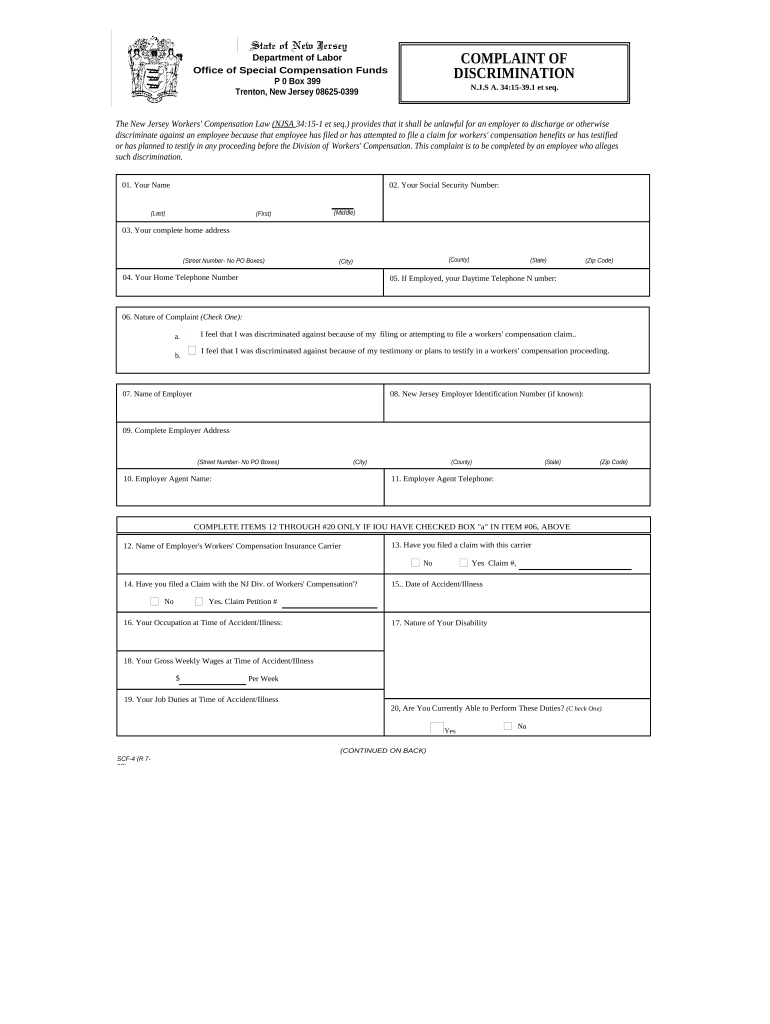
Click ‘Get Form’ to open the New Jersey Discrimination form in the editor.
Begin by entering your personal information in Section 01 through 04, including your name, Social Security Number, complete home address, and telephone numbers.
In Section 06, select the nature of your complaint by checking the appropriate box that reflects whether you were discriminated against for filing a workers' compensation claim or for testifying.
Provide details about your employer in Sections 07 through 10, including their name, identification number (if known), and contact information.
If you checked box 'a' in Section 06, complete items 12 through 20 regarding your workers' compensation insurance carrier and details about your accident or illness.
If you checked box 'b', fill out items 21 through 26 related to testimony in a workers' compensation case.
Finally, review all entries for accuracy before signing at the end of the form to affirm that the information provided is true.
Start filling out your New Jersey Discrimination form online for free today!
Fill out new jersey discrimination online It's free
New Jersey Law Against DiscriminationNew Jersey employment discrimination LawNew Jersey Division of Civil RightsNJ civil rights attorneyNJ workplace discriminationNew jersey human rights lawNJ Law Against Discrimination noticeNJ Division of Civil Rights phone number
Security and compliance
At DocHub, your data security is our priority. We follow HIPAA, SOC2, GDPR, and other standards, so you can work on your documents with confidence.
The New Jersey Law Against Discrimination in the Workplace
The NJ LAD prohibits employers from retaliating against employees who speak out against unlawful discrimination. Employees have the right to: oppose practicesRead more
Cookie consent notice
This site uses cookies to enhance site navigation and personalize your experience.
By using this site you agree to our use of cookies as described in our Privacy Notice.
You can modify your selections by visiting our Cookie and Advertising Notice.