




01. Edit your irs form 433 d online
Type text, add images, blackout confidential details, add comments, highlights and more.

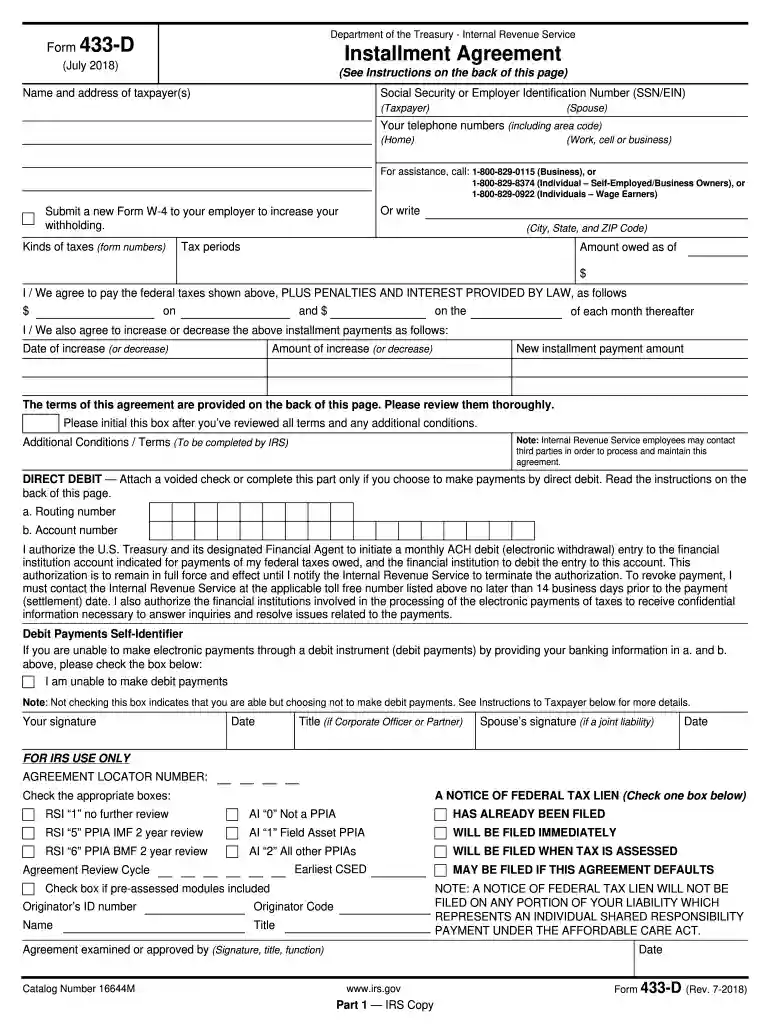
Type text, add images, blackout confidential details, add comments, highlights and more.

Draw your signature, type it, upload its image, or use your mobile device as a signature pad.

Send form 433 d via email, link, or fax. You can also download it, export it or print it out.
IRS Form 433-D, commonly known as the Installment Agreement, is a critical tool for taxpayers who are unable to pay their federal tax liabilities in full. Designed by the Internal Revenue Service (IRS), this form facilitates an agreement to settle tax debts through monthly installment payments. The form details the terms of the payment plan, accounting for payment amounts, schedules, and conditions that allow taxpayers to manage their tax obligations more feasibly. Key elements include taxpayer identification, payment terms, and authorization for automatic withdrawals, if applicable.
To effectively use IRS Form 433-D, it's essential to follow the IRS’s prescribed process. Begin by ensuring your eligibility, which generally requires that all prior tax returns are filed, and then complete the form with detailed and accurate financial information. This includes proposing a monthly payment amount that doesn't exceed your financial capacity but complies with IRS requirements. Once finalized, the form needs to be submitted to the IRS, either by mail or through electronic submission methods when available. Proper use of the form aids in establishing a mutual agreement with the IRS to prevent further collection actions, providing a structured path to resolving outstanding tax debts.
IRS Form 433-D can be obtained through various channels to accommodate user preferences. The form is available for download from the IRS official website, where it can be accessed in PDF format. Taxpayers can also request the form by visiting an IRS local office or contacting the IRS directly to have a physical copy mailed to their address. These approaches ensure broad accessibility, allowing individuals to select the method that best suits their situation.
Completing IRS Form 433-D involves several critical stages to ensure accuracy and compliance:
The importance of IRS Form 433-D lies in its ability to provide taxpayers with an opportunity to manage tax debts without immediate financial strain. By establishing an installment plan, individuals can maintain compliance with federal tax obligations while avoiding aggressive collection measures such as liens or levies. This approach also prevents the accrual of additional penalties and interest on unpaid taxes, making it an invaluable option for those seeking manageable solutions to tax debt challenges.
IRS Form 433-D contains several key components that are crucial for establishing an efficient installment agreement:
When engaging with IRS Form 433-D, taxpayers must adhere to specific IRS guidelines. These include ensuring all information is accurate and up-to-date, understanding the implications of the agreement, such as continuing interest accrual, and maintaining communication with the IRS should financial circumstances change. Abiding by these guidelines helps in maintaining compliance and prevents any potential complications with the installment plan.
Several documents may be required to support the completion of IRS Form 433-D:
These documents serve as the foundation for the IRS to evaluate the appropriateness and feasibility of the proposed installment agreement.
Before submitting IRS Form 433-D, taxpayers must ensure they meet eligibility criteria, which typically requires filing of all previous tax returns and demonstrating the inability to pay taxes in full. Taxpayers must also provide a viable plan to meet future tax obligations while satisfying the installment agreement terms. Ensuring eligibility before submission can smooth the approval process and increase the likelihood of acceptance by the IRS.


IRS Form 433-D is widely used across various taxpayer scenarios:
This adaptability makes IRS Form 433-D a valuable resource for resolving tax obligations across diverse financial situations.
We've got more versions of the irs form 433 d form. Select the right irs form 433 d version from the list and start editing it straight away!
| Versions | Form popularity | Fillable & printable |
|---|---|---|
| 2024 | 4.9 Satisfied (54 Votes) | |
| 2022 | 4.8 Satisfied (43 Votes) | |
| 2020 | 4.8 Satisfied (53 Votes) | |
| 2018 | 4.4 Satisfied (134 Votes) | |
| 2017 | 4.4 Satisfied (469 Votes) | |
| 2015 | 4.2 Satisfied (56 Votes) | |
| 2013 | 4.3 Satisfied (50 Votes) | |
| 2012 | 4 Satisfied (42 Votes) | |
| 2010 | 4 Satisfied (40 Votes) | |
| 2007 | 4 Satisfied (32 Votes) |
At DocHub, your data security is our priority. We follow HIPAA, SOC2, GDPR, and other standards, so you can work on your documents with confidence.


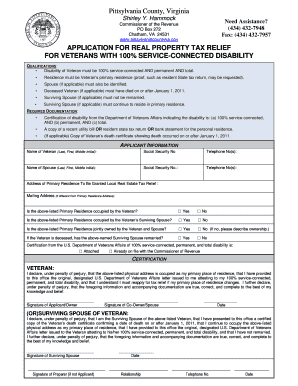


Form 433-D (Rev. 7-2024). Form 433-D. (July 2024). Department of the Treasury - Internal Revenue Service. Installment Agreement. (See Instructions on the backRead more
Apr 15, 2015 You may be eligible to claim the premium tax credit if you, your spouse, or a dependent enrolled in health insurance through the HealthRead more


