






Definition and Meaning of a South Carolina Divorce Decree
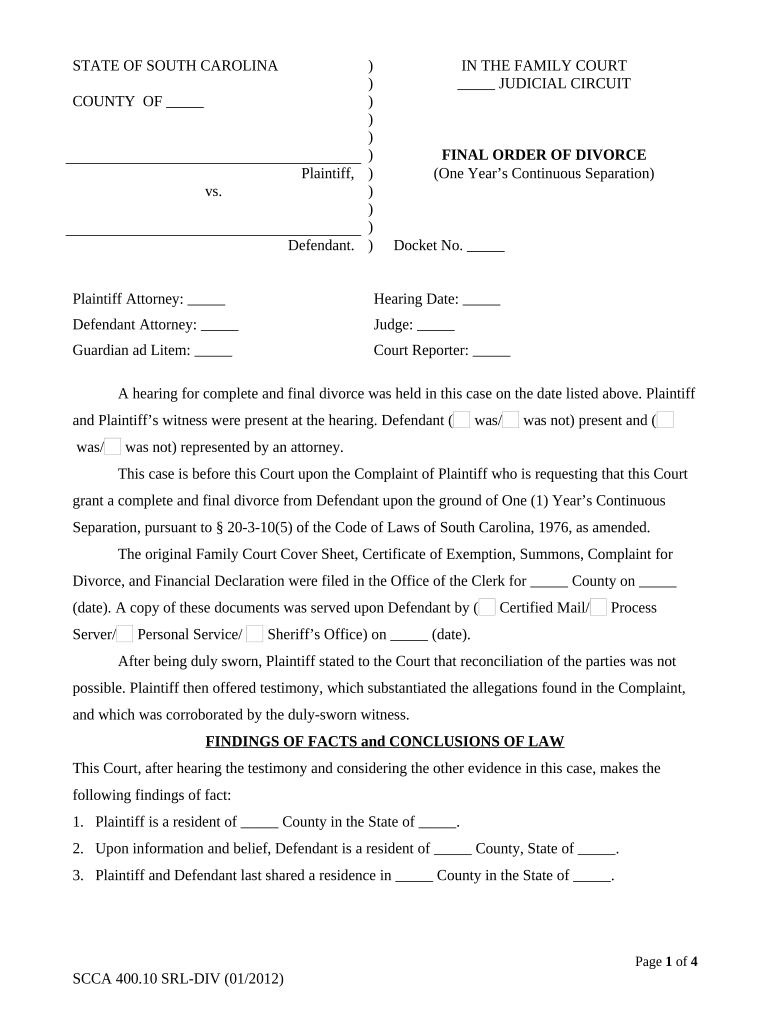
A divorce decree in South Carolina is a legally binding document issued by the Family Court that finalizes a divorce. This document outlines the court's findings and stipulations regarding the dissolution of marriage. In South Carolina, the decree may cover various essential aspects, including the division of marital property, custody arrangements, and support obligations. The key elements typically within a South Carolina divorce decree include:
- Findings of Fact: The court’s record of the circumstances surrounding the marriage and the reasons for the divorce.
- Marital Property Division: Detailed descriptions of how property and debts will be allocated between the parties.
- Child Custody and Support: Provisions regarding the physical and legal custody of children, including visitation schedules and child support payments.
- Alimony Arrangements: If applicable, the decree might specify terms for spousal support.
- Name Change: Opportunities for either party to change their name post-divorce, if so requested.
Understanding the components of a divorce decree is essential for both parties as it establishes the legal framework for their post-marriage responsibilities and rights.
How to Obtain a South Carolina Divorce Decree
Obtaining a divorce decree in South Carolina involves specific steps that must be meticulously followed to ensure legal validity. Here’s a structured process for acquiring this crucial document:
- File for Divorce: The process begins when one party files a Complaint for Divorce with the Family Court in the county where either party resides.
- Serve the Other Party: The spouse must be formally notified of the filing through a process server or sheriff’s department, ensuring they receive a copy of the complaint.
- Attend a Court Hearing: If both parties agree to the terms, they may attend a court hearing where a judge will finalize the divorce and issue the decree.
- Wait for the Final Order: After the hearing, if all is in order, the court will issue the Final Order of Divorce, officially ending the marital relationship.
- Obtain Copy of the Decree: After the order is issued, the parties can request certified copies from the court clerk’s office.
Access to the divorce decree may also be sought online, depending on the county, through the South Carolina Judicial Department's website.
Important Elements of a South Carolina Divorce Decree
A South Carolina divorce decree encapsulates vital information that both parties must understand and comply with. Some of the critical elements include:
- Legal Separation Overview: Outlines the reason for the divorce, usually based on a year of continuous separation, as required in the state.
- Specifics on Property Division: The decree articulates how property acquired during the marriage will be divided, including real estate, bank accounts, and retirement benefits.
- Guidelines for Child Custody and Visitation: It includes detailed arrangements for parenting time and decision-making responsibilities concerning any children involved.
- Spousal Support Terms: If one party is entitled to receive alimony, the decree will specify the amount, duration, and conditions for payments.
These elements not only clarify responsibilities but also ensure that both parties act according to the court’s final judgment.
How to Request a Certified Copy of a Divorce Decree
Requesting a certified copy of a divorce decree is essential for legal purposes, including name changes, insurance claims, or when applying for loans. The procedure involves:
- Visit the Relevant County Family Court: Go to the courthouse in the county where the divorce was filed.
- Complete the Request Form: Fill out an application or request form for a certified copy of the divorce decree. This may be available at the clerk’s office or online.
- Provide Necessary Information: Include details such as the case number, names of both parties, and the date of the divorce.
- Pay Required Fees: There may be fees associated with obtaining a certified copy, generally ranging from five to twenty dollars.
- Wait for Processing: Certified copies can often be obtained immediately, but processing times may vary based on the court’s workload.
This process ensures that individuals maintain legal documentation of their divorce, crucial for future references.
Overview of South Carolina Divorce Records
Divorce records, which include the divorce decree and other related documents, are public records in South Carolina. Access to these records can be crucial for various reasons, including verifying marital status or conducting background checks. Key points regarding South Carolina divorce records include:
- Public Access: Most divorce records are accessible to the public unless sealed by court order. This transparency allows individuals to view and obtain these records upon request.
- Online Availability: Many counties offer online databases where individuals can search for divorce records by entering relevant details, such as names and case numbers.
- Types of Records: Besides the divorce decree, records can include petitions, responses, and any court orders related to custody, support, and property division.
Knowing how to access these records can help in various practical situations, including legal proceedings or personal affairs.
Understanding the Legal Implications of a Divorce Decree
A divorce decree not only signifies the end of a marriage but also enforces legal obligations on both parties. Important legal implications include:
- Enforceability: The decree has the force of law; failure to comply with its terms can result in legal penalties.
- Modification Procedures: Changes to custody or support arrangements must often be pursued through the court, requiring a formal modification to the original decree.
- Impact on Future Relationships: The terms of a divorce decree can influence future actions, such as remarriage, which may require legal consideration regarding spousal support.
Grasping these implications enhances understanding and compliance with the decree’s terms, fostering a smoother transition for both parties post-divorce.